There’s a scene in Jigarthanda DoubleX that doesn’t just whisper Karthik Subbaraj’s philosophy; it flaunts it. Caesar, the gangster-turned-gun-slinging film junkie, watches a Clint Eastwood western in a crumbling theatre, transfixed. Then, as if summoned by Eastwood himself, he walks not beside the screen but through it, literally exiting via a door carved into the white canvas, re-emerging with Eastwood’s swagger, silhouette, and slow-burn stare. That’s not just homage. That’s possession. Because for Subbaraj, cinema isn’t a mirror; it’s a portal. And with Retro, he doesn’t just step through it. He charges in, camera-first, swinging a myth, and a 90s dance remix.
Retro is what happens when a filmmaker ties himself up in a dozen knots and dares himself to escape. It’s part Krishna retelling, part surreal vision, and entirely a Subbaraj special: genre-on-genre, idea-on-idea, chaos curated into spectacle. It spans timelines, leaps geographies, and, at nearly three hours, swings between epic drive and indulgent detours. But oh, what glorious detours they are.
We meet Paarivel Kannan, played by Suriya with granite stillness and haunted eyes. Born in a slave colony where every male child is executed, he is intentionally removed from his parents, adopted by a foster mother who adores him and a foster father who sees him as a blunt-force weapon. The man can fight, but he cannot laugh. Anger is not an emotion for Paarivel, its his breath.
And here lies the first of Subbaraj’s many narrative handcuffs: how do you teach a man like that to smile?
The answers, because there are many, begin with Rukmini, a girl he meets at his mother’s cremation in Kaasi, re-encounters in the 90s, and falls for like a man starved of softness. She wants love. He wants peace. But violence has its claws in him. On their wedding day, betrayal erupts. Blood is spilled. His father’s hand is severed. And Paarivel is jailed. You think that would be intermission. Except no. This is a Karthik Subbaraj film.
We arrive in Andaman, a cinematic no-man’s-land of gladiator games, cultish slave-masters, forbidden goldfish shipments (yes, kind-of), and a villain with a gladiator ring. Subbaraj piles on the pulp with gleeful abandon. He’s not afraid to get silly, surreal, or symbol-heavy. He’s having fun.
This is Suriya’s Aayirathil Oruvan. His brother Karthi had Selvaraghavan’s jungle madness, a lost civilization, an ancient Tamil kingdom buried under time and trauma, and a reluctant hero who realizes he’s the chosen one in the midst of crumbling temples and whispered prophecy. Here too, there’s a distant island, a culturally frozen slave society, a secret lineage, a revolution waiting to ignite. But this time it’s Suriya’s turn. His Paarivel does discover who he is. But we already know.
Subbaraj dances with Joseph Campbell’s Hero’s Journey and then deliberately breaks rhythm. Krishna’s life is textbook ‘monomyth’: born under threat, raised in exile, guided by divine playfulness, he returns to liberate. That arc is everywhere, from Star Wars to The Matrix to Harry Potter. And yet here, Subbaraj seems to resist it. Paarivel is the chosen one, but the film refuses to plunge him into real doubt, real failure. Maybe that’s intentional. Maybe Subbaraj wants to deny us the comfortable myth. But what that resistance also does, unintentionally or not, is lower the stakes. We never feel Paarivel might lose. We admire his strength, but we don’t fear for him. There is no Abyss. Only ascension.
And yet, there are moments of sheer, operatic madness that remind you of Subbaraj’s powers. A 15-minute one-take sequence in the first half, blending dance, drama, and destruction with Suriya, Joju George, and Pooja Hegde moving in perfect chaos, is a technical flex few filmmakers in India would even attempt. It’s messy, muscular, magical. And then there’s the Ha Ha Hospital, no less, where Parivel pretends to be a laughter doctor of joy just to win back Rukmini.
Subbaraj litters the film with absurd, loving callbacks. Senorita I Love You from Johnny drops as Suriya sports the same thick moustache Rajini wore in that film. Later, Daddy Daddy from Darling Darling Darling hijacks the movie in the most WTF moment of the film.
Joju George, as the iron-fisted (literally) villain-father, is spectacular. After Paarivel chops off his hand mid-wedding massacre, he shows up on the Andaman island with a Thanos-meets-Iron-Man gauntlet so hilariously over designed it might as well be its own irumbukai maayavi character. In a role that Vijay Sethupathi would’ve killed, Joju brings menace, conviction, and absolute commitment to pulp.
Shreyaas Krishna’s cinematography is confidently unobtrusive. No Wes Anderson-style lateral dollies here. Instead, whip zooms, punch-in closeups, panning sweeps that serve emotion. Santhosh Narayanan’s score is full-bodied and percussive, except for that one item number (featuring Shreya) that lands like unrequested filler. Jayaram, playing a Chaplinesque therapist who never lands a joke, leaves that entire subplot floating in narrative limbo. But it’s okay. By this point, Retro has left orbit anyway.
You admire more than you ache. The emotional moments, Paarivel meeting his biological mother, a woman long enslaved, her gaze locked into distance, don’t pierce. They unfold like they were meant to matter, but they don’t. Not really.
And yet, the ideas never stop. Identity, anger, liberation, inheritance, spectacle: Subbaraj plays with them all like a kid in a sandbox made of VHS tapes. His screenplay structure is less narrative arc and more magic trick: setup, misdirection, payoff. The dots always connect, even if they occasionally feel somewhat messy.
Suriya is stoic and brooding. He’s a man with a storm behind his eyes, and he sells every beat. But the prophecy angle, the chosen-one reveal, lacks bite. Perhaps because it’s telegraphed too early. Perhaps because Subbaraj is too busy myth-building to ground it in real dread. We never feel like Paarivel might fail. And that, in a story built on redemption, is a small but crucial crack.
Retro isn’t perfect. But it looks beautifully inspired. It’s not original in the sense that nothing here is new: Gladiator, Mad Max, Django Unchained, Inglourious Basterds, Spartacus, it’s all here. But mashed up, spun around, and served hot off the Karthik Subbaraj stove, it becomes its own beast. A remix so loud and specific, you can’t help but call it new.
Is Retro messy? Yes. Bloated? A little. Mad? Delightfully so. But is it boring? Never. It’s a three-hour, genre-smashing, politically loaded, spiritually confused, emotionally aloof love letter to cinema itself.
I didn’t love it. But I kind of love that it exists. And knowing Subbaraj, he’s already writing his way into a new puzzle. I can’t wait to see how he’ll escape next.
It was the best of times. It was the worst of times. It was unmistakably the end of time as we knew it. The twentieth century was down to its final ten breaths, its last flickering fax transmissions, and its remaining struts down the catwalk of history before the new millennium arrived with bleached tips, bug paranoia, and the eerie promise of global reinvention.
In Silicon Valley, sleep-deprived engineers were building firewalls with one hand and praying to their pagers with the other. In London, banks rehearsed doomsday drills with the poise of a Shakespearean finale. In Tokyo, telecom ads squashed a cartoon Y2K Bug while Greek villagers prayed over livestock to outwit the glitch. China clutched paper bank slips like talismans, and an Australian bunker boasted a moat against digital doom. In South Africa, rumors flew of healers burning herbs to banish the bug. Prince’s 1999 blared anew, and Nostradamus fans swore his fiery quatrains foresaw it all. Even Jennifer Lopez had released a prophetic anthem, crooning from a glittering rooftop, Waiting for Tonight, as if she too wasn’t sure tomorrow would show up.
The Y2K bug wasn’t born out of malice but frugality. It was the human urge to save two digits now and pay for it with global hysteria later. No, it wasn’t a virus. It was time compression. A planet squashing its calendars to save memory, only to wake up one December wondering if 1900 would return like an unpaid loan. Still, Y2K became a reckoning. A fever dream where time itself might misfire and delete its own existence. If you knew Java, you were handed a plane ticket to America. If you didn’t, you were handed a sachet of turmeric and advised to attend a special archana at the temple on Thursday morning.
The world was split between those coding the future and those barricading themselves from it. Newspapers in America screamed in all caps about the impending collapse of civilization. Western psychics warned of a cosmic misalignment of Mars and mainframes.
Closer to home, Tamil astrologers were predicting a fine year for Mesha Rasi, as though Rahu and Ketu had been fully briefed on timestamp overflows. Somewhere in that peculiar Indian limbo where the end of the world arrived like an afternoon train from Arakkonam, late, overfull, and still running, Madras was waking up to Thirupaavai recitals, to cow’s milk bubbling on gas stoves, to margazhi mornings perfumed by edible camphor and akkaravadisal. The Music Academy stage smelt of brass bells, printed schedules, and the unspoken rivalry between Aruna Sairam and Sudha Ragunathan. Saravana Bhavan had just introduced the revolutionary 14-idli sambar set, a culinary innovation so indulgent it made the newspaper. And in the flickering projector glow of Madras’ theatres, Sethu, a low-budget tragedy with zero expectations, had begun its slow, inevitable ascent into cult immortality. Vikram, the actor who had hitherto existed somewhere between B-grade movie and non-existence, was now the poster boy of every bus stop. Nobody knew it yet, but the next decade of Tamil cinema had just been kickstarted by a man named Chiyaan, smashing his head into a rock. That is, if there was another decade left. If the world didn’t end, Vikram might even win a National Award for it.
And in the middle of this cosmic stage, beneath the comets of paranoia and the fireworks of anticipation, was him.
He was supposed to be coding. He was, unquestionably and delusionally, in theory, the very backbone of India’s contribution to global millennial survival. He was not attending Y2K readiness summits. He was not saving civilization from semicolon-induced system failures. He was, instead, quietly panicking in a rented house in KK Nagar, Madras, over a sudden, sharp, unrelenting pain in the region known to medicine as the posterior and to poetry as the place the sun doesn’t shine.
While the world wondered whether satellites would fall and nuclear warheads would detonate at midnight, he was more concerned with whether he would ever sit on a bus again without wincing. His apocalypse had already arrived. It wore no cape, carried no laptop, and gave no press conference. It came silently, intimately, deep in the bowels of his being.
It was the final countdown, yes. But not just for mankind. It was literally the last days of the twentieth century. And the last days of this twentieth century man.
It had started as an insignificant discomfort, a minor irritation that any self-respecting 23-year-old would choose to ignore. The body, after all, was an invincible machine at that age, a self-healing, indestructible miracle engineered to withstand bad college canteen food, dubious street-side bajjis, and a reckless adolescence fueled by Pepsi, Maggi noodles, and the mistaken belief that youth was permanent. Surely, this too would pass. Except it didn’t.
On the third day, there was blood. Bright, unmistakable, catastrophic red swirled in the toilet bowl like the opening credits of a Hitchcock thriller. He froze. He stared. Time didn’t just pause. It backed away, quietly. He stood motionless, pants around ankles, as the fluorescent light above hummed with municipal indifference. It wasn’t just pain now. It was betrayal. Proof that his trusted body, the once-reliable chassis of youth, had turned against him. That he was no longer invincible. Not even slightly. Somewhere a crow cawed. A pressure cooker hissed next door. Life carried on, smugly, while his gut twisted with ancient dread. He imagined hospital beds, whispered diagnoses, missed paychecks, and eventually, funeral pyres lit by distant cousins who would say, “He was a quiet boy. Mostly sat.”
The only thing more terrifying than seeing blood in the toilet was asking Google about it. At the time, Google was still a fledgling oracle. It was unreliable, unsympathetic, and seemingly designed to confirm that any symptom you had was terminal. Every search led to one of three inevitable conclusions:
A. You are definitely dying.
B. You were already dying before you Googled this.
C. You should have gone to the doctor six months ago.
“This was it,” he thought. This was how it started. Not with fever, not with chest pain, but with a red swirl and a question mark. He did the only rational thing a terrified man could do in 1999. He waited for it to go away. It did not. By the fourth day, his faith in miracles had been thoroughly shattered. He had to do something.
He did not know it yet, but inside him and outside in the wider world, a parallel drama was unfolding. Two crises, one cosmological and the other colorectal, danced on a shared timeline. One was discussed in White House briefings, the other in hushed tones near bathroom doors. Y2K and the you-too-kakkaa problem. What were they if not siblings born of poor planning and ignored warnings? He began to suspect that both disasters, the global and the deeply personal, were about to peak at the same time.
There was, of course, a small issue: work. It was his second job, and he had been there for just a few months. Taking leave was a delicate matter, fraught with the fear of being seen as unreliable. How exactly does one phrase such a request? “Mam, I need a day off.” Too vague. Suspicious. “Mam, I have a health issue.” Dangerous. IT managers were naturally paranoid. Any hint of illness, and suddenly you were marked as fragile, dispensable the human equivalent of buggy code. No, there was only one person who could solve this crisis his mother.
It was Sunday afternoon, and she was watching her Sun TV serial, an emotionally exhausting saga where a long-suffering daughter-in-law was accused of something absurd, probably stealing her mother-in-law’s betel leaves. He hesitated. One does not casually interrupt a Tamil mother during Sun TV time. “Amma,” he ventured cautiously. A grunt. “Amma, listen.” A sigh. The serial had gone into an ad break. The gods had granted him a small window. “I… uh… there’s blood in the toilet.”
She did not even blink. She had seen too much. This was a woman who had navigated the complex terrain of raising a wheezing child, applying Vicks VapoRub in industrial quantities, surviving the Chicken Pox Epidemic of ’87, and the infamous fall from a Belgian grill gate of ’90. Compared to that, this was an errand. She didn’t ask what kind of blood, or how much, or whether it had stopped. She simply said, “We’ll go to the doctor.” And so a proctologist was found.
A certain Dr. Ravi Some-Kumar in T Nagar. Or was it Raj Some-Kumar? Maybe even Kumar Some-Kumar? It didn’t matter. The middle name was always forgotten, like the supporting actor in a bad film. He was simply Some-Kumar, a name as vague as his own understanding of what was happening to his body. The clinic was behind Holy Angels Convent school, tucked away in a quiet residential lane. This was surprising because T Nagar was not known for quiet residential lanes. No. For all practical purposes, T Nagar was just Pondy Bazaar.
It was where the world came to shop, a place where sidewalks did not exist because they were occupied by commerce vendors selling sticker pottu, plastic bangles, fake Nike shoes, fake Adidas shoes, fake Puma shoes, and fake Lacoste T-shirts that were “imported” but somehow cost only a hundred rupees. Yet here, nestled behind the madness, was Some-Kumar’s clinic. The auto ride there was a journey of pain. Sitting in an auto, on a good day, was an exercise in core strength. Sitting in an auto with a bottom problem was torture. Every pothole, every sudden brake, every unexpected swerve was a fresh level of agony.
The auto driver, blissfully unaware, was conducting a one-man political debate with himself. “Amma should enter central politics, sir. Country needs it. Superpower it will become, sir.” He was in no mood to debate. He sat there, gripping the side handle, attempting to hover slightly above the seat, caught in the impossible physics of not-quite-sitting, not-quite-standing. The clinic, when they finally arrived, was a house-turned-hospital. A home that had been repurposed for medical emergencies. The waiting room smelled faintly of ginger tea and existential dread.
The receptionist was a woman of indeterminate age with the air of someone who had seen everything and judged all of it. She had the sharp, calculating look of a person who could extract unnecessary personal details from even the most tight-lipped visitors. “You first time here?” she asked, her pen poised above the appointment register. “Yes,” he mumbled, trying to avoid eye contact. “Where are you working?” “IT,” he replied, regretting it instantly. “Ah, IT people. Always stomach problem, gastric problem. Sitting too much, no?” “Uh… not really.” “Too much tea? Or skipping breakfast? That’s what it is. You young boys, no discipline.”
He smiled weakly, desperate to end the conversation. But she wasn’t done. “So what’s the problem?” she asked casually, flipping through papers as if she were asking about the weather. “Oh… just routine check-up.” His voice trailed off. She gave him a look. A long, knowing look. The kind that suggested she had seen a hundred “routine check-ups” walk in and limp out. Eventually, she waved him in.
Dr. Some-Kumar was affable. Mild-mannered. Hummed a tune from Dil Se as he scribbled something in a notebook. His coat was faintly stained with iodine. His stethoscope hung like an afterthought. “Lie down,” he said, already donning gloves. The humiliation was total. Just as he lowered himself onto the table, the receptionist walked in, uninvited but clearly summoned by telepathy. “Hold this light,” the doctor instructed. She did. She peered. He prayed for lightning to strike the clinic.
After what felt like a geological era, Some-Kumar stepped back, removed the gloves with grim finality, and announced: “It could be hemorrhoids. Or it could be piles.”
There was a pause. Then came the kicker.
“Surgery,” he said. Pause. “Soon.”
When he walked back to the front desk to settle the bill, she was waiting. “Ten thousand rupees for surgery,” she said, her face a masterclass in neutrality. He couldn’t meet her gaze. She had no such qualms. “And one thousand advance,” she added, flipping through receipts with the same fingers that had, moments ago, held a light over his most private embarrassment. His mother glanced at him. He glanced at his mother. They paid. And as they stepped out, one burning thought formed in his mind: Why was he about to get cut open without a second opinion?
It was his maternal uncle who floated the idea, as casually as one might recommend a new tea stall. “Why don’t you go check with Dr. Bhaskar Acharya?” Ah, Bhaskar Acharya, a name that didn’t just arrive. It echoed, ricocheting off the dusty corridors of memory, dragging with it an entire history wrapped in layers of faded medical charts, and that distinct smell of hospital corridors: part disinfectant, part despair.
Bhaskar Acharya wasn’t just any doctor. He was the son of Dr. Acharya Senior, the patriarchal physician whose name had been etched into the family’s collective medical history like a watermark, subtle, permanent, and impossible to ignore. And just like that, his mind spiraled backward, into the fabric of old Madras.
Dr. Acharya Senior’s clinic wasn’t merely a building. It was an institution, a living, breathing organism nestled opposite the sprawling Purasawalkam tank, a structure so intertwined with the city’s pulse that you’d think it had been there since the Chola dynasty. To reach this bastion of healing, one had to ascend a narrow staircase that existed not for convenience, but as a test of character, an act of pilgrimage before the ritual of diagnosis.
Inside, the clinic was less of a waiting room and more of an anthology of ailments. This was early ’80s Madras, and the waiting area was a microcosm of human suffering and stubbornness.
Shirtless men who had been dragged in after snake bites, their arms tied with cloth as makeshift tourniquets. Elderly women in faded saris fanned themselves furiously, their foreheads glistening with beads of sweat and kungumam. A man perched precariously on the hood of an Ambassador car outside because chairs were for the weak. Children with snotty noses wailed in chorus, competing with the distant honking symphony of Purasawalkam High Road traffic.
Presiding over the controlled chaos was Acharya Senior himself. Tall, lean, and perpetually upright, with a slight forward tilt, as if always bracing for life’s next crisis. His shoes shone in quiet defiance of Madras dust, his trousers were ironed sharp enough to slice bread, and his full-sleeved white shirt was rolled up exactly three folds. No more, no less. Even sleeves followed orders.
But it was the glasses that made him unforgettable. Thick, black, rectangular frames that weren’t just lenses but judgment amplifiers, magnifying both his vision and his quiet disapproval of poor diets, late-night television, and the general foolishness of mankind. He moved quickly, cutting through the waiting room like a man late to an appointment only he knew existed. His walk, a slightly forward-leaning glide, could have made even Steve Jobs pause mid-stride and reconsider posture. The Acharya Walk, as he liked to call it in his mind, was a family heirloom.
And with that walk came a legacy, a philosophy of medicine passed down like family jewellery. The tonic trinity. No matter the ailment—fever, headache, a cough that could dislodge ceiling tiles, or vague metaphysical complaints like sulphur forming in the chest or vaayu entering the knee, the prescription was always the same. Three mysterious liquids, poured with ceremonial gravity into unlabelled glass bottles from unmarked jars.
One, deep red, the colour of Rasna gone rogue. Two, murky blue, suspiciously like diluted fountain pen ink. And three, a terrifying cream-ish sludge, somewhere between expired coconut chutney and cement water, the kind of hue that made you question your will to live. Each tonic promised miraculous recovery, provided you could survive the taste. The true genius, of course, lay in never knowing what was in them. They worked, or they didn’t. But the ritual worked. That was the point. It was medicine by mystique, less science and more surrender. And somehow, it worked. People got better. Or at least they stopped complaining. Which, in Indian healthcare, is basically a full recovery.
Because years later, in the more sterile, modern corridors of his son Dr. Bhaskar Acharya’s clinic, he would see it again. That same forward tilt, the same sense of urgency balanced with casual indifference. Bhaskar was taller, with a faint stoop at the upper back not quite a hunch, but a subtle architectural flaw gifted by either genetics or the weight of medical degrees. And Bhaskar wasn’t just some distant family doctor. No. He had history. Personal history.
At the age of five, he had already been on Bhaskar’s operating table. It was a simple ear procedure, the kind doctors forget by lunch. But to a frightened child, it felt like open-heart surgery.
He remembered the sterile brightness of the surgical room, the metallic gleam of unfamiliar instruments, and the ominous object they placed over his face, a sieve-like contraption, the kind his aunt used to sift flour before making chapatis. Except this wasn’t for flour. This was for chloroform.
“Amma! Ammamma! Amma! Ammamma!” he had cried, his voice trailing into unconsciousness like a radio signal fading into static.
When he woke up, groggy and confused, he heard the tale that would become family folklore. His maternal grandmother, Ammamma, had spent the entire surgery knocking on the operating room door, demanding updates withthe persistence of a LIC agent. It was less a medical procedure and more a joint operation between surgeons and an emotionally overwrought grandmother trying to breach sterile protocol. But Bhaskar’s medical portfolio didn’t end there.
There was his uncle, the proud owner of a hernia that had been operated on three times. By none other than Bhaskar himself. Whether this was a testament to the hernia’s resilience or Bhaskar’s optimism remained an unsolved medical mystery. And then there was the time he broke his arm in ninth grade. They had rushed to Dr. Bhaskar’s clinic in Kilpauk, only to find the nurse asleep in the middle of the room, snoring softly like a background soundtrack to his fractured dignity. “Excuse me… I think my hand is broken.” The nurse had blinked, yawned, and said, without missing a beat, “Oh, the doctor doesn’t handle fractures here. You’ll have to go somewhere else.” Since that day, he had never returned. Until now.
But this time, he decided not to take his mother. This wasn’t the kind of humiliation that required parental supervision. Instead, he enlisted Senthil, college mate, confidant, and owner of a Suzuki Samurai that had seen better days. “Machi, I’m ready. Let’s go.”
The Suzuki Samurai arrived with the mechanical enthusiasm of a dying mosquito. Riding pillion with a backside problem was a fresh circle of hell. Every pothole felt like an act of violence, every speed bump a personal vendetta. He held on with his teeth clenched as Senthil weaved through traffic with the casual elegance of a man who had never known rectal fear. But for him, the pain had become a kind of private opera, sharp, rhythmic, and inescapable. With every bounce of the shock absorber, he imagined nerve endings firing distress signals, and an internal mutiny he could neither see nor soothe. He still didn’t know what it was, only that it lurked back there with the silent menace of a bomb not yet triggered.
It was December 31st. The last day. The final sunrise of a century that had seen world wars, moon landings, and Sony Walkman. But here he was, riding pillion on a trembling Suzuki Samurai, wincing at every pothole, haunted not by the collapse of civilization but by the quiet revolt inside his own colon. While Americans stockpiled batteries and Canadians whispered prayers to their modems, India smirked politely. Bureaucrats shrugged, “Not our problem. We never upgraded anyway.” Our servers ran on jugaad and incense. Our banks used punch cards. And on Raj TV, the morning astrologers continued unfazed. Mesha Rasi, they assured us, was headed for a golden year, particularly in health, wealth, and unspecified rectal resilience.
The newspapers weren’t helping. “World Waits as Clocks Tickle Toward Chaos,” screamed The Hindu. “Pentagon Unplugs Coffee Machines as Precaution,” warned an American daily that probably meant it. “Village Recipes Lost in Software Backup Crisis,” claimed a Tamil magazine with alarming specificity. But it was The New York Times, urbane, grave, and tragically unaware of Madras that captured the moment best: “Midnight Nears. Nobody Knows Anything”. As the bike bumped forward through the Kilpauk evening, he clutched the side handle like a man trying to hold the world together. Senthil’s confidence steered them into the city’s underbelly while his own backside screamed from behind. You are not okay. You are absolutely, catastrophically not okay.
But Kilpauk was waiting. Kilpauk, that stubborn neighborhood, had refused to change. The roads were the same, the houses the same, the air thick with the familiar blend of nostalgia and dust. Dr. Bhaskar’s clinic, too, remained untouched by time, the broad house with its lazy ceiling fan, the cane chairs with their dignified creaks bearing the collective weight of countless anxious bottoms.
They waited. And then his name was called. Dr. Bhaskar Acharya hadn’t changed much: the faint stoop, the forward-tilted walk, the same no-nonsense demeanor, like a man perpetually two steps away from being late to something important. “Doctor, do you remember me? I used to be your patient years ago,” he asked, unsure whether this counted as a reunion or a confession. Bhaskar peered over his glasses, his expression somewhere between vague recognition and the polite indifference reserved for old acquaintances whose names you’ve forgotten. Unlike the mortifying ordeal with Some-Kumar, here he felt… comfortable. Maybe it was nostalgia. Maybe it was the fact that Bhaskar had already seen his insides, under brighter lights and more dramatic circumstances. Whatever it was, he spoke plainly, without preamble or pride. “Doctor, I want you to check it out.”
No mention of Some-Kumar. No tales of auto rides and existential dread. This was day one, as far as Bhaskar was concerned. The doctor rose, leading him to the familiar inspection room, its walls indifferent to human suffering. “Lie down,” Bhaskar instructed. So he did.
Bhaskar leaned in, adjusted his spectacles with the gravity of a man about to announce a Nobel Prize, and examined the area in question. There was a pause a thoughtful silence, not the ominous kind, but the kind that precedes a verdict you probably won’t like, delivered with the effortless confidence of someone who has seen far worse.
“Are you drinking enough water?” Bhaskar asked, his tone carrying the faint disapproval of a school principal inspecting an unfinished homework assignment. “Too much tea? Coffee? Ah, of course. You IT boys think hydration is for plants. Constipated, were you? Straining like it’s an Olympic event? That’s all it takes a little pressure, a small tear. A fissure.” He snapped off his gloves with the finality of a man who had seen enough. “Simple thing. I’ll make a small nick to relieve it, and you’ll be fine. This isn’t piles, not hemorrhoids just your backside protesting against bad life choices. A small fissure. I’ll make a tiny nick, slap on a bandage, and congratulations you’ll survive the millennium.”
A small fissure. Not piles. Not hemorrhoids. Not the catastrophic, organ-failing, surgery-requiring apocalypse that Some-Kumar had predicted. Just a cut. Bhaskar did exactly that. A small, efficient procedure, followed by antiseptic, a bandage, and a casual, “You’re good to go.” Just like that.
The medical saga that had consumed his mind, wrecked his sleep, and nearly drained his wallet was over in less time than it takes to boil an egg. There were no dramatic hospital admissions, no terrifying bills, and no Ammamma pounding on surgical theater doors. It ended with a quick, painless snip. Like trimming an overgrown fingernail. More intimate. With no bragging rights.
As he stepped out of the clinic, the December sun felt warmer. The air lighter. The world, less apocalyptic. Kilpauk looked exactly the same. Rickety autos rattled past. Elderly men in veshtis squatted like philosophers on street corners. The scent of roasted peanuts, wrapped in yesterday’s Dina Thanthi, floated upward like incense to no god in particular. The world hadn’t changed. But he had.
For ten days, he had lived beneath a medical doomsday clock, convinced that his backside was plotting a quiet, treacherous mutiny. Now, with Bhaskar’s offhand diagnosis and casual procedure, he realized that all that terror had sprung from an over-hydrated imagination and an under-hydrated colon. Perhaps that was life. One false alarm after another, followed by a sigh of relief and a smear of antiseptic.
Elsewhere, the clock struck midnight.
In Times Square, champagne sprayed in bursts of confetti-staged euphoria. In Paris, lovers kissed beneath binary fireworks painted across the Seine. In Tokyo, LED mascots danced on backup power. In Coimbatore, crackers exploded five minutes early, just to be safe. And in a modest house in KK Nagar, a man with gauze on his rear sat down gently for the first time in ten days and whispered, “Okay.”
The end of the world had failed to arrive.
And he too had survived. Bruised. Bandaged. Slightly violated. But intact. The crisis that had devoured his sleep, his spine, and his self-respect had resolved not with fanfare, but with Dettol and a plastic chair. No headlines. No helplines. Just a nick, a bill, and the quiet miracle of sitting without flinching. A modest epilogue to a tale told entirely between two cheeks.
And isn’t that just how it goes? We imagine our endings in operas and mushroom clouds. We expect hellfire, reckonings, and the undoing of logic and light. But more often, it’s a glitch. A sneeze. A missed call. A line of bad code. Or a red swirl in porcelain.
Sometimes, the apocalypse is not a bang. It is a fissure.
It’s hard to say exactly when the house began to burn. Was it the moment Shaila Banu and Shekhar first exchanged glances on a quiet boat ride in Tirunelveli? Was it when their love, innocent and immediate, dared to cross the lines drawn by religion and community? Or did it begin much earlier, long before they ever met, in the simmering tensions of a country already primed to tear itself apart? Perhaps the fire was always there, just waiting. In Bombay, Mani Ratnam simply opens the windows and lets us see the smoke that had been gathering all along.
Bombay isn’t just a story about an interfaith marriage or communal riots. It’s about how quickly personal lives can be engulfed when the world around them starts to burn. Hatred spreads like fire from one home to the next, sometimes without warning. And yet, even in the middle of that fire, people still live. A mother still hopes her children will come home. A father still protects his family. Someone makes tea. Someone holds on to love. Bombay captures all of this in flickers and flames, and these moments, these notes, make up the soul of the film.
I don’t think I realized it the first time I watched Bombay. I was just a teenager then, but even back then it felt different. Now I see it might be Mani’s most accessible film. No, I don’t mean that in a simplified, watered-down way. It’s not a layered puzzle like Iruvar. It’s not as emotionally opaque as Kaatru Veliyidai. It’s not haunted by the abstract political messages of Dil Se. This one is direct. Straight to the heart. It hits you where you live because it feels like it’s happening next door.
When I sat down to rewatch Bombay as part of this retrospective, I was stunned by how much of it I remembered. Not just scenes, but feelings. That first glimpse of Manisha Koirala off the boat. That ridiculous disguise where Arvind Swamy wears a burqa. That rain-soaked street where a red bag becomes a symbol of pursuit. That gas cylinder explosion that tears through generations in a brief second. These aren’t just plot points. They’re lodged inside me, like memories of something I lived through, even though I didn’t.
It all begins with a glance. Just a glance across water in Tirunelveli. She arrives in a boat. He sees her. Her veil flutters in the breeze. Their eyes lock. Without a word, something is set in motion. Personal. Private. As if two strangers recognized in each other the possibility of everything.
The magic is in how Mani builds all this so quickly. I kept checking the timestamp. In just 76 minutes, he gives us a believable boy-meets-girl story in Tirunelveli, a conservative Hindu family clashing with a conservative Muslim one, a secret romance, a runaway marriage, a full relocation to Bombay, a pregnancy, a delivery of not one but two kids, a complete reset of their lives in a new city, and the emotional reality of pre-riot India. That’s not just efficient storytelling. That’s a screenwriting challenge for the ages. Try compressing all that without rushing and without losing the audience. Mani does it.
And the tone is a real feat. The first half is soft, romantic, full of rain and restraint. The second half is all tension and trauma. But the shift is seamless. You don’t feel the gears changing. You’re just pulled along, first by curiosity, then by dread. The emotional pacing is gentle, yet the narrative pacing is breakneck.
The tone shift from romance to riots is seamless on paper, but I have to admit the second half sometimes felt a bit rushed. Events escalate quickly as the city descends into chaos. While the emotional beats still land, I found myself momentarily pulled out of the film. Part of that came from recognizing the sets. The riot scenes, meant to portray the streets of Bombay, were clearly shot on the erected sets at the Campa Cola grounds in Guindy. The blinking SPIC company neon sign in the background gave it away. That single detail cracked the illusion for me. I kept wishing those sequences had been filmed on an actual location or at least built on a more convincing set. For a film that had felt so immersive and real until then, the artifice stood out.
This is also one of the few Mani Ratnam films that feels like it came from a place of urgency. You can sense it. There’s a fire under the camera. He mentioned that it was conceived as a documentary. Then it became a fiction film. Then it became Bombay. The decision to turn a child’s (or two) perspective of trauma into a full-blown family drama was instinctive. And it works.
Because what could have been a dry, preachy political film becomes something far more immediate. It’s not about ideas. It’s about people. It’s about a mother standing in a burnt-down house hoping her children will find their way back. It’s about two kids, Kamal and Kabir, who get doused in kerosene while a mob tries to figure out whether they’re Hindu or Muslim. It’s about a grandfather who shows up, despite everything he said before, just to see if his son is safe. These moments matter. These are the stakes.
And the acting. Arvind Swamy, to me, finds his full form in this film. In Thalapathi, he was barely there. In Roja, he was still young. But here, he’s a man. Not a masala hero, not a tragic lover, just a man trying to hold his family together. And Manisha Koirala? How do I even start? Mani extracts something extraordinary from her. She’s not loud. She’s not performative. But she’s entirely present. The mirror scene where she catches herself smiling and calls herself mad is quiet genius. Her confrontation with Nassar, asking, not pleading, whether he’s here to split her family, is a masterclass in control.
That two-minute exchange between Shaila Banu and Narayana Pillai is the kind of scene most directors would stretch into ten. They’d load it with music, with flashbacks, with tears. Mani gives you economy. One question. One look. One line. And everything is said.
I want to talk about the music because how can you not? This might be A.R. Rahman’s most versatile early score. The Bombay theme is a lullaby pretending to be a plea. It’s classy, international, and one for the history books.
For me, the pick of the album is Kannalane. Chitra’s voice carries the whole love story in a single breath. The chemistry between Shaila Banu and Shekhar in that song is unbelievable. That notorious one-legged jump, where he steps onto the pillar and springs back in sheer joy, is the physical embodiment of a heart bursting. It’s not a dance move. It’s happiness, the kind that follows the first realization of love. That entire song is built on a foundation of simple gum-sum-gum-sum-gum-pa-chak rhythm, layered with qawwali, Mapla folk tone, and inspiration from Nusrat Fateh Ali Khan. What follows is nothing short of a melodic explosion, one that hasn’t really stopped since 1995. Thirty years on, the momentum still feels like the beginning of something.
And then there is Humma Humma, also known as Antha Arabic Kadaloram. The version we first heard on cassette was already a revolution. Rahman’s own voice pulses over Middle Eastern percussion, stitched together with a rhythm that felt like Sufi rock, even though I didn’t yet have the words for it. But the film version gave us more. There was a nonsensical chant, shiganaa pagana pagana pagana bea pa that never appeared in the original album but lodged itself into my memory from the theater. Only around the 200th-day of the film, alongside Malarodu Malaringu, did that full version make it to tape. Around the 4:23 mark, the chorus begins to rise, and the song transforms into something electrifying. The Humma Humma chant arrives like a blast of air in a crowded room. It was unlike anything Tamil cinema had heard before. It became the anchor track that pulled me into the album and held me there long enough to discover the rest.
Even the editing choices here feel alive like the jittery cuts in Humma Humma, or the time-jump montages in Poovukkenna Pootu. Mani is always playing with rhythm, even visually. It’s not style. It’s syntax.
There are no perfect films, but this one comes dangerously close as a perfect Mani Ratnam film for me. It dares to compress so much pain, love, history, and humanity into one tight frame and never once loses its emotional clarity. There’s barely any comic relief, barely any “mass” moments. And yet, it was a hit. That’s the part people forget. Bombay was a critical success and a popular one. It ran for 200 days. It got banned and then reinstated in multiple countries. It was both an artistic gamble and a cultural event.
Yes, Mani lost some footage to the censors. We never saw the demolition scene as he shot it. But we still felt it through newspaper headlines, through the trembling of a mother, through the silence of a child.
Let me say this clearly: Bombay is not just Roja’s cousin, though I love that description. It’s its own creature. It stands alone because this is the film where Mani stopped flirting with politics and dove into it.
Years later, when I think of Mani’s filmography, this is the one I will point to when people ask, “Where should I start?” Not Alaipayuthey. Not Mouna Ragam. Not even Nayakan. I will point them to Bombay because this one feels real. Lived. Close.
So here it is. Bombay. Not his most complex film. Not his flashiest. But maybe his bravest.
You don’t watch Bombay for answers. You watch it to remember what it feels like when the world breaks and something tender still holds. A film that moves fast but feels deep, that captures a private ache inside a public crisis. Maybe that is what great cinema does. It reminds us that even when the world is burning, we are still just trying to find our way back to love.
A girl, a boy, an arranged marriage, the ghost of a lost love, the divorce papers, the heart that will not quit. That is Mouna Ragam in six beats, Mani Ratnam’s 1986 film that grabs you and does not let go.
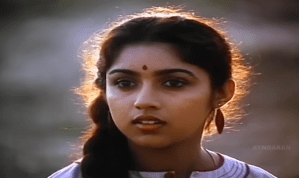
There is a moment in the movie, a top-angle shot where Divya, played by a luminous Revathi, sits on a terrace next to the thulasi maadam, on her wedding evening, and asks her mother a question that stops you cold. “How am I supposed to share a room with a stranger? Would you have let this happen two days ago?” It is not loud or filmy. It is soft, almost like she is talking to herself. But it lands like a thunderbolt. At his sharpest, Mani transforms a single line into a mirror for every Tamil girl who has ever felt the weight of an arranged marriage. Nearly forty years later, Mouna Ragam still feels like a punch to the gut, a movie that is as much about love as it is about fighting for your own space.
The film starts in Divya’s room, plastered with childhood photos, real ones of Revathi, not some art department trick. It is a small touch, but it pulls you in, makes you feel like you are flipping through her family album. Then comes the morning chaos. Divya begging for bed coffee, her mother scolding her to shower first because “Appa will get mad.” It is so 1980s Tamil Nadu, so real, you can almost smell the filter kaapi and whatever is cooking on their stove. Mani does not waste time with big hero entries or over-the-top drama. He gives us a home, a family, a girl who is mischievous but rooted.
And that is the thing about Mouna Ragam. It is different because it dares to ask questions. Divya is not just saying no to Chandrakumar(Mohan), the decent-and-mellow guy her parents pick. She is saying no to the whole idea that a girl’s life gets decided in one evening. When she tells Chandrakumar, “Please reject me, I will not be a good wife”, and he just smiles and says he likes her, you see her panic. Her family is thrilled, her father slaps her when she fights back, her mother guilt-trips her with a heart-attack sob story. It is all so familiar, so suffocating. Mani does not judge. He shows it like it is, and that is what makes it hit home.
But here is where he flips the script. Mani refuses to turn this into a sob story. It is a love story, just not the kind we are used to. Chandrakumar is not your typical hero. He sleeps on a mattress on the floor, reads Tell Me Why books, listens to Vivaldi on vinyl and respects Divya’s no when she pushes him away on their first night. “It feels like a caterpillar crawling on me”, she snaps when he touches her hand, and he backs off, no ego bruised.
Then comes the flashback, Divya’s past with Manohar(Karthik), the rebel who steals her heart. He is all fire and charm, beating up a politician’s son, winking at her after she bails him out, parking his bike in front of a Pallavan bus just to mess with her. It is the kind of energy Mani later gave Surya in Aayitha Ezhuthu, but when Manohar gets shot running to marry her, it is not just tragedy. It is the reason Divya is so broken. Mani does not milk it with slow-mo tears. He lets the pain sit there, real and raw.
Back in Delhi, the film turns into this beautiful push and pull. Their Delhi house, with its wooden vibe and funky rolling staircase, feels like a Mani trademark, cozy yet cool, a space where two strangers slowly figure each other out. Chandrakumar takes Divya to see the Taj Mahal, and instead of some big dance number, we get Panivizhum Iravu, Ilaiyaraaja’s magic weaving through shots of college kids(!!) dancing while Divya and Chandrakumar sit by a campfire, the Taj peeking through trees. It is not in-your-face romantic. It is gentle, like they are both scared to admit what is growing. P.C.Sreeram’s camera makes it look like a painting, and you can’t help but think Mani read that Aadhavan’s shortstory, Taj Mahalil Oru Pournami Iravu, because the mood’s so similar..
P.C is the guy behind the lens. He paints it alive. Delhi streets, the Taj Mahal’s outline, they are like a quiet friend in the story, all warm glows and soft edges that carry Divya’s tug-of-war inside. He grabs the small stuff, a tiny Tamil Nadu bedroom, that Delhi house, and makes it feel full of life, light hitting just right. Every shot is holding something back, waiting. Mani leans on him for a reason. PC does not flex, he shows you what is there, a world where love takes its own sweet time.
In addition to delivering a smash hit album, Ilaiyaraaja is the one giving Divya and Manohar their own beating heart. For Divya, it is this tender restless theme, Manohar’s music is all heat. His music peaks in that crazy symphonic rush when he tries to outrun the police, their bullets flying as he races to reach her, horns and strings smashing like his life is slipping away. And it is. Raaja gets them, wild for Manohar’s rush, gentle for Divya’s hurt, every note theirs alone.
When Chandrakumar is left bloodied by union goons, Divya rushes him to the hospital. And when the hospital receptionist asks her who she is, the answer escapes her before she can stop it, “I am his wife.” It is not a plot twist, it is the moment she finally sees him. By the time she’s tearing up divorce papers at the railway station, yelling, “I love you,” and he’s chasing the train, pulling the chain to carry her off, you’re cheering because it’s real. Mani takes these two people, stuck together by fate, and makes you believe they choose each other.
In Mani’s telling of this love story, everything collides with a raw, unfiltered energy. PC’s backlit angles, soft yet sharp, the cast, Revathi, Mohan, Karthik, living every second, those costumes, flowing saris and simple shirts that look natural but are not, the production design making every room a home, Raaja’s music tearing through your chest, the themes of love and fight weaving it tight. Mani makes it feel so easy, so human, like you could touch it, but you cannot. Meticulously crafted yet just beyond grasp, this is the essence of big-screen magic. It’s not all that perfect, but pulsating with life, it unsettles, and that is its power.
Mani had made four films before, sure, but this quiet movie, with its understated title hiding its seismic impact, put him on the map as an artist you could not ignore. Drawing from Mahendran’s Nenjathai Killathe, it felt like a new arrival, blending sharp storytelling with a visual style that sets the stage for everything he would do next, from Roja to Iruvar to OK Kanmani. He showed Tamil cinema a new way. Dialogues that sound like real people talking, not heroes shouting. A heroine who is not a doormat or a goddess, just a girl figuring things out. A hero who is strong because he waits.
Mouna Ragam is not flashy, it is deep. It is not about love at first sight but about love that resists, questions, and ultimately chooses. When Divya, sitting in the front seat of their Premier Padmini, turns to Chandrakumar and asks for a divorce in a calm, firm, and an unsentimental tone, the film delivers its most radical moment. It is not a plea, not an outburst, just an unshaken declaration of what she wants. In that instant, Tamil cinema’s idea of marriage shudders. This is Mani Ratnam making his mark, not with noise, but with certainty. He changed the game. And decades later, we are still playing by his rules.


 kirukkal.com