-
Korvai – Fiction
the boy in the shop takes the folded sari in both hands and throws it open and six yards of it leap into the air between us and hang there and before it lands there is time for everything because silk takes one second to remember it is heavier than the air it was pretending to be and in that one second the whole street I was born on leaps up with it the silk street of Kanchi where the pit looms go clack clack under the floors like the heart of the earth refusing to stop where the warp dries the length of the lane so you spend your whole childhood walking through a forest of stretched gold where the dye runs in the gutters arakku red and storm blue and the green of a parrot making up its mind and over all of it the gopurams of a thousand temples standing as they have stood since the Pallava kings wore this same Kanchi pattu against their skins since the gods themselves were measured for it because everyone on this street knows you do not put cotton on a god and here I am a grown man in a good Madras shirt with a chequebook in my pocket and my daughter’s wedding three weeks off crawled back to the one street I swore on my pride I had finished with to buy her the finest thing these hands can make and the boy says this one sir the masterpiece the famous hands and it is the storm colour the exact grey blue of the sky over the Vegavathi in the hour it cannot decide whether to drown the town or spare it and the border is a red gone almost black and where the two colours meet runs that hard clean impossible line the korvai the interlock where ten thousand patient times the weaver crossed one thread of blood through one thread of storm and locked them each to each so that you may take the border of a true Kanchi sari in your fist and pull till the muscles stand out in your arm and it will not part it will not give it holds the tightest at the very seam where border and body were severed into being it clings the hardest in the one place it is most divided and no one alive can throw a korvai alone it takes two at one loom passing the single shuttle between them and I knew a girl who could make that line her name was Vimala which is to say the one without a stain the flawless one and this whole street swore her korvai was so fine you could run a wet needle down it and never find the join and I knew her cloth better than the street knew it I graded her saris in my father’s warehouse from the time I was tall enough to reach the table and in all those years I never met one dropped thread in anything her loom sent out and I loved her the way a coward loves the thing he has already decided he is not allowed I loved her across the lane across the loom across the difference my family kept clearing its throat over weaver’s daughter we are not weavers we are exporters we are modern men and I told myself she did not care one grain of rice for me she who never once lifted her eyes from the shuttle when I passed who carried her flowers to Kamakshi at every dawn and Ekambareswarar at every dusk and seemed sealed inside the cloth the way the goddess of this town once sealed herself inside her own devotion when the river rose to take the little lingam of wet sand she had shaped with her hands and Parvati did not run she put her two arms around the dissolving god and pressed him to her and let the whole flood break across her back rather than let it carry him off and I decided Vimala was sealed like that a folded cloth a woman who had chosen her gods and her gold over a man in a good shirt and so when the match was finally spoken and my mother sniffed and sent quiet word down the lane that we would be looking elsewhere I let her I let it go I told myself I was setting the girl free I told myself I had read her to the last thread and there was besides the flaw because understand I am a connoisseur I have my father’s eye and his father’s before him and every sari of hers that ever entered our house my mother’s festival silks my sisters’ bridal silks came with one wrong thread one broken thread of gold near the border sitting there in all that flawlessness and I hunted for it every time and found it every time and felt a small mean private gladness there it is I would tell myself even those hands tire somewhere even that attention must sleep she is not perfect after all there is the proof a fault in the weave a fault in the woman and a man may set down what is not perfect a man may carry his pride to the station and take the slow train to Madras and marry a district collector’s soft niece and build forty unbothered years and never once lie awake and the silk is still in the air it is still coming down and the one broken thread catches the shop light near the border the way it always did and I open my mouth to perform the only thing I have known how to say for forty years in every silk shop from Madras to here the single flaw you see madam if one looks closely and the old man at the back of the shop her brother gone grey says without lifting his head her thread does not break sir it broke only in the cloths that went up your stairs and she began this one the week the street heard your daughter’s name and there is a question lying on the counter between us that a braver man would pick up and I do not pick it up and his head stays down and my hand is still held out toward the falling border and the silk is still coming down slow as a verdict and I am counting now I am counting the threads in from the edge as though forty years too late I am learning to read and the warehouse and the house are meeting in me at last the hundred clean bales and the one bent thread that waited on every silk that ever crossed our threshold and it comes back to me the one sari they sent back unopened the spring I left the finest thing she ever wove the whole street said the one and only time she carried the broken thread away from the safe border and set it in the very centre of the cloth in the place that lies over a heart and nobody could fathom why a master would ruin her best work with a fault and I never saw it because it came to our house in red paper and my mother sent it back without cutting the string and I stood in the hall and let her and now the silk lands it touches the wood and I understand in the last splinter of the second that a woman’s heart is an ocean of secrets and no eye is famous enough to sound it no shop light good enough and the knowing of a woman was never the knowing of her secrets it is the knowing that they are there and the leaning in close anyway for the length of a life and the men this street buries happy are the men who understood that early and stayed and she never asked me to sound her she asked so much less she went down her own deep herself year after year and brought up the one thread she could spare because a weaver’s daughter could send nothing up our stairs not a word not a look nothing but cloth so she sent cloth and laid her heart along the border where I of all the men on this earth could not miss it and I did not miss it I found it every time I held it to the light with the famous eye and I marked it down and of her whole ocean I was shown this one gold thing over and over for forty years and had I understood only that much only the fact of the deep I would have crossed the lane at nineteen and spent my one life leaning close to a woman I would never finish and that would have been the life and instead I stand in a shop with a chequebook three weeks before a wedding holding my hand out for the last letter she will ever send me and I the man with the famous eye the reader of weave and woman I looked straight at it and I called it a flaw
-
all that is – 7: things that do not ask for thanks

listen to this chapter now on youtube!
The past is a foreign country, they do things differently there.
And there, in that soot-stained, fever-sweated, eternally queueing republic called India, land of ancient gods and ration coupons, of overpromised futures and undercooked dreams, what they did, what they perfected, what they made into religion, art, torture, and lullaby, was wait. Children waited. He waited, in Madras, where the red oxide floor grew cold under your buttocks as you sat pretending to study while mentally counting down the days to the new Lion Comics release. And across the subcontinent, through Bombay gutters and Calcutta rooftops, across the sun-bleached terraces of Hyderabad and the fog-sour lanes of Delhi 6, past the cassava fields of Palakkad and the biscuit factories of Punjab, into the railway colonies of Jolarpet, through the slums of Dharavi and the stitched-together dreams of Shivajinagar, they waited.
In Jaipur, children lined the platform railings and waited to board the Palace on Wheels, the maharajas’ old saloon cars reborn as a hotel on rails, holding imaginary tickets for a journey they could not afford. In Bombay, the boy with the torn banyan who hawked postcards outside VT station waited in the monsoon for the white man in the black Ambassador car to lower his window and photograph his face into history. In a housing board colony in Secunderabad, kids waited for the ‘foreign-return’ uncle to visit with a suitcase full of American things that smelled like a different air. In Kerala, children waited for remittances rather than letters: for blue aerogrammes from Dubai, for money orders that came once every two months and brought with them the permission to eat chicken. In Madurai, the girl with oiled plaits waited for her mother to return from the firecracker godown with ten rupees and a hug. In Ludhiana, the boy whose father guarded borders waited for the telegram that did not come, which meant another day his father had not died. In Delhi, they waited through curfews and sirens and slogans. In Kashmir, they waited for school to reopen after gunfire. In Bangalore, the boy with glasses waited for the MS-DOS course to begin, although he did not know what MS or DOS was. In a Tamil fishing village, the girl who had never owned a clock waited for high tide the way others waited for God.
Children of teachers waited for promotions; children of priests waited for miracles; children of mill workers waited for shoes with tongues. Rich children waited in bungalows for parents who were always flying somewhere important. Poor children waited in school gates for parents who lifted cement sacks and dropped their spines into the road. They waited outside textile mills. They waited in the backs of temples. They waited inside autorickshaws where their mothers stitched blouse hooks on foot-pedaled machines. They waited by firewood. By sugarcane juice. By dogs in heat. They waited for someone to come pick them up who often never did. Some waited outside casting studios for a chance to cry on camera for twenty-five rupees and half a samosa. Some waited outside cricket stadiums with no tickets and Sachin-sized dreams. Some waited outside tailoring shops with torn receipts and newly shrunken hope. Some waited outside doors that had NO VACANCY written in chalk: hotels, hostels, hospitals, humans.
Children waited for siblings to be born, then for them to grow up and stop being annoying. They waited for puberty with a panic that looked like hope. They waited for their underwear to be laundered, their notebooks to be returned, their names to be called. They waited for cricket bats they couldn’t afford, for tap water that arrived like a trickle of approval, for power cuts to end, for girls to notice, for teachers to be absent. They waited for fever to rise, for fevers to fall. They waited to ask questions, and when they were old enough, they waited to be allowed to speak. They waited for fathers to stop shouting, for mothers to stop crying, for god to show up on Sundays and festivals and test days and marriage proposals and movie releases. They waited for letters from Singapore, from Canada, from Muscat, from the boy in the next class. They waited for things they didn’t know they were allowed to want: new slippers, new friends, new names.
They waited with class, with caste, with calories. With one textbook shared among three. With mosquito bites blooming into maps. With torn underwear and 80-mark exams and a stomach too empty to hold ambition. Waiting was their condition, the default mode of subcontinental childhood. And their waiting, though mocked by time, made them philosophers, liars, dreamers, poets. Because in waiting, they built entire civilizations in their heads: imaginary worlds, imaginary friends, imaginary candies that never ran out. They waited until waiting became an inheritance. Until they became parents who taught their children how to wait. And in this billion-person choreography of suspended motion, in this circus of delayed everything, no one waited harder, longer, more lovingly, more pointlessly, more feverishly than the child who waited, with fingernails bitten and breath half-held, for a five-rupee comic book named Ulaga Poril Archie, Archie in the World War, to descend from the rain and justify all the days that had come before.
But some forms of waiting, he would later learn, were assigned by no government, no parent, no railway platform. Some were chosen, self-inflicted, glorious. He waited for comics. Tamil comics: translated, transplanted, de-nationalized epics of alien wars and detective duels, machine men and morally ambiguous cowboys, all draped in Tamil like imported chocolates rewrapped in banana leaf. It began (though this is not that story) on a third- or fourth-grade morning, years before the Wednesday in question, when his mother, saree rustling and office-bound, took him by the hand and led him through a shortcut lane that was both map and mythology, the most honest stretch of Madras he would ever walk.
The walk from Vellala Street to Miller’s Road was, in official terms, no more than 500 steps. It was through a small lane that was called Miller’s Lane. On a good day, if you were late, it took two minutes. If you weren’t, it took an hour. It was a subcontinental artery, paved in spilt rice and spit betel. This was the unspectacular daily India, the kind that never made it into tourist maps or national slogans, but lived forever in your clothes. The houses were pressed close together, double-storied, angular, painted in unpredictable pastels that had sun-bleached into oddities: guava pink, paaya brown, mosquito-coil green. Some doors had brass knockers shaped like lions; others had none at all, just children’s handprints in white paint from Ayudha Puja three years ago.
Half the population was Tamil, the other half Telugu, with floating units of Malayalam-speaking tailors and the Hindi mother-in-law relocated by marriage. Caste announced itself silently: on foreheads marked in vibhuti ash or vertical namams, on the way women tucked their saree ends (over shoulder? around waist?), and in the quality of the doormat. You could see shirtless men in striped lungis yawning on their thresholds, reading Dina Thanthi upside-down, scratching themselves like it was religion. Grandmothers with arms like broomsticks and cheeks sunk by the gossip of seventy years sat on plastic chairs beside steel vessels, calling out prices of coriander before the vendor even arrived. Women wore large bindis that could be mistaken for an extra eye; they returned from the butcher’s with live chickens wrapped in newspaper, their beaks peeking out like political dissent.
There was a man fixing a punctured tyre using fire and spit. A boy running with one chappal, the other sacrificed to a puddle. There was always, always, a Lambretta scooter that wouldn’t start, being pushed by a thin man in a thick helmet. Leaking pipes ran like open veins along walls, where moss grew like secret gods. The TVs were always on, black-and-white, volume maxed out; somewhere a radio cut through them, Vividh Bharati announcing, Innikki paattu kekkuravanga: Ramasamy from Rajapalayam, song requested: ‘Ilaya Nila’ by SPB, and you never saw who listened, but the song floated out anyway, weaving through drying sarees like radio incense. A transistor sat on a step, playing cricket commentary from a voice that sounded half-dead and half-bored.
There were smells: boiling rice, burnt milk, incense, socks, diesel, cow dung, arappu powder, gossip. There were people who had jobs (teachers, clerks, bus conductors), and people who did not but looked like they might someday (failed typists, overqualified mechanics, ex-students of life). There were boys with nothing to do and lungs full of Charminar smoke, standing behind walls pretending to look at the sky. There were tailor shops the size of prayer rooms, where a single man stitched a blouse while chewing on thread and heartbreak. And there were children. Everywhere. Girls carrying water in silver pots they were too small for. Boys with torn shorts, their pockets sagging from marbles. He was one of them. But also not.
Because that day, the walk was an initiation. Into the country. Into the city. Into the secret universe where small lanes told bigger stories than highways. He hated it at first: the narrowness, the smells, the open intimacy of it. Vellala Street had seemed like the world until then: broad, familiar, mapped by routine. This Miller’s lane was another country. He was in the third grade. A child. The kind that did not cross from one end of the world to the other on his own. But that day, his mother handed him a book at the end of the lane. Got on her bus. And vanished into her workday. And he, book in hand, walked home alone for the first time, past pipe leaks and transistor songs, past other people’s porches and personal gods, past everything that makes India too large to explain but somehow small enough to carry in your chest forever. In those days, parents did not call to check if you had reached home. They believed you would. And, most likely, you always did.
And at the other end of Miller’s Lane, Miller’s Road. A name, like many others in Madras, left behind by the British like a half-eaten tin of Quality Street on a summer afternoon: familiar, unmelting, and sticky in all the wrong places. Miller’s Road, so named for no visible mill (there were none, unless you counted gossip as grain), was one of those leftover colonial labels the city forgot to peel off. No one remembered the Miller, if there ever was one. Some said he baked, some said he ran a dispensary, some said he was just the first white man to fall off a cycle on that stretch and earn immortality by embarrassment. But the name stuck, long after the Empire left, long after the bakery became a biryani kadai, and long after R. N. Mudaliar built South India’s first film studio there, as if cinema had always been waiting to replace the crown. Miller’s Road on that day gave him his first comic. A Lion Comics issue. Tamil letters and English frames. Full surrender. After that, the virus took hold. He read everything. And by everything we do not mean casually skimmed or “went through,” but read, the way prisoners read cracks in the wall. He read each book fifty times minimum, two hundred times not unusual, and certain rare, divinely anointed issues (Athisaya Theevil Archie, Steel Claw vs Dr. Shock) he read three hundred times or more, to the point that he could narrate panel sequences backward while brushing his teeth, as though possessed. Comics were planets. And he became a small, fevered astronaut, launching every week from the launchpad of that Miller’s Road shop whose name he forgot but whose layout, smell, and bundle-string haunt him still.
But that story, the one about the comic craze, about the paper-stapled religion of his youth, deserves its own scripture. Still, a footnote must be offered here, for context, for confession. He believed, with the arrogance available only to lonely geniuses and Tamil middle-schoolers, that no one else read comics like he did. Krishnaveni’s son Ravi did. But Ravi was a blunt-force reader: if it didn’t have an explosion in the first three pages, it was deemed useless, sentimental, or worse, girly. But he, he was different. He read the speech bubbles. He read the asides. He read the editorial footnotes in the back. He read even the romance comics, those soft-focus Tamil translations with names like Minnal Kathal and Mayakkam Sirippu, where men in bell-bottoms with sideburns rescued women from kidnappers who mostly spoke in ellipses.

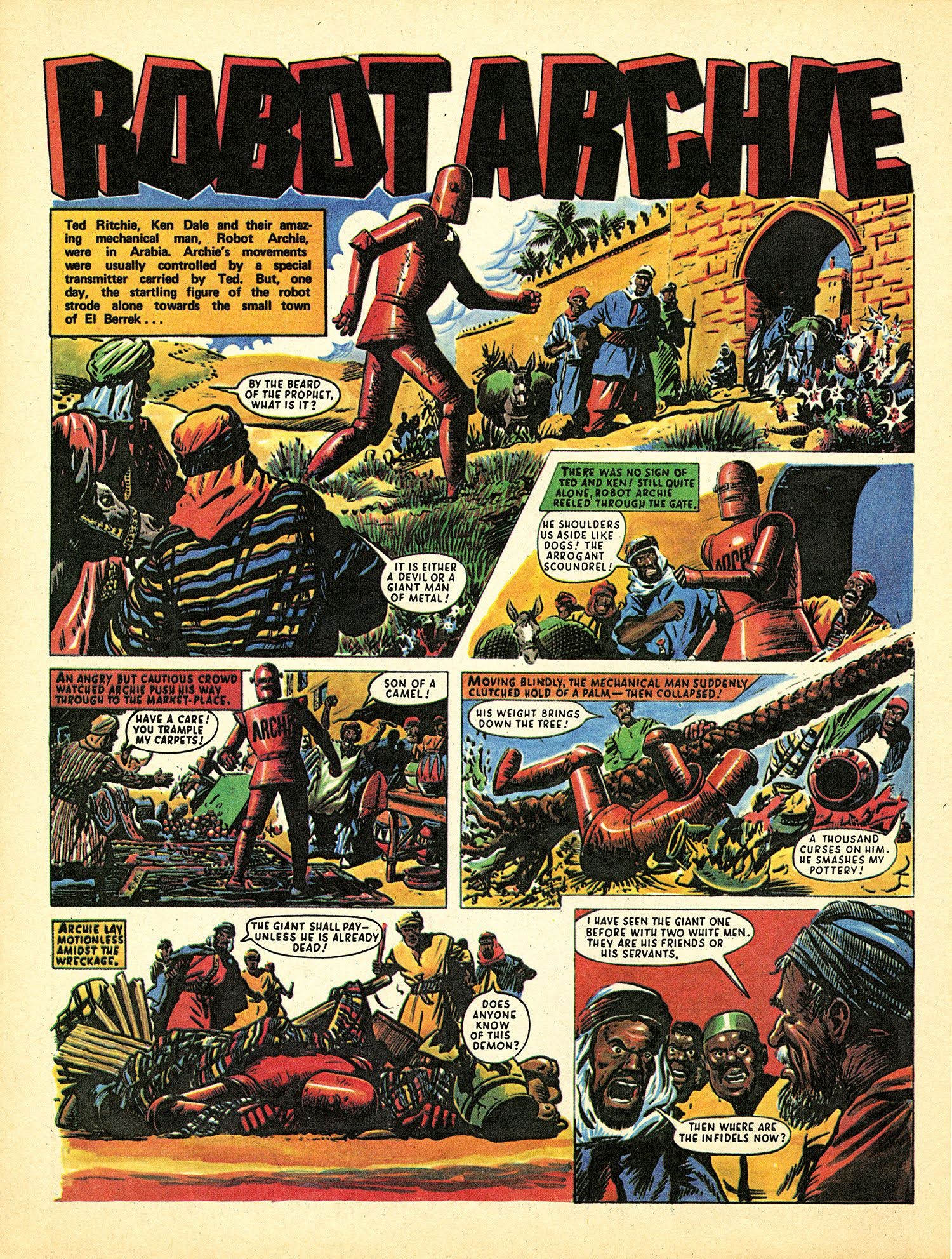
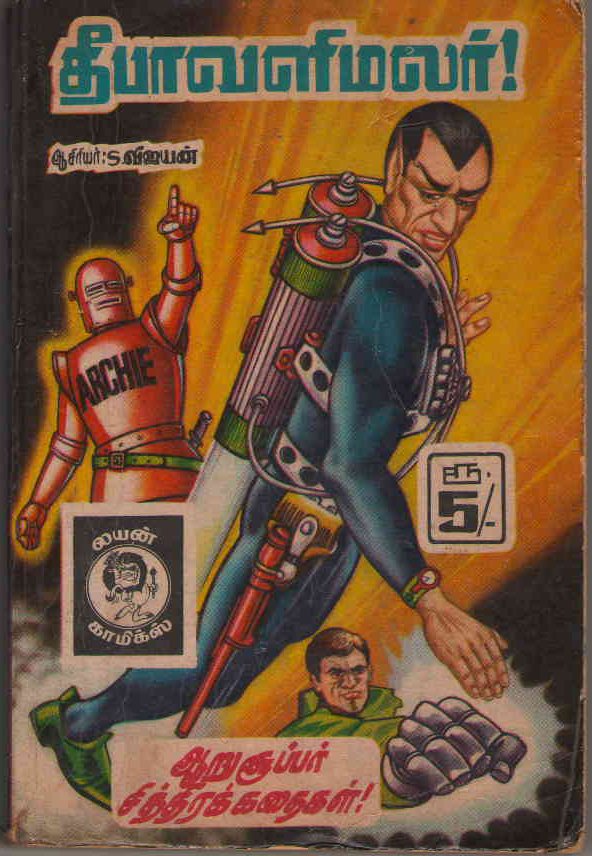
It was, undeniably, the golden age of Tamil comics. Lion, Muthu, and Rani, like some accidental holy trinity, were all at their aesthetic peak. A typical Lion or Muthu comic (bold fonts, glossy-ish cover, and a plot with at least one international smuggler) cost anywhere from 2.25 to 3 rupees. Rani Comics, their cheaper cousin, had a flatter form factor, slightly wider, slightly taller, often printed with cheaper ink that smelled like wet slippers when new, and cost between 1.25 and 1.75 rupees, depending on the story, the season, and possibly the moon. But the anniversary issues, ah, the sacred, exorbitant five-rupee monsters, those were once-a-year revelations. And only two ever earned his devotion: Tex Willer in Dragon Nagaram, and this one, this prophecy, Ulaga Poril Archie. He knew the characters: Victor and Thompson, two brothers who controlled the robot. He knew Archie, the iron giant: crimson from dome to boot, riveted like a railway boiler, eyes round and lidless as torch bulbs, arms of jointed pipe that had folded rifles in half. On the cover of an older issue he swung from a jungle vine over a river of open-mouthed hippos, entirely unbothered, a machine on holiday. The half-slapstick, half-destroyer of evil. He didn’t know that Archie was stolen (sorry, adapted) from a foreign pulp universe. None of them did. They believed the writers of Lion Comics were geniuses, Madras-based demigods who conjured robots and Nazis and global wars from an office on Miller’s Road itself. And for that year, which was 1988, that month, that week, that Wednesday, the only thing more urgent than Archie’s arrival in World War II was his arrival on Miller’s Road, tied to the newspaper rack, hanging like divine laundry between two rusting bulldog clips.
The final thirty days became a kind of religious observance, marked on no calendar, carved into the soft tissue of his brain. August slipped past like a pickpocket, taking with it his ability to concentrate on anything that did not involve Archie’s arrival in Ulaga Poril Archie, the upcoming five-rupee magnum opus that had, in his mind, already won all known literary awards, including a Booker, a Bharat Ratna, and possibly a Param Vir Chakra.
Midterms came and went in a blur of neglected margins. Independence Day arrived, accompanied by tricolour sugar candy, bleary classroom speeches, and the first telecast of “Mile Sur Mera Tumhara” on Doordarshan, a choir of Indian legends (Kamal Haasan, Balamuralikrishna, Kapil Dev, Sunil Gavaskar, and more) singing of unity in fourteen languages, veins pulsing with patriotic harmony. For most of his classmates, it was goosebumps and pride; for him? Radio static. The merging notes reached him as mechanical hum. The montage of India’s diversities played, and he saw only the moment Archie would drop into the battlefield. While India was humming a song about unity, he was humming a different tune: the clank-clank of an iron robot, waiting his turn. He was as patriotic as the next boy in his row. He simply had more pressing matters: Archie, the robot, was about to enter World War II, and he still didn’t know whether Victor or Thompson would be holding the controller, or if the Nazis would bring tanks, planes, or dinosaurs. (Because in Tamil comics, that was always on the table.)

He began a countdown. A private one, conducted in the ritualistic silence of true devotion. He counted the pages of old comics, rereading every Archie appearance in the Lion back-catalogue with forensic intensity. He timed himself: how fast he could read, how fast he could feel. He acted out the fight scenes in his bathroom mirror with his toothbrush as a weapon. He practiced laughing like Archie. He considered learning German, in case Nazis spoke in the new issue. The week before release, he was a wreck. A ghost in the school building. He would sit in class, mouth slightly open, staring past the teacher, past the blackboard, into some imagined battlefield where Archie was probably making a joke while drop-kicking a tank. His classmates learned long division. He mentally sketched blueprints for a robot’s spinal column. His mother asked him to buy green chilies; he came back with peppermints and no explanation. He refused to eat anything spicy, for fear it might interfere with his comic-focussed dreaming. On the final three nights, he began to hallucinate plot twists in his sleep: dreaming of cover art he had never seen, hearing the sound of pages flipping even when no book was in his hand. He walked past the Miller’s Road shop twice daily, trying to make eye contact with the newspaper man as if to say, You and I both know what’s about to happen.
In this countdown, the rest of India faded. It didn’t matter what Parliament did, what cinema released, what uncle died. The only relevant truth was this: a robot with a square jaw and an iron body was about to enter history, and he had to be there, front row, wet shirt or not, five rupees in hand, moral compass uncalibrated but eyes wide open.
The storm had been promised on Sunday, like a telegram from the gods delayed in transit. It was coming, they said (yes, yes, surely coming) on Monday morning, first light, direct from the Bay of Bengal. Then they said afternoon. Then they said perhaps Tuesday. And on Tuesday, they said Wednesday. By which time, Madras, having been stood up by weather before, had already begun its long, practiced wait.
This was waiting of the chaotic civic kind, chaotic because it was democratic. The streets were full of it. Bus conductors waited with white towels wrapped around their necks like battle sashes, staring into the distance where no bus came. Flower-sellers waited for the day’s quota of kanakambaram that never arrived. Newspaper agents paced inside their shuttered stalls, wondering if the Dinamani van had broken down in Guindy. Milk packets had not made their usual appearance at dawn; thereby, husbands waited for tea, wives waited to shout at husbands, children waited to be ignored. The whole city leaned forward, a thousand chins jutting into a grey morning thick with suspense. Was it coming or wasn’t it? The storm, the real storm, had become indistinguishable from the idea of the storm.
Even the Meteorological Department, speaking from their whitewashed colonial building near Nungambakkam in the tones of state-sponsored uncertainty, was waiting for confirmation from the gods. The radio dutifully relayed their mood swings. “Heavy rains likely,” it said at 6:30. “Storm will cross Pondicherry coast,” it said at 7. “Likely to hit Madras by evening,” it announced at 7:30, sounding hopeful but not fully committed. By then, Vividh Bharati’s rain-wet airwaves carried the final news that mattered: All schools across the Madras Corporation limits were closed, effective immediately.
And so he was not faking a headache this time. He was granted a real, certified, all-India-honoured holiday. The cyclone (nameless, because Indian storms then came without brand labels) had done what no fever could: won him a sanctioned absence from school. But the holiday came with a price.
He still needed to get the comic book.
And now the comic book was more than an object. It was a quest. It was a grail. It was, by all logic and urban geography, unreachable.
Because this was a full-blown storm, lashing sideways. Madras storms did not creep in. They pounced. Trees leaned like drunkards. Drainage systems, which under best conditions operated on blind faith, now went into full collapse. The main roads of Purasawalkam bloated like puffed rice. Side roads became tributaries of despair. And the thin, conspiratorial lanes, the ones he knew by smell and shortcut, became impossible. Miller’s Lane, which yesterday held the promise of comic-book salvation, now hissed with frogs and eddied with sludge.
Still, the day had to be lived. His father, unimpressed by both weather gods and radio forecasts, left for his office at 7:30 with his usual brisk efficiency, carrying two tiffin boxes, one folded umbrella, and zero hesitation. His mother, who worked at the DMS (Director of Medical Services), was less convinced. She paced in a green saree with kozhukattai dough sticking to her fingers, muttering about Sankatahara Chaturthi, about whether buses would run, about whether someone in her office would step into the meeting without her and then she’d never be able to speak. All while she rolled and steamed the kozhukattais, small dumplings for Ganesha who, this month at least, came uninvited with thunder on his heels.
There was no question of staying home alone. He and Gayathri were bundled off, armed with umbrellas and lunch boxes, to their Ammamma’s house five doors away on the same street, a place that functioned like a maternal embassy during weather emergencies. Ammamma, the matriarch of the red house with maroon oxide floors, did not sit on any throne. She cooked, she wiped, she rocked, she scolded, she prayed. She fed people in shifting combinations. Her husband, his Thatha, was not keeping well that week and sat wrapped in a veshti and a shawl, sipping boiled water and occasionally sighing.
Her son, his Mama, worked for Britannia and had already left, one pant leg rolled up to avoid the water. His Mami, who worked in Shastri Bhavan, was contemplating whether to risk the bus or call in sick and burn one of her sacred casual leaves. Their daughter Priya had just been born and was asleep in a swing. Kaushik, their boy, ran around half-dressed and giggling, a permanent mischief glint in his eye.
Gayathri, clutching her own lunch box with drama, arrived slightly wetter than necessary and blamed him for not sharing umbrella space. She immediately found a dry corner and began her elaborate unpacking process. He, however, had no such clarity. Because the problem had only gotten bigger.
He still needed five rupees.
And he still needed someone to take him through the flood-swallowed streets, through the slippery laneways, past the leaking awnings and broken flowerpots, all the way to the small shop opposite the Lion Comics office, where the latest book (Ulaga Poril Archie, no less) would land, or had perhaps already landed.
He knew that by four o’clock, it would be gone. The shopkeeper would sell out. Ravi would get his copy. Others would queue and collect. The world would move on. And he, who had waited for this day like a monk waits for moksha, would have nothing.
Ammamma called him in for hot kanji and pickle. But he sat cross-legged by the window, watching the rain blur the rooftops, trying to come up with a plan.
He had the waiting.
Now he needed the miracle.
Since his mother had, in a rare pre-dawn burst of administrative foresight, already packed the steel tiffin with lemon rice and curd rice wrapped in banana leaf, his Ammamma had, for once, one less thing to cook that afternoon. Not that she’d let her kitchen rest. The stove still hissed under a vessel of sambar. The coffee filter still breathed its last decoction. Gayathri was curled up somewhere near the radio, half-listening to a story about a woman who had murdered her husband with a pressure cooker. Thatha, who had been sick for a week and refused to see any doctor who charged more than five rupees, was asleep under a wool blanket too thick for Madras.
And he, who by now had walked the length of the hallway twice, thrice, maybe fifteen times, Archie comic clutched like a relic in his palm, had only one thought: how to leave. How to exit. How to cut through the walls and storm and well-meaning elders and find his way to the comic book shop on Miller’s Road before the world’s greatest book vanished into somebody else’s plastic bag.
Outside, the storm had taken its position: a full-lunged, large-hearted cyclone, howling like some forgotten Rakshasa newly exiled from the Bay of Bengal. The teasing kind of rain, the kind that half-dried the clothes on the line and ran away, had been dismissed for the season. The streets had become tributaries. The thin lane between the porch and the main gate had disappeared under a brown, surging stream that looked capable of eating chappals, small children, and the Tamil Nadu Electricity Board whole.
He had tried opening the door once, just to try. Just to test. Just to smell the rain-soaked world that now held his book hostage. A gust of water slapped him across the face. And in that exact moment, he saw Ravi.
Ravi from the opposite house. Ravi who had a TV with colour. Ravi who drank Complan with milk even when he wasn’t sick. Ravi who had, according to all rumours and at least two confirmed sightings, already placed a special request with the newsstand uncle to reserve Ulaga Poril Archie under his name.
“Ravi!” he yelled.
No response. Ravi walked on, hunched into his father’s giant raincoat, disappearing into the watery veil like a man carrying state secrets.
That was it. The book would be gone. The first batch would be sold out. He’d return tomorrow and all they’d have would be Tinkle Double Digest and something about Phantom stealing a diamond in Bengali. He could cry.
And perhaps he did. Perhaps, a little.
At around 12:15 p.m., after Thatha had been fed rice mashed into divine softness with a hint of rasam, after Gayathri had fallen asleep with her legs hanging off the diwan, after Priya had screamed and been rocked and screamed again, and after Kaushik had whacked the wall with his yellow plastic cricket bat thinking it was Imran Khan’s fastest ball, he approached Ammamma again.
She was wiping down the gas stove. The same stove that had cooked three meals a day for thirty years. The same stove under which a gecko family now resided, uninvited but tolerated.
“Ammamma,” he said. “Can I have five rupees?”
“Five rupees for what, da?” she asked, without turning.
“For the next comic book,” he said, lifting up the time-traveling Archie like it was proof of divine calling. “This is the last part. The robot went to find the emperor. I need the next part.”
“I’ll ask your amma tomorrow. She said not to give you money for comics anymore. You’re buying too much.”
Too much? Too much? What was too much? Could someone ever have too much oxygen? Too much friendship? Too much Archie?
He sat. He stood. He walked. He paced.
Kaushik came by and said, “Bow?” Which meant ball. But he couldn’t. He just couldn’t. His life was in ruins. He was pacing the perimeter of a crumbling empire.
After lunch, eaten in the spirit of a last meal though it was probably the best rasam he’d had that week, he cornered her again.
“I need the book now, Ammamma. If I don’t get it today, it will be gone. Gone!”
And to his own horror, tears began. Fat, childish tears, unjustified by war or famine, wholly earned by a delayed robot.
Ammamma, mid-wipe, turned. Her eyes softened. Her hands, forever smelling of turmeric and starch, cupped his cheek.
“Crying for this? Come. Eat your lunch. I’ll give you five rupees.”
Salvation came through Ammamma’s infinite and elastic love. The currency of grandmothers. Five rupees. Paper, ink, national tender. In that moment, the key to life itself.
One problem solved. Now for the storm.
He did not know it yet, but history would record this as the moment when the siege of Waiting finally crumbled. Somewhere, the Mahatma had spun his last charkha. Because now, after thirty straight days of counting backwards from hope to desperation, he was done. The waiting was over.
No more circling calendars. No more dreaming under desks. No more biting the ends of Natraj HP Pencils while imagining the robot flying across a double-spread page and punching the villain into an onomatopoeic explosion. He had waited long enough. Too long. Longer than Rama had waited to cross the ocean. Longer than Kamal Haasan had waited to win a National Award. And now that he had five rupees in hand (an uncreased Ashokan lion staring up at him like it knew this was going to be spent on sin), he knew what had to be done.
“I’ll go now, Ammamma,” he said, still trying to keep his voice within the limits of fifth-standard civility. “I’ll go and come back in five minutes.”
She paused in the act of wringing her dishcloth dry. “Go where?”
“To get the book. It must have come. It’s Wednesday.”
“Which shop?”
“Miller’s Road.”
A gasp. An audible, grandmotherly intake of moral oxygen. “Miller’s Road! In this weather?”
“Yes, just the small sandhu. I’ll jump and go.”
“Sandhu? That Miller’s lane is a river now. Even the cat didn’t cross it this morning.”

road to archie He looked at her blankly. The words were sounds. They did not mean what they meant. He could not hear the word wait anymore. The word had become a disease. It was a fog in his ears. A tremor in his knees. What is five rupees if not for this? What is a Wednesday if not for this?
“I’ll go and come, Ammamma. I swear. I’ll jump, I won’t fall.”
“Run? Ayyo, your amma will kill me. She said don’t let him out at any cost.”
“What if she comes back late? The book will be sold out by then!”
That last phrase, sold out, was the matchstick. To not own Ulaga Poril Archie, to never touch the pages that Ravi would touch first, to not be part of the sacred circle of the first readers, the Chosen Few: this was unthinkable. He had to go. The robot had to be summoned.
“Okay okay,” she said, after what must have been a century of hesitation. “Let me make coffee for Thatha. Then I’ll come with you.”
What?
She said it as if it were nothing. As if gods came down in the rain to walk with children for comics every other Wednesday. As if the laws of the land, the warnings of the weatherman, the instructions of his mother, and the ancient taboos about going through the sandhu during a cyclone didn’t apply to Ammammas. Maybe they didn’t.
She folded the end of her saree back over her shoulder. Straightened it with that fierce casualness that only women who had raised generations possessed. Ladled perfect dark filter decoction into boiling milk. Added the exact amount of sugar, a skill like neurosurgery. Poured it all into the prized steel tumbler, set aside a smaller one for him. “You also want?”
He nodded.
She passed him the half-tumbler like it was a pact.
They sipped. The storm roared. Kaushik banged the red plastic ball into the wall again and again.
She packed the umbrella (black, slightly bent at the tip, a veteran of a thousand rain-battles) under her arm. Told Thatha, who had already lain down again after lunch, “Five minutes.”
He didn’t ask where. Why would he? When did men ever ask the right questions?
She turned to him and said, “Come.”
That was it.
Come.
A word older than rain. Older than the city. A word that meant permission. A word that meant the storm had lost.
He rose.
And together, they stepped into the torrent.
She went first, umbrella tucked beneath one elbow like a third limb grown out of necessity. With one hand she held his, firm, soft, callused like the inside of an areca leaf, and with the other she measured the earth, placing each foot where it might find the least resistance. A game of hopscotch against the weather, against the grime, against the city itself. He followed, stepping exactly where she stepped, like he was tracing the path of a known constellation.
The rain hadn’t stopped, not fully. It had mellowed, yes. It had retired from its frenzy and entered a new mood, sullen and intermittent. The kind that let you walk but never let you forget it was still in charge.
Their house was the last one on the corner of the lane, the same lane that had seen births and weddings and electricity failures and summer dust storms, and now, yet again, this: flooding. As they emerged from the gate, still damp from the downpour, he noticed that the games had resumed. Across the street, Vinod and Prasanna were playing Trade Business, the low-rent, high-drama Indian cousin of Monopoly, their tokens makeshift coins, the board already soaked at one corner. Two younger girls shouted out versions of “Ice poise!”, the Indian street mutation of “I Spy,” said with defiance and domestic reinvention.
Someone called out, “Dei! Where going with party?”
He waved with his free hand. The other was still held.
They crossed the edge of the lane. On the opposite side, Meena Typing Institute was under siege. A whole lane of water had swallowed the entrance, typewriters perhaps now dreaming underwater. It was, tragically, an omen: the sandhu they had to cross next might be worse. He winced. The water might’ve retreated some, but the battle was far from over.
Balaji Musicals was still at it, flooding the street with Ilaiyaraaja’s synths and strings at full throttle, as though music, if played loudly enough, could beat back a cyclone. The grocery store stood lonely, abandoned, its green wooden shutter half-drawn like a sigh. The vegetable vendor, determined and absurd, wore a torn polythene bag on his head like it was war armour. His pushcart vegetables were wrapped in plastic sheets that gave each item a fogged anonymity. One could make out the shape of a tomato, a lady’s finger, a mutinous brinjal, all looking like captives in a rain museum.
They reached the Miller’s Lane. It had not escaped the storm’s tyranny, but it had aged into a manageable mess. The puddles had shrunk into squelches. Strategically placed stones and elevated concrete bits now became islands of salvation. Ammamma placed her foot on one, and he followed. Another stone. Another careful landing. It was a dance of evasion, learned in childhood, perfected in motherhood, passed on in grandmotherhood.
The lane spat them out onto the wider street, and now Miller’s Road stood ahead like a soaked runway. The actual bookstall wasn’t immediate. It sat a hundred feet ahead, just before the unofficial bus stop, which itself sat before the official one. The buses, those Pallavan rebels of the state transport department, never stopped where they were supposed to anyway. Then: SPLASH. An auto-rickshaw, its driver blind to their existence and deaf to civic guilt, rammed into a pothole with theatrical precision. A sheet of muddy water leapt out and hit them both on the side. He gasped. She winced. He immediately looked at his shirt. His shorts. Would the book survive this kind of return trip? He didn’t have it yet, but already he worried like a man with cargo.
Still, the mission was clear. The water could soak his knees, the auto could drown in guilt, the city could crumble. He had to get the book. The last stretch. He was ready to run. But something was wrong. The newspaper stall, the one with its blue tarpaulin roof and its bent metal shutter, was closing. The shopkeeper, his eyes narrow, was pulling down the shutter one panel at a time.
“No!” he muttered. He let go of her hand.
“Book! Sir! Book!” he shouted, breath ragged.
The man turned. “What?”
“The Ulaga Poril Archie. Today’s new one.”
The man looked disinterested. “I don’t know.”
The final shutter was halfway down. The lock was in his hand.
Then, from inside, a voice. A teenage voice. “Irukku!” There was a God.
Out came a boy. Shorts. Shirtless. Holding it. The Book. It existed. It was real. It had already been read (at least halfway) by the boy, who looked smug in a way only someone holding someone else’s destiny could look.
“It came half an hour ago,” the boy said, waving the book like it was an ice cream he wasn’t selling. “It’s good.”
He didn’t hear the second sentence. Or any sentence after that. His world had collapsed into colour and paper. The five-rupee note leapt from his pouch like it had a life of its own. The boy grabbed it, dropped a fresh copy, unopened, unread, unsmelt, into his hands like a sacred prasad. It was thick. It was broader than usual. The cover. Oh God, the cover. Robot Archie, larger than tanks, was carrying Victor and Thompson on his metallic shoulders, sprinting with impossible speed. Behind him, a military tank pointed its cannon right at them. Victor’s eyes were round with horror. Thompson’s mouth was open in a silent scream. But Archie, oh, Archie, was unfazed, unstoppable, unwavering.

He had it now. He held it. In his soaked, muddy, small brown hands.
And even the cyclone, watching from the sky above, quietly stepped aside.
At that exact moment, when he clasped the book like it was Moses’ own tablet, when the five rupees had successfully shape-shifted into a dream incarnate, when the storm briefly paused to admire its own theatre of chaos, the Great Indian Wait came undone.
In Ludhiana, the cricket ball that had been swallowed by the neighbour’s kitchen tandoor emerged triumphantly, rolling back onto the gully pitch like a prodigal son returning home. In Secunderabad, the boy whose father had gone off to Riyadh and hadn’t written in eleven months got a letter, a postcard, a photograph, and a box of imported biscuits, simultaneously. In Madurai, the firecracker factory had released its mothers an hour early for once. One such mother came home not just alive but triumphant, with two weeks’ leave sanctioned, a small bonus wrapped in a crumpled envelope, and a parcel of Akarwal sweets clutched tight like a holy relic. Her daughter fainted, then woke up laughing. Somewhere in Bihar, a class monitor who had once been falsely accused of stealing a geometry box was exonerated on the school notice board, his name underlined thrice in red ink. In Dadar, a paper boat that had vanished into a manhole reappeared in the Arabian Sea and sailed into a fisherboy’s waiting hands. Across Kerala, the monsoon momentarily halted to compose a poem in Malayalam and offered it to a shy poet’s doorstep.
In a thousand bylanes and ten thousand rooftops, gully cricket balls that had vanished into tyrannical uncles’ balconies, wrathful aunties’ kitchens, and the infinite void of municipal drains all bounced back in unison, ricocheting off window grills, cartwheeling down stairwells, squeezing through keyholes, and found their rightful fields, greeted by open palms and yelps of joy. It was said later that at least a hundred thousand children swore they had seen their lost tennis balls roll toward them, freshly cleaned and unscuffed, as though God himself had given them a second chance.
And then (this part was quietly filed in the Department of Cosmic Corrections) twenty-five thousand unresolved civil court cases across India’s high courts were resolved at once. Judges blinked, lawyers collapsed, clients wept. Judgements appeared, written across the courtroom walls in golden script rather than on paper: as per dharma, as per truth, as per what should have always been.
Somewhere in Tambaram, a girl waiting for her school admission letter got the envelope, and with it a seat, a scholarship, and an ink pen she hadn’t asked for but desperately needed. A boy in Guwahati was finally told he wasn’t adopted after all. The Delhi Electricity Board accidentally overcompensated a bill and gave 137 families a refund. And somewhere, a bright and smart child waiting for a late train was issued, by the same cosmic clerks, a flight ticket that would itself wait, undiscovered, for another three decades, to a country at the far end of the sky where South India, for once, was the one waiting.
No one saw it happen. But the atmosphere shifted, just a little, like a country exhaling after holding its breath for years. As if the storm had unlocked something latent and overdue and aching for release. The Grand National Unwaiting had begun.
And in the middle of it all, he read. He stood under the umbrella held by his Ammamma, and read. And with each page turned, another chain somewhere in the country quietly snapped.
They had barely turned into the narrow lane, the one that split from Miller’s Road and curled toward Vellala Street like a forgotten line in a forgotten poem, when the rain returned with new rage, unrepentant, unforgiving, as though it had remembered its job halfway through and come sprinting back. Ammamma opened the umbrella again, one hand on his wrist, the other holding the handle tucked into her ribs. The umbrella, that ancient black dome with three bent spokes, opened with a grunt, barely enough for two, barely enough for him.
But he had no eyes for the weather. His eyes were somewhere else entirely, inside the thick, wet-smelling comic book in his hands. Ulaga Poril Archie. The world had ended and restarted for him with that title. And now it began again.
Archie was in Europe, or somewhere made to look like Europe. A robot conscript in a World War that looked both familiar and comically misdrawn, like the artist had half-seen a history book and dreamed the rest. Victor and Thompson had been captured by the enemy (a boot-stomping army of helmeted villains with sharp German consonants and no mercy) and Archie, poor Archie, had been chained in a yard of rusted metal and sorrow. He strained. He bent. He could not escape. The chains had been drawn too tight even for robot arms.
He frowned. He had waited a month for this? For Archie to be defeated? He turned the page with a damp thumb. The panel showed Victor shouting for help. Another showed Archie slumped in defeat. His lips were pressed. His chest was tightening.
And then something shifted.
He turned the page. And the next panel was no longer the war. No longer Archie. No longer robot nor captor. It was… him.
A drawing of a boy walking in the rain, an umbrella stretched above him. And a woman beside him, just outside the frame. He turned the page again. The close-up: a boy holding Ulaga Poril Archie, reading while walking.
The panel after that: his head, turning toward the source of the umbrella. Toward the woman holding it.
He looked up.
Ammamma.
Only now he saw. Only now he noticed. Her saree clung to her like a second skin on the side where the umbrella did not reach. Her blouse was soaked. Her shoulder was streaming. Her sandals sloshed with every step, and her thin cotton petticoat sagged, defeated by the flood. She held the umbrella like a shield above him, adjusting every few seconds, tilting it to block a gust, to cover his comic, to shelter his head. One arm was getting tired, he could see the shaking, but she didn’t let go.
And even as she stepped over a puddle with a small wince, even as her left foot sank ankle-deep into streetwater, even then, she said it gently, tenderly, as though to a prince:
“Careful, kanna. Don’t let your chappal slip.”
He didn’t know when the tears began. Whether they were for Archie, bound and shackled in a prison of iron, or for her, wet on one side, quiet as dusk, holding up the umbrella so that neither rain nor world would touch the book or its reader. Whether it was sorrow or understanding or some new word that had no name yet.
He closed the comic. Tucked it gently into his shirt, pressing it against the thudding place in his chest. He reached for the umbrella.
“Come inside,” he said. “You’re getting wet.”
She shook her head, smiled that sideways smile that didn’t disturb a single wrinkle. “No, kanna. You read. I’ll hold.”
She didn’t say it like a heroine in a storybook or a martyr in a moral science class. She said it the way one might say the stove is off. The door is locked. I’ll hold. As if that’s what grandmothers were built for. One body to keep the rain off. One soul to make a roof when God forgot.
Years would pass, and the rain would keep every one of its appointments. It would flood the Miller’s Lane the year the results came, and the year the visa did. Schools would fade into offices. Cycle bells would grow into marriage invitations. First crushes into second mortgages. Illnesses would come. The long ones. The naming ones. The stove that had cooked three meals a day for thirty years would cook two, then one, then be wiped down a final time by hands that were not hers. And one winter, a fever would ground him on the wrong side of the planet, writing him the one leave-letter he never wanted, from a funeral in Madras where it was finally his turn to hold the umbrella. The rain would go on falling: on a shop that no longer sold comics, on a lane that no longer flooded, on people who no longer waited, because everything, even robots, came home delivered. And some evenings, in the country at the far end of the sky, it would catch him bareheaded between the car and the front door, and he would stand in it a little longer than necessary, holding nothing over his own head, and be eleven years old. But this would remain. This one, ordinary miracle.
A narrow lane in Madras. The waterlogged street. One umbrella. Him beneath it. And one woman who never stepped into a spotlight. Who never asked to be thanked. Who stood in the storm and chose, without a single line of dialogue, to get wet so that he might read.
Ammamma.
(to be continued…)
-
broad gauge

in the fourth standard they told us
to pity the parallel lines

all that longing
and never a meeting

nobody mentioned
the lines that cross

how they get exactly one point
then spend forever leaving it

i think about that
at the level crossing

waiting with everyone else
for the gate to lift

those two have never met
never once been farther apart

some lines are given switches
a little crossing now and then

this one was laid straight
as far as anyone can see

when the night mail comes through
they take her weight together

the same ton in the same second
and neither says a thing

put your ear to one rail
and hear what is coming

long before it shows
the other already knows

what holds them apart
is what holds them in place

the ties have a gentler name
sleepers

it takes every one of them
to keep two rails true

and whatever the distance was
the distance is

from the window of the evening train
they seem to meet up ahead

the horizon swears to it
then moves

let the passengers keep the horizon
we keep the gauge -
Darshan – Fiction

At eleven minutes to five on a Monday, with the abhishekam bell about to go, Shanmugam stops being able to finish tying a string of jasmine.
The last loop is between his thumb and his first finger. It does not close. The jasmine waits. The woman waiting for the jasmine, green saree, gold at the ears, glances at her phone the way the whole city has lately learned to glance at its phone, as if time lived in there now and not in the sky where it used to live, and behind her a young man in a striped shirt who is late for the Pradosham and wants it understood that he is late shifts his weight from one chappal to the other and lets out through his nose the small expensive sigh of a man who believes his hurry is the most important object on East Mada Street.
It is not. The most important object on East Mada Street, at this moment, eleven minutes to five, is a thing none of them can see, which is the inside of the man tying the flowers.
He has sold flowers and the small machinery of devotion at the east gate of the Kapaleeswarar temple for forty-one years. Camphor, kumkumam in a tin worn silver at the lip, sandalwood, the loose vermilion he scoops with a folded square of newspaper, agarbatti in fans, vilvam leaves for the god and arugampul grass for the bull, the lemon that is said to take away the nameless fear, the banana, the coconut, and the flowers, always the flowers, malli and mullai and the orange kanakambaram strung in arm-lengths by women in Mylapore who go blind early doing it. His stall is not a shop. A shop has walls and a shutter and a name painted by a man who came on a ladder. Shanmugam’s establishment is a blue plastic sheet, two crates, a plank, and an understanding, renewed daily, between himself and the corporation and the police, who twice a year arrive with a lorry and a sense of theatre and clear the entire gauntlet of platform vendors off the street into the lorry and drive away feeling that order has been served, after which the vendors walk back from wherever the lorry left them and by evening the plank is on the crates again and the flowers are strung again and the understanding, which is older than the policemen and will outlive them, resumes. He has been cleared away and has returned more times than he can count. It is, if you think about it, a small rehearsal of resurrection, staged twice a year, though nobody on the street thinks about it, least of all him, who only thinks, on those days, about the cost of a new sheet.
So. The loop will not close.
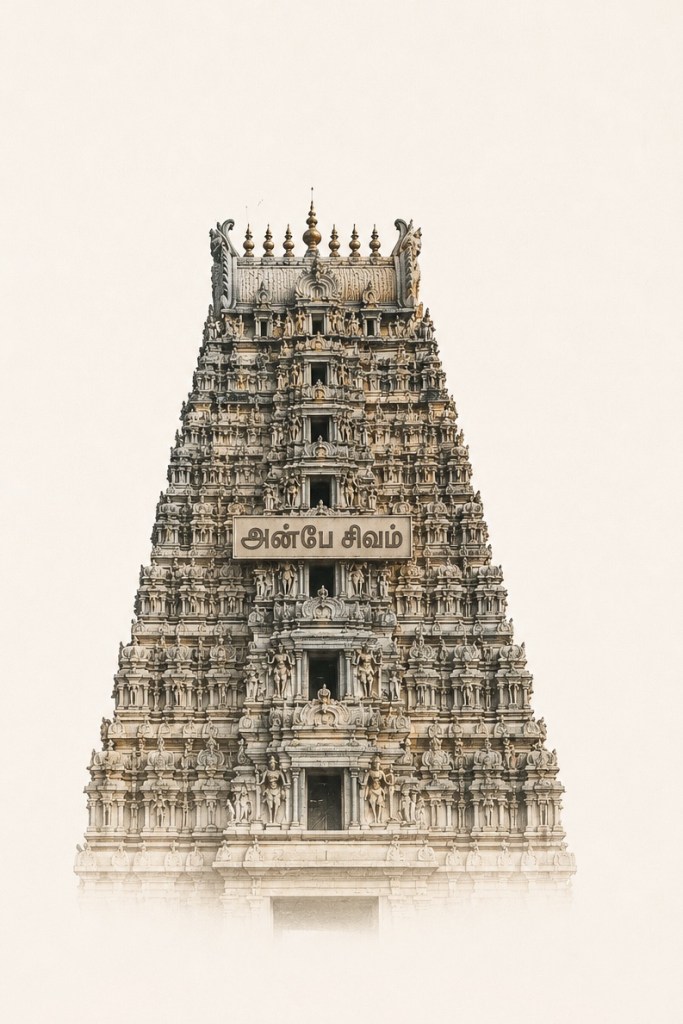
Dusk is coming down on Mylapore at the pace of a temple elephant, thick and golden. The gopuram above the east gate has gone from stone to bronze to a great standing shadow with lamps waking at its feet. The mada street is filling: cycle bells, auto horns, office shirts, silk, schoolbags, the flower row’s kerosene lamps catching one by one down the line like a slow fuse. On the west side the tank holds the last of the sky in its green water and lets it go. Somewhere inside the walls a peacock cries. The town is named for them. And the light is doing the thing it does only at this hour, the hour that is neither, the day ending and the night not begun, the seam, and every Tamil child is told the same two things about this hour, you do not sleep in it, you do not set out in it, because the seam is where things pass through.
Now, you should understand what kind of evening this is, because the evening is part of the machinery and the machinery has chosen its moment with a craftsman’s malice. It is Pradosham. Not any Pradosham but Soma Pradosham, the thirteenth lunar day fallen on a Monday, Monday being the day that belongs to Shiva the way Friday belongs to the goddess, so that the merit doubles and the crowd doubles and the abhishekam inside is about to begin, the milk and the curd and the honey and the trembling ghee going over the dark stone of the lingam while the priest’s voice climbs the old ladder of the chant. And the books, the ones Shanmugam cannot read because his schooling stopped at the second standard when his own father died and the stall passed to him like a debt, the books say a thing about this hour that the books are quite serious about. They say that during Pradosham the gods come down. All of them. That the membrane between the seen world and the unseen world, which is ordinarily as thick as the wall of the temple, goes thin as the skin on boiled milk, and the thirty-three crore of them, which is the number everybody says and nobody has counted, descend to attend the worship, to crowd invisibly into the prakaram and stand among the devotees and receive what is offered.
And here is the first cruelty of the evening, the small one, the appetiser. They have, in fact, come down. The street at eleven minutes to five is packed shoulder to shoulder with the divine. They throng the gate. They are everywhere, weightless, innumerable, dressed in light the colour of light, and not one of them, not one single god out of the thirty-three crore who have crossed the thinned membrane specifically and only in order to see and be seen, looks at the man at the gate who is dying.
Because that is what is happening. The loop will not close because somewhere in the left side of his chest a muscle that has beaten without his thanks for sixty-eight years has, like a vendor cleared one time too many, declined to walk back. There will be no resurrection of this one. He has perhaps a minute. He does not know it is a minute. What he knows is that the jasmine has gone very far away and very bright, that a cold sweat has come up on him in the warmest hour of the evening, and that the bell is about to ring, and that the membrane, which the books promised would go thin, has gone thin not above the temple but inside him, so that the unseen world pouring through tonight is not a world of gods at all but the only unseen world he was ever the keeper of, which is himself.
The minute opens like a hand.
The first thing it puts into his hand is smell.
Understand this about flower men: they cannot smell flowers. It is the first tax the trade collects. Somewhere in his third year at the plank the jasmine walked out of his nose the way a woman will walk out of a house where she is never spoken to, quietly, taking everything, and for four decades since, the man at the exact centre of the most fragrant trade the earth conducts has not once smelled a flower. Now it comes back. All of it, in one breath. Forty-one years of malli going off in his skull, festival-loud, and under the jasmine the camphor, and under the camphor the sambrani smoke, and under the smoke the snapped green blood of the vilvam leaf, wet stone, lamp oil, split coconut, the deep brown smell of the street itself giving back the day’s sun, dust, diesel, somebody’s burnt-sugar kadalai cart, the tank’s old green water, the whole confiscated library of his nose returned in a single second, with interest, and the interest is this: smell is the oldest door, it goes straight to the back rooms where the first things are kept, and so with the jasmine comes, unasked, after sixty years, the smell of his mother’s hair.
You think a minute is small. You think it the way you think a paisa is small, having forgotten there was ever a thing it could buy. A minute, properly opened, properly looked into, is not small. A minute is a town. It has streets you have never walked and a tank with steps going down into green water and a gopuram with three thousand eight hundred painted figures on it, which is the number the street has always said and nobody has ever climbed up to check, and you could spend a life walking it, and most people do, walking the one minute they are actually inside while believing themselves to be elsewhere, in some larger emptier place called the future where they have parked all the looking they intend to do later. He had thirty-five million of these. He is now told, by the brightening of the jasmine, that he kept almost none, and that the bill for the unkept ones has fallen due all at once, payable now, in the only currency the hour accepts, which is attention, and he has exactly one minute’s worth left in his pocket and the books did not lie, the gods have come down, but they came for the milk and the ghee, they did not come for him, no one comes for him, the witnessing of Shanmugam is a thing that has been left, like so much else, for later, and later has just been cancelled.
So he turns.
Not his body. His body is a plank on two crates and will not be cleared again tonight. What turns is the man who lived inside the vendor, the self that forty-one years of correct change had kept out of sight, and it comes around slowly, the way the temple turns the festival idol on its pivot so the crowd on every side receives its darshan.
And here is the thing the street had said for forty-one years and never once heard. His name is the word for what is happening to him now. Shanmugam, which in plain Tamil is Arumugam, the six-faced, the six faces of the god folded into a flower-seller’s name and called across the counter ten thousand times with the god in it heard by no one. The god is directly above him. He has been up there the whole time, high on the east tower in painted stucco with his two wives beside him, repainted every generation, six faces turned six ways over the gate, and the crowd going in underneath does not look up at him either. So the pivot brings him round, face after face, and the first it turns into the brightness is the one they all knew: the vendor, correct change, the right flower, the lemon for the nameless fear handed across to other people’s fear. Behind it, already swinging into the light, is the second.
The second face is the one that read the street.Because he did read it, oh he read it, forty-one years is a long education and the gate of a temple is the only seat in Mylapore from which the entire human comedy is legible, every soul passing through on its way to lie to god in the cleaned-up language people save for god, and Shanmugam, who could not read the books, read the people instead, fluently, helplessly, the way some men cannot help solving the puzzle in the newspaper. He knew from what they bought. The widow who bought an extra muzham of flowers in the month after the husband went, buying for two, keeping the habit warm a little longer. The big merchant from Luz who came every amavasya and bought the largest coconut and the most camphor and the rice-flour that is said to wipe out debt, and prayed, Shanmugam knew, against the second set of books he kept, the ones with the true numbers in them, and the prayer never worked because the gods can read the second ledger too. The girl who came glowing on a Tuesday and came grey on the Tuesday eight weeks later and bought, the second time, only the small flowers, the cheap ones, the flowers you buy when you are asking and not thanking. He knew before the families knew. He was the unlicensed astrologer of the gate, reading not the stars but the baskets, and the accuracy of him would have frightened the street had the street ever once suspected that the flower-fellow was awake in there, was a lit room, was anything at all behind the hands.
That was his whole genius and he spent it the way you spend a thing you have decided is worthless. On strangers. Safely. At the exact distance of a transaction, which is the safest distance there is, close enough to touch the coin, too far to be touched. He loved them, the passing thousands, he loved them with the enormous unspendable surplus of a man who had decided early, for reasons the minute is now turning up like flagstones, that the love must never be allowed to show, because a thing that shows can be wanted, and a thing that is wanted can be taken, and he had had, once, at the very start, something taken, and had filed the lesson under the heading where he filed everything, which was: give them the flower, keep the man.
Kamala.
The third face is Kamala and it costs him, even now, even with the bell about to ring and the brightness eating the edges of the street, it costs him to turn it up into the light.
She came on Fridays. Thirty years of Fridays, for the goddess, for Karpagambal of the wish-giving tree, and she bought the long jasmine, the good mullai, and she did a thing with it he could have picked out of a crowd of ten thousand women. She took the string in her right hand and knocked it twice against the inside of her left wrist to shake the water off. Twice. Never once, never three times. Then into the bag. Then the coins, which she always had ready before she asked, counted out of a cloth purse with a broken clasp that she carried for three decades and never replaced.
What she never knew, what he made certain across thirty years that she would never know, was that on Thursday nights he set aside the best of the coming day’s string for her, the tightest buds, the ones that would open slowest and last longest in a woman’s hair, he chose them for her the way the priest inside chooses the words, and he handed them across with the correct change and not one syllable more than the transaction required, and she took them believing she was being served, and she was being loved, every Friday, for thirty years, in a language he had invented specifically so that it could not be understood.
There was a Friday eleven years ago when she came in white.
He had known for two days. The street tells the street. He had had two days to find a sentence and had not found one, and she stood at the plank in the white and asked for the long jasmine as she had asked for it every week of her adult life, and he gave her the string he had chosen on Thursday night, and he gave her the correct change, and he said nothing. Not one word. Because a word would have been a hand, and a hand once put out has to be taken back afterwards, and he did not have the second thing in him. She knocked it twice against her wrist. She went in to the goddess.
And for eleven years after that he went on choosing, every Thursday night, in the dark, by feel, the buds that would open slowest and last longest in a woman’s hair, for a woman who would never again put a flower in hers.
Tonight is Monday. She comes on Fridays.
In four days she will walk up to the east gate and there will be somebody else at the plank, a nephew or whoever the street sends, and she will buy the long jasmine from him, and it will not be a string chosen the night before because there will be no more Thursday nights, and she will knock it twice against her wrist and go in and ask the goddess for whatever it is she has been asking for. She may notice. The way you notice that a tree has gone from a street and find that you cannot say what kind of tree it was.
He knew her name because he had heard her daughter use it. He never once said it. To say the name would have been to cross the channel, and you do not cross the channel.
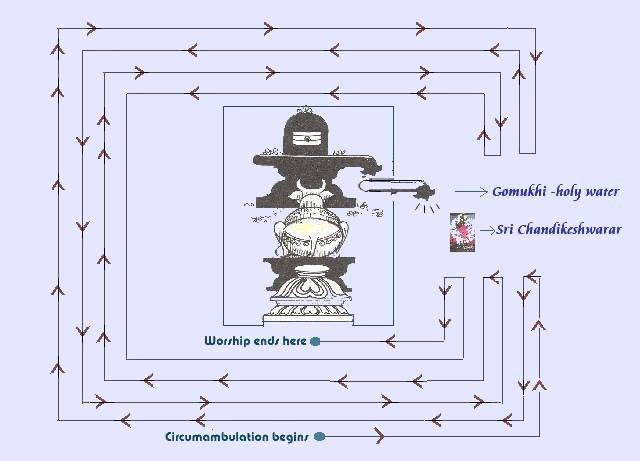
somasutra pradhakshinam He knows about channels. Pradosham has a particular walk, the somasutra pradakshinam, where the devotee goes from the bull toward Chandikeswarar and back, and then toward the gomukhi, the channel that carries the bathed god’s water out, and never once crosses it, approaching and retreating, approaching and retreating, never completing the circle, and Shanmugam, who has watched ten thousand devotees do this walk through the gate, understands in the brightening minute that it is the only walk he ever did. Toward and away. The flower across the gap. Never the closing of the loop. He built a life out of the somasutra and called it dignity and the minute is informing him, without mercy, because the minute has no mercy in it, only light, that it was not dignity. It was fear wearing dignity’s good shirt.
The bell goes.
Inside, the first brass pot tips, and the milk comes down over the dark stone in one long unbroken white rope. It runs off the god the way everything runs off a god, blessed and unkept, away down the channel toward the gomukhi, and on Shanmugam’s tongue, across fifty years and a hundred feet of crowd, arrives the taste of that same milk: prasadam in a boy’s cupped palm, faintly warm from the stone it had been poured over, his father’s hand on his shoulder, his father alive, the stall still the father’s debt and not yet the son’s, the temple courtyard cool underfoot at some festival dawn before everything. He has not tasted it in half a century. He tastes it now to the last degree of its warmth. And under the sweetness, rising like water coming up in a field, a new taste, thin and metallic, which he does not recognize, and which is the body beginning to hand back its instruments.
And now the fourth face, and the bell has not yet finished its first stroke, and the milk is still on its way down the dark stone, and the books say that at this exact instant Shiva is dancing between the horns of the bull, the ananda tandavam, the five-fold dance the Tamil calls aindhozhil, the one that makes the worlds and keeps the worlds and ends the worlds and the fourth act of which, the fourth, is named maraithal, concealment, the hiding, the veiling of the real so the unready are not destroyed by seeing it too soon, and Shanmugam has been performing the fourth act of god for sixty-eight years without knowing it had a name or a fifth act after it, because the fifth act is arulal, the unveiling, the grace, the showing at last, and he never reached the fifth act, he stopped the dance at four, he concealed and concealed and concealed and the curtain never went up
and the fourth face is Karthik.
He named the boy himself, in the year the rains failed, named him for the same war-god he himself was named for, the god who can turn any face he likes to the world, and they used it, the two of them, oh they used it, they turned hard faces to each other across a kitchen for twenty years, the father iron because iron was the only material he trusted, and he had told himself for so many years that it was the only material he had been issued that he had come to believe it, the boy reading the iron as the absence of love because how is a boy to know that iron is what love looks like in a man who has decided love must never show, and the boy did the only thing the boy could do which was the thing the god is famous for, he went away to his own hill, his hill being a city far off and then a country far off, and the going was a slammed door and the father heard it slam and turned, you understand, turned the fourth face, the concealing one, and let the boy believe the slam had landed on a man who did not care, when in fact
and Pankajam, dying, four years before the boy, Pankajam who had watched the whole somasutra of it from the kitchen for thirty years, who had married a man who talked, who had been inside the lit room once, in the first year, for about eleven months, and had felt the door go quietly to behind her and had spent the remaining twenty-nine years knocking on it in the only language he left her, which was the volume knob of the radio, up when she was angry and down when she wanted him to speak, and in twenty-nine years he never once turned it either way himself, Pankajam said to him the last clear thing she ever said, she said you love that boy more than your own breath and you are going to let him die not knowing it, and he had said nothing, he had given her silence, the correct change, and she had been right, she had been right to the day, because the call came on a Tuesday, the boy, the hill, the heart, the same traitor muscle that ran in the family like a name, gone, at forty, in a country whose flowers Shanmugam could not picture, gone certain to the last hour that his father was simply a cold man, and the truth of it, the whole lit room of it, the forty-one years of unspent terrible tenderness, stayed where it had always stayed, inside the one man, witnessed by nobody, spoken to nobody, a love that existed entirely and only and forever inside a single skull and was now, with the milk falling over the stone and the bell still ringing and the green-saree woman beginning, just beginning, to notice that something is wrong with the flower-seller, about to be switched off at the source as though it had never been, the purest unseen thing in a city of unseen things, going into the ground with him in the next several seconds, unrecorded, the way it goes into the ground constantly, all around you, in every overlooked person you have ever failed to look at, right now, as you read this, someone at a gate
and he reaches for the boy.
This is the fifth face, this is the act he never performed, the unveiling, and he performs it now, in the brightness, with everything he has left he turns the whole hidden room of himself toward Karthik and opens it, every door, the flowers chosen in the dark and the name said at last and the iron explained and the slam answered, he opens all of it, he is at last and entirely a man who shows, the dance has reached its fifth act in the final second of the dancer, anugraha, grace, the showing,
and there is no one there.
The boy is four years in the ground in another country. The woman is reaching across the plank now and saying ayya, ayya, in a voice the gods do not turn toward either. The young man in the striped shirt has not yet looked up from his hurry. And the love, fully shown at last, perfectly and completely shown, the somasutra completed, the channel crossed, the fifth act danced, arrives nowhere, lands on no one, is received by not a single living or divine or remembering thing in the thinned and crowded and blazing world, two reachings crossing in the dark and touching nothing, the father reaching for the boy who reached, once, and was met with iron.
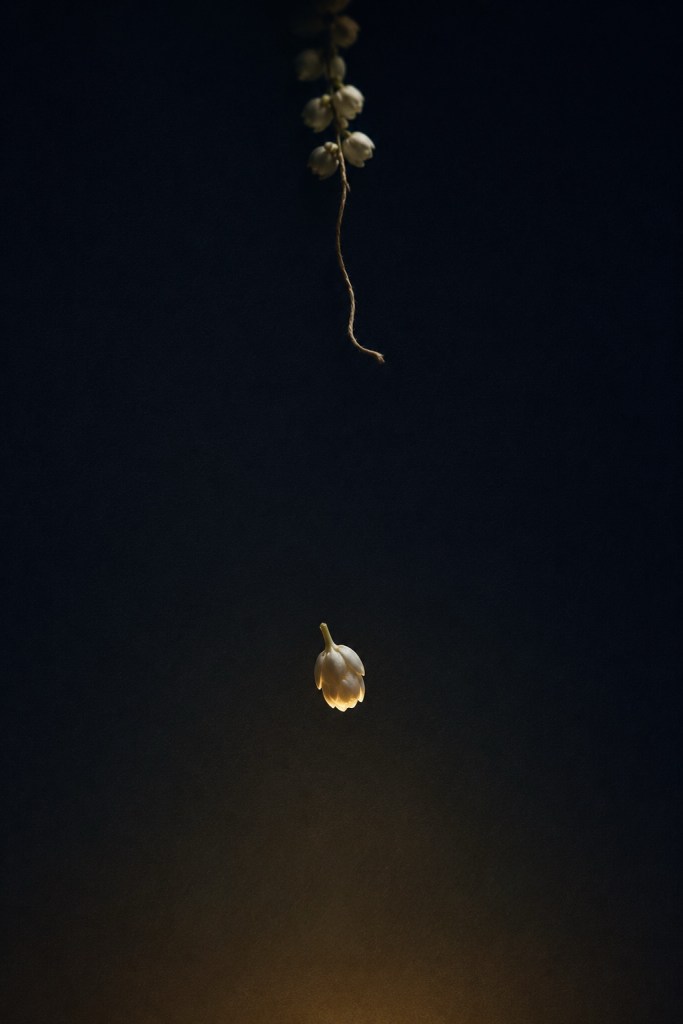
Inside, between the horns of the bull, the camphor goes up.
The cry goes up with it, ten thousand throats at once, the crowd on the steps surging to see the one flame all of Mylapore has come out this evening to see, the small fire lifted in its slow circles between the two horns, and the thirty-three crore, packed into the prakaram shoulder to invisible shoulder, are watching it too, every divine eye and every human one aimed at a single light. There are two lights in Mylapore tonight. That is the first. The second is at a flower stall by the east gate, and it is the brightness, and the brightness now is everything, the gopuram and its three thousand eight hundred painted gods gone molten at their edges, the green of the tank, the milk on the stone, the buds he chose on a Thursday, the whole seen world burning white the way film burns white at the end of a reel, and not one eye, human or divine, of all the crores gathered at this gate for the express and ancient purpose of seeing, is looking at it.
And now the world leaves him in order, the way the lamps are put out in a great house, one room at a time. The evening wind comes off the tank and crosses the street, he can see it crossing because the hung jasmine sways, and it does not arrive on his skin. His skin has closed its counter. The woman’s coin is held out in the air, one rupee, the milled edge he has known better than any face, and his hand declines to report it, the hand forgetting money first of all things. The last thing his skin accepted, a moment ago, without his knowing it was the last, was the cool of the jasmine. And then there is only sound, because hearing is the last door, hearing stays by the bed after all the others have gone home, and he hears the bell, and under the bell the chant climbing its old ladder, and under the chant the woman, ayya, ayya, and under her, from the temple wall, a peacock crying the light down, and one by one the sounds let go of the things that made them, the bell’s sound lets go of the bell, the street’s sound lets go of the street, the ladder lets go of the chant, the crying lets go of the peacock, until it is all one sound, and the one sound is the room the world is kept in, wide and unfurnished, and at the sill of that room the loop, the last loop of the jasmine, between his thumb and his first finger, in the final unspendable instant, begins, at last, after a whole life of the somasutra, after forty-one years at the gate, after the second standard and the lorry and the understanding older than the police, to