we strike a match
against the edge of yesterday,
and suddenly the dark forgets its name.

this is the world remembering
how to see itself.

lamps lean forward
like curious children,
asking the night if it still believes
in forgiveness.

somewhere, a flame whispers
into another flame,
and the air blushes,
ashamed of its own silence.

quietly, we light
what was always burning,
beneath the soot of our forgetting.

dear diwali,
or whatever you call
that small impossible moment
when light chooses you back.
a note: i’m still not sure if this is a poem or few overconfident sentences pretending to be one. i wrote it on a walk, with rahman’s 99 songs looping in lossless audio. 99 songs is such an underrated album, every track has that unmistakable rahman style of slow poison. this thought came as i was listening to sofia number from that album. so thank you rahman, madhan karky, srikanth hariharan, and whoever invented headphones. diwali nostalgia kept colliding with the song’s longing for hope. i didn’t really write this, it sort of arrived. a small self-reminder that hope and kindness and clarity don’t appear fully formed, they keep practicing their return. part nostalgia, part rhythm, and a little bit of light finding its way back.
[For continuity, you may consult part 1, part 2 , and part 3. But like most sequels, they mainly prove that the hero is bad at learning lessons and even worse at reading books.]
“À Paris, monsieur, tout est chef-d’œuvre.” (In Paris, monsieur, everything is a masterpiece.)
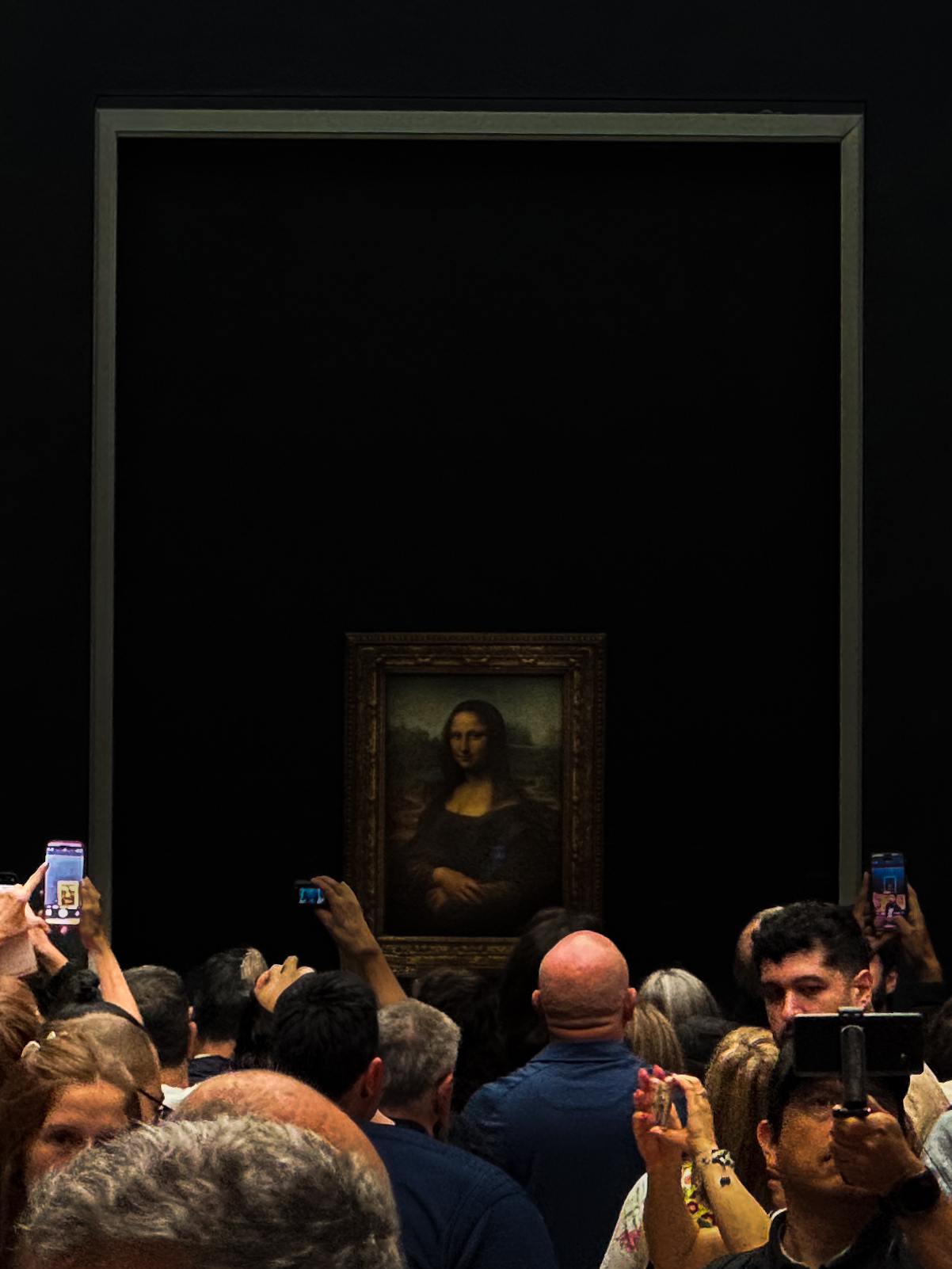
The tour guide’s voice rose above the static of elbows, backpacks, and camera shutters, rolled through the high-vaulted room delivered by a man who had repeated it nine times already that morning. The Good Reader turned, puzzled, and found a riot: at least three hundred people, and three hundred and five glowing screens, all raised aloft in a trembling forest of glass. Every angle of Mona Lisa was being harvested in real time pixelated, filtered, archived before breakfast.
Some faced her directly. Others turned their backs, holding phones in front of their grinning faces, reducing Leonardo’s enigma to a blurred wallpaper behind their own teeth. One woman rehearsed a TikTok dance, pivoting on sneakered heels while Mona Lisa’s half-smile photobombed her hips. A man wielded a selfie stick so long it nearly clipped the gallery lights; another filmed a vertical Reel with breathless commentary: “Here she is, guys, the most famous smile in the world!” The smile, meanwhile, held steady, inscrutable, timeless, unbothered. Our own inscrutable Good Reader, baffled, thought: But who here is looking? Was she smiling for Leonardo in 1503, or for the ten millionth iPhone in 2025? Was her mystery meant for kings and popes, or for TikTok’s algorithm, where she now looped endlessly between recipes and cat videos?
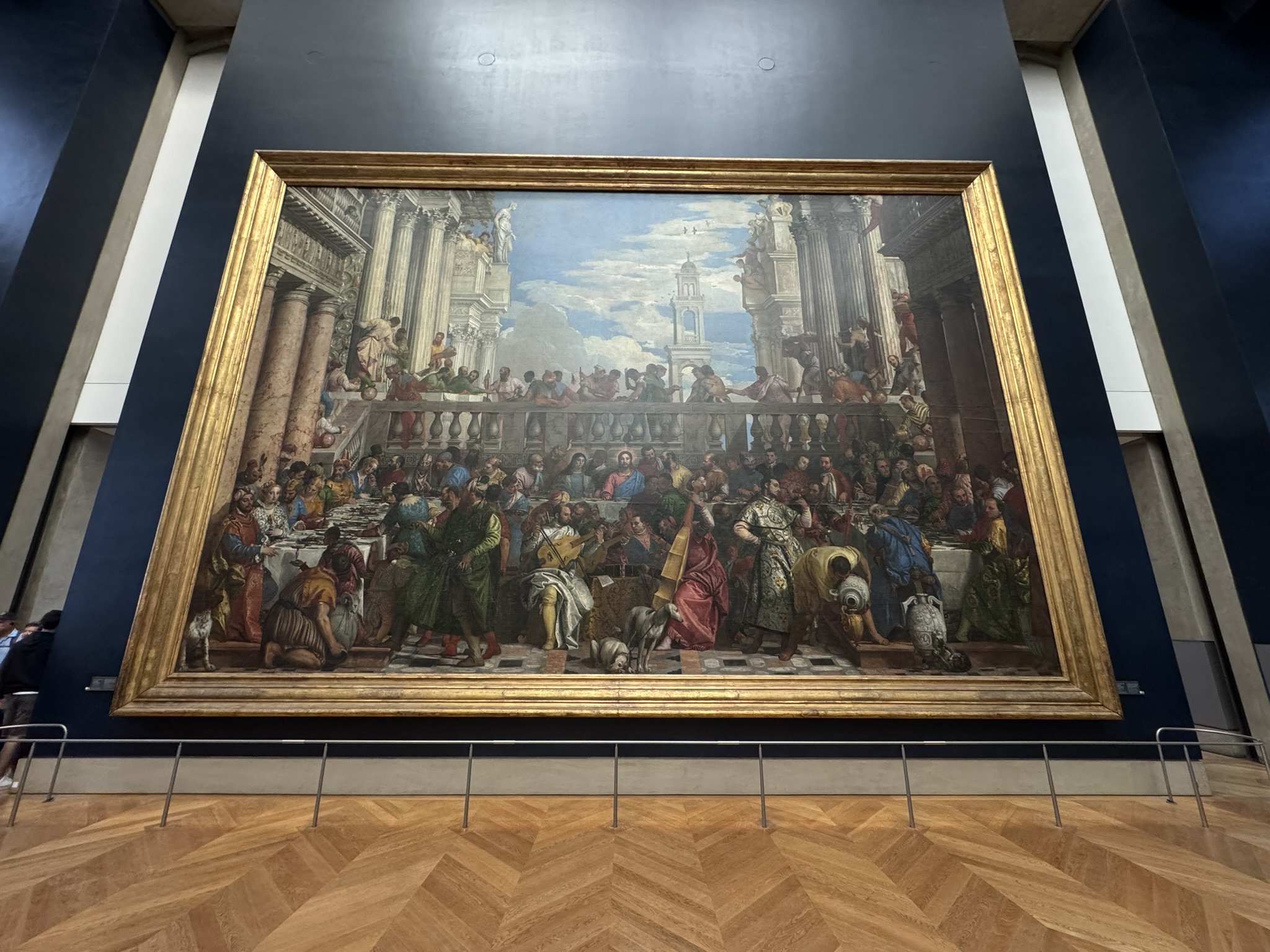
And directly opposite her, ignored, abandoned, was a miracle of another scale: Paolo Veronese’s painting named Wedding at Cana, a canvas so large it could double as a cinema screen in 70mm glory. It thundered across the wall with wine, music, robes and silver platters. It was a carnival of faces, a riot of color. Yet nobody looked. The Good Reader, still carrying the strange calm from the Eiffel Tower’s blaze the night before, felt it like a residue in his chest. While everyone pressed forward toward the ropes, he did the opposite: he lowered himself, cross-legged, onto the cold marble floor. Gasps. Side-eyes. Someone whispered “yoga?” But he was oblivious to the gasps around him. He was engrossed in the two-dimensional wedding. He tilted his gaze upward, scanning Veronese’s banquet inch by inch. Left to right. Top to bottom. From the musicians strumming on the balcony to the miracle unfolding in goblets below. He tried to absorb every face, every robe, every brushstroke.
Behind him, the tour guide launched into the Mona Lisa’s theft of 1911, her insurance value, her smile’s eternal enigma. But the voice thinned, muffled, drowned in the sheer flood of Veronese. The group surged forward without him. And the Good Reader, absurd, comic, reverent, remained behind, the only man in Paris who had come to the Louvre and sat cross-legged before the masterpiece nobody else had time to see.
That morning had begun in Saint-Germain, in a hotel whose name promised intellectual grandeur, La Villa des Artistes (Villas for the artists), but whose Wi-Fi coughed like an asthmatic. The Good Reader rose with the conviction of a man about to make history. Not the greatest of all time, not the GOAT, that was taken by goats and tennis players, but something rarer: the GREA-T, the Greatest Reader of All Time. A man destined to shoulder the unread world. He reached into his pile of twelve still-pristine companions and pulled forth the heaviest of them all: David Foster Wallace’s Infinite Jest, thick as a paving stone, its spine groaning under the weight of footnotes nobody had ever finished. And because Paris demanded costume, he briefly considered the full disguise: a beret, tilted rakishly, cigarette dangling at the angle of genius. For thirty long seconds he even pictured himself with ash trembling and smoke curling. But the fear of actually having to inhale defeated him. He chose the safer armor: a tote bag with printed Mona Lisa holding a baguette, earnest shoes, unread book.
The walk through Saint-Germain was expensive in every sense. Each cafe charged five euros for an espresso. Every boutique window displayed scarves that cost more than his flight. On the way was the shrine: Shakespeare and Company, the nostalgic book store of Paris. Its crooked green façade was already besieged by tourists, queuing for selfies. He wanted, desperately, the iconic shot, arms spread, hugging the very place where Sylvia Beach first gave James Joyce’s Ulysses to the world. But he hesitated. Who could he hand his phone to? Was there a trustworthy face among the selfie sticks? Would he, like last night, lose everything to theft, this time by an Instagrammer in yoga pants? So he compromised. He touched the glass window, palm flat, as though paying homage to a saint. He whispered something absurdly solemn, “Thank you, Sylvia,” then turned, and began his long march toward the Louvre.
Outside the Louvre pyramid, just as he was wondering whether to brave the queue or surrender entirely, a man with a red flag appeared like a Parisian prophet. His voice was theatrical, trained for echo: “Skip the line, monsieur! The fastest, the best, the only way to see the Louvre in under three hours!” He rattled off the itinerary: Mona Lisa, Venus de Milo, Winged Victory, The Raft of the Medusa. “All the great hits, monsieur, all the masterpieces!” The Good Reader, weak before conviction, nodded gravely. He tapped his digital wallet, paid the fee, and clutched the receipt with the dignity of a pilgrim buying indulgences. For this, he had purchased speed, access, and the official Louvre canon, the curated list of masterpieces for the impatient.
And yet, not twenty minutes later, he found himself cross-legged on the cold marble of the Mona Lisa room, staring not at Leonardo’s half-smile but at Veronese’s thunderous Wedding at Cana. Abandoned by his tour group, the Good Reader rose slowly from the marble, knees creaking. The crowd surged toward the greatest hits, and he, half-devout and half-deflated, followed a different scent: pastry. For even the Louvre had a cafe, and in that cafe he discovered the closest thing Paris had to fast food. He got himself a single almond croissant. He bit. And the heavens tilted. Buttery flakes clung to his lips, sugar scattered like divine dandruff onto his tote bag, the almond paste pressed against his tongue that he nearly wept. For ten seconds he forgot Da Vinci. If the guide’s proclamation was true “In Paris, everything is a masterpiece,” then surely this croissant deserved a wall of its own, a gilt frame, a velvet rope, and five million tourists lifting their phones to record its crumb. Wiping sugar from his face, he decided: Very well. If everything is a masterpiece, then I must read among the masterpieces. Among the greats. Among the saints of paint and pigment. He straightened his tote bag, clutched his relic of a book, and set off.
First stop: Venus de Milo. She was magnificent, pale and poised, her armless calm was graceful. But her gallery was more scrum than sanctuary. Elbows jostled, cameras flashed, teenagers practiced duck-lips beside her torso. Venus remained serene; the Good Reader did not. There was no space to sit and no silence. So he moved on, deeper into the Louvre’s arteries, seeking what all failed readers eventually seek, an empty chair and a little peace.
What followed was less pilgrimage and more slapstick. He drifted through the Louvre’s wings asking strangers in English, who replied in French, to which he nodded gravely, as though he had understood. Security guards gestured down corridors with authoritative sweeps of the arm, and every time he followed their directions, he arrived at yet another scrum: Venus again, Victory again, The Raft of the Medusa mobbed with backpacks, David’s Coronation of Napoleon. The masterpieces were everywhere, but peace was nowhere.
And as he shuffled in and out of these crowded chapels of art, the thought came to him, foolish and profound in equal measure: If everything in Paris is a masterpiece, why do people only look at some of them? Are there better masterpieces than the other masterpieces? But of course, they weren’t even looking. Not really. They were capturing. Every face turned not to Venus, not to Mona Lisa, but to their own phones. People didn’t want to see art; they wanted to see themselves near art. It puzzled him deeply, absurdly. If you stood in front of a canvas the size of a house and reduced it to a smudge on your phone, had you seen it? Or had you only managed to shrink the miracle into wallpaper for your lock screen? What was the point of flying across an ocean only to walk away with a thumbnail? Why not stand six inches closer and see the brushstroke itself and the tremor of a wrist from centuries ago. Would these painters and sculptors, if resurrected, thank the tourists for pixelating their life’s work into a 6.1-inch rectangle? Would Liberty Leading the People still look revolutionary if she was paused mid-swipe between a cat video and a Zara coupon? The Good Reader, who had failed to read anything all summer, now interrogated the world like a philosopher king. And yet his tone, even in his own head, was hopelessly foolish. He sighed, baffled by modernity, baffled by himself. And so, abandoning both the guards and the crowds, he decided at last to trust instinct, which in his case meant walking until he was lost.
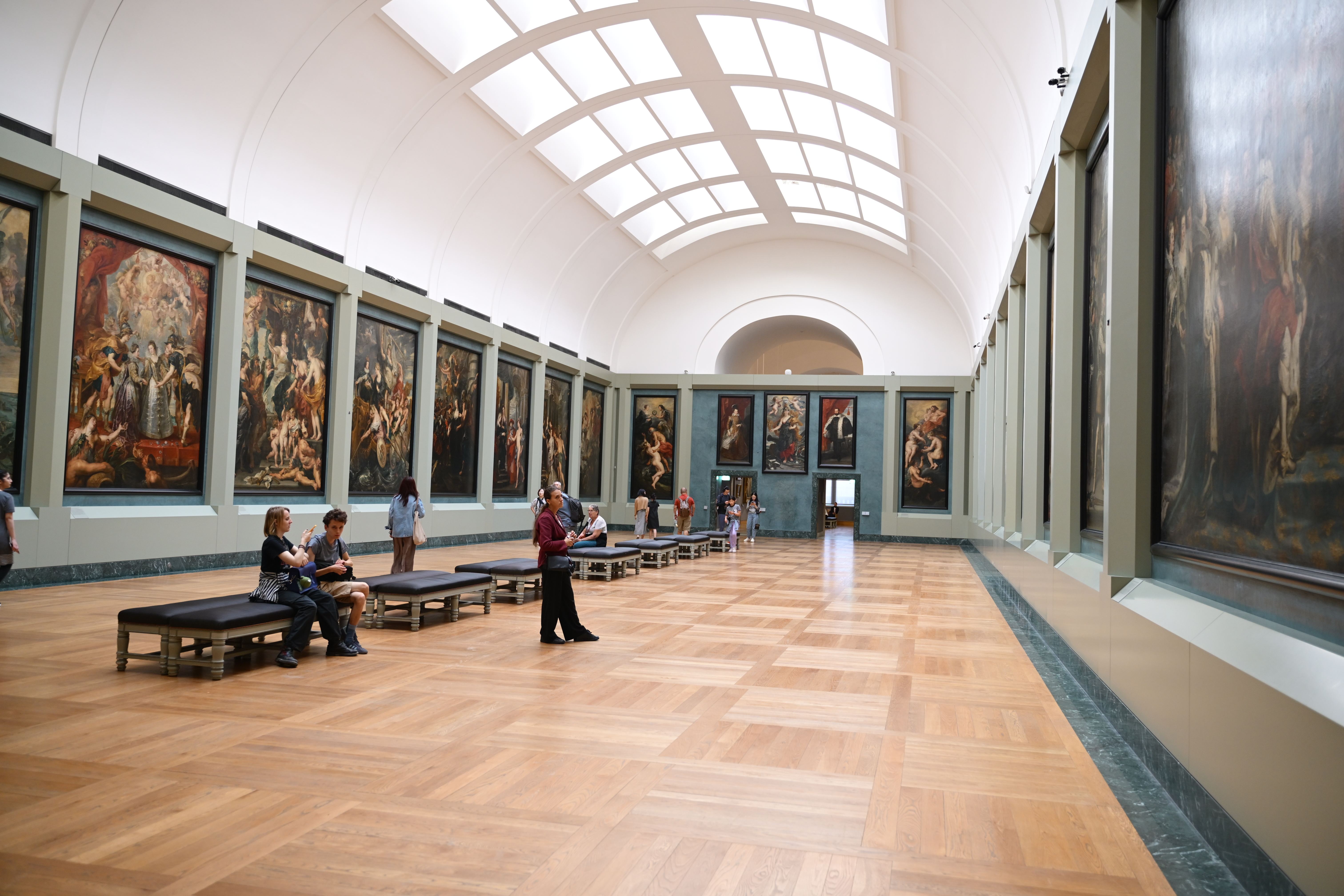
And then, like a miracle of misdirection, he stumbled into the Rubens gallery. On both sides towered were artist Rubens vast canvases, twenty-four in all, a Technicolor soap opera in oil narrating the life and scandals of Marie de’ Medici, the queen of France. Here she was, being married off to Henry IV as if Olympus itself had arranged the match. There she was, crowned, triumphant, every inch of her history swollen into allegory, packed with clouds, gods, cherubs (chubby, winged infants), battle smoke, and improbably muscular horses. It was less history than binge television, a seventeenth-century miniseries painted at wall size.
The gallery was nearly empty, only a few tourists drifting like bored extras at the far end. At the center stood some benches, stranded between canvases, facing everything and nothing at once. The Good Reader approached one of them as if it were a throne reserved for him. He sat. He wriggled. The bench was stiff, indifferent, a punishment slab. After one minute he conceded defeat, slid off, lowered himself cross-legged onto the parquet floor beside it.
He balanced the book, Infinite Jest on his lap as though it were both relic and weapon, the fattest volume in his possession, chosen that morning for its sheer gravitational pull. To attempt reading David Foster Wallace in the Rubens Room was like attempting to memorize the Mahabharata during a Superstar movie: theoretically noble, practically deranged. For Wallace was no ordinary novelist. He was the bandanaed prophet of excess, the man who believed sentences could stretch like suspension bridges and footnotes could metastasize into entire ecosystems. Infinite Jest was his cathedral, not merely a book but a continent, a twelve-hundred-page carnival of tennis academies and halfway houses, stitched together with digressions so long they became novels within novels.
He cracked Infinite Jest and read aloud, softly, almost reverently: “I am seated in an office, surrounded by heads and bodies. My posture is consciously congruent to the shape of my hard chair.” He blinked. He, too, was seated, not in a hard chair but cross-legged on parquet, and yes, he too was surrounded by heads and bodies. His eyes drifted from line five of Wallace to the painting in from him, The Apotheosis of Henry IV and the Proclamation of the Regency of Marie de’ Medici, a hurricane of clouds, horses, courtiers, and immortals.
The Good Reader froze, cross-legged, but then something absurd happened. As if Wallace himself had granted him footnote propulsion, his body began to creep forward, still folded in yogic posture, book clutched. Inch by inch he glided across the floor as a clay-mation pilgrim. To the casual onlooker the gallery appeared still; only if you squinted could you see it, the benches, the skylight, the whole room fixed in place, while the Good Reader inched closer and closer, as though the painting had switched on its own gravity.
The figures inside the canvas seemed to notice. A courtesan tilted her painted head. A cherub raised a finger. A horse rolled an eye as if to say, At last, someone is watching. Even Marie herself appeared to bend her painted gaze toward this man in sneakers creeping across the floor like an offering. He tried to look back down at Wallace, but the words blurred, footnotes dissolving into the painting’s flesh-colored clouds. It was no longer clear whether Infinite Jest was dragging him toward the painting, or the painting was pulling Infinite Jest toward itself. Either way, book, reader, and masterpiece edged steadily nearer, until he was close enough to see the grain of the canvas, the brushstroke itself, the pulse of the 1620s still beating in pigment.
He didn’t know if it was fifteen minutes or three hours that passed. And then, just as suddenly as it had taken him, the painting released him. The swirl of gods and courtiers retreated to their rightful places, the clouds flattened back into oil, and the Good Reader found himself again on the floor, cross-legged, the book cooling in his lap. He exhaled. Something had shifted. Rubens, centuries dead, had reached a hand through pigment and time and shaken him awake. Not with a revelation, but with a joke. The joke that Marie de’ Medici’s triumphs, his own distractions, and all the footnotes of history amounted to the same thing: spectacle, noise and jest.
And so what escaped him now was laughter. At first a low chuckle, then a bubbling grin, then the kind of laugh that made tourists glance sideways and quicken their pace. He laughed at Rubens’ gaudy excess, at the angels who looked suspiciously like overfed infants, at the horses who seemed perpetually constipated. He laughed at himself, a forty-two-year-old man sitting cross-legged on a museum floor with the world’s most unread masterpiece in his lap. He laughed until he was lightheaded, and when he finally closed the book, slipping Infinite Jest back into his tote, the laugh followed him out.
Through the long corridors he carried it, absurd and unstoppable, until he passed again through the Mona Lisa room. By then she was besieged by another five hundred tourists, five hundred phones, five hundred screens trembling in the air. No one looked at her; everyone captured her. And the Good Reader stopped and gazed at the scene. He laughed again, louder now, as if all the masterpieces in Paris had leaned out of their frames to whisper the same secret into his ear. It was not mockery, not despair, but the kind of laugh that belongs to fools and prophets alike, the recognition that Mona Lisa’s smile, Rubens’ brushstroke, Wallace’s footnotes, and even the almond croissant’s crumb were conspirators in the same grand jest. And in that moment, cross-legged pilgrim turned accidental sage, the Good Reader understood that he had finally read a masterpiece, and it wasn’t in his book.
[if you’re wondering how our good reader ended up here croissants in hand, books still unread, the backstory is available in two equally unhelpful installments: part 1 and part 2.]
(“Good morning, sir. Here is your coffee… and your basic tourist intellectual package.”)
The waiter smirked, setting down the tray: café crème foaming, orange juice bright as stained glass, and a pain au chocolat sweating butter through its paper sleeve. But the true relic, of course, was the paperback copy of A Moveable Feast, spine already cracked at page 36, the universal signal to every Parisian waiter that the guest believed himself the reincarnation of Hemingway, only hungrier and less published. The Good Reader stiffened, determined to look serious, as though the waiter’s sarcasm had been meant for the other thirty people attempting the same ritual that morning.
At 8:07 a.m., on the terrace of Café de Flore, the boulevard unfolded into theater. Women in sundresses rehearsed Instagram reels, pacing back and forth until their boyfriends got the hair flick just right. Men in linen shirts staged static photo shoots, clutching hardcovers as props, their faces tilted into the kind of fake concentration that suggested deep reading but was actually just mild sun glare. Tourists orbited the tables, selfie-sticks extended like medieval lances. Even joggers slowed, aware that every stride might end up in someone else’s “Paris morning vibes” reel.
And in the middle of it all sat our Good Reader, book open, brow furrowed, a man entirely convinced he was summoning Hemingway’s ghost through osmosis. This was performance art, with himself as the unpaid extra. And even as he underlined a sentence with priestly solemnity, there was already a telltale tremor in the air, the unmistakable prelude to failure. Paris had not yet defeated him, but it was warming up.
The Good Reader stirred his cafe creme, reverent as if channeling Hemingway through dairy. He sipped, frowned, and realized the grim fact: this was not black coffee. This was espresso disguised, padded with milk, foam, and Parisian attitude. He raised a hand.
“Excuse me,” he asked, vowels wilting in the humid air, “do you have… just black coffee?”
The waiter did not blink. He smirked the way only a Parisian waiter can, having seen this exact scene thirty times already that week.
“Non, monsieur. Ici, il n’y a pas de ‘black coffee.’ We have café allongé. We have Americano for tourists who miss their office mugs. But in Paris…” He placed another tiny cup beside the first with theatrical precision. “…in Paris we drink espresso.” Then he leaned in, delivered the line with velvet sarcasm, and in doing so baptized the Good Reader into the true religion of café culture:
“Here’s your espresso, monsieur. No rush, monsieur.”
breakfast in paris
The words clung like prophecy. No rush, monsieur. Half insult, half gospel, the phrase became the Good Reader’s refrain for the rest of his Parisian days. Every time he tried to hurry a waiter for the check, every time he opened Google Maps only to discover the average café stay was 2 hours 37 minutes, the city whispered it back: No rush, monsieur. This was Paris, the capital of lingering, the republic of loafing, the empire where art is born not in haste but in the holy slowness of small cups and large afternoons.
But how had he landed here, espresso in hand, Hemingway at page 36, performing seriousness while photobombing three Instagram reels? Rewind. Two days earlier, unread and overfed in Chennai, the Good Reader had boarded a British Airways flight to London with the posture of a man boarding the Ark: one man, one tote bag, twelve unread books. Somewhere over the Black Sea, between turbulence and reheated paneer tikka curry, he decided London was merely a foyer, a polite lobby to the true cathedral. Paris. Paris was where artists sharpened their pens, where painters invented light, where writers birthed manifestos between cigarettes and indigestion. He would not stop at London. He would tunnel under water itself if he had to. And in the 1920s and ’30s, Paris had been the heady crossroads of the Lost Generation, a magnet for starving artists and restless expatriates chasing cheap wine, cheaper rents, and the illusion that genius might be contagious. Hemingway, Fitzgerald, Stein, Pound, they had all brooded and brawled here, drinking their youth and their doubts into art. To the Good Reader, that history meant Paris was not just a city but a proving ground, the only proper arena where a reading pilgrimage could turn into scripture.
And so, like all great pilgrimages, it began at an airport bookstore. Heathrow, Terminal 5. A display table groaning under pastel thrillers, leadership manifestos, and cookbooks promising enlightenment through lentils. And there, gleaming faintly through the clutter: Hemingway’s A Moveable Feast. The thirteenth book of his summer, bought with the solemn conviction that it could only be read in Paris, on a terrace, with overpriced coffee and a smug expression. He tucked it reverently beside his other eleven volumes, carried them onto the Eurostar as if smuggling contraband genius, and emerged two hours later into the City of Light, unread but glowing with intention.
Back at Café de Flore, the Good Reader adjusted his paperback to page 36 of A Moveable Feast, convinced this would be the day his life changed. The sentence he underlined was Hemingway’s famous line: “There is never any ending to Paris, and the memory of each person who has lived in it differs from that of any other.” He stared at it with solemnity, mouthing the words like scripture, and managed, before destiny intervened, to read exactly six additional lines.
Because the pain au chocolat was steaming. Because the orange juice gleamed in its glass. He bit. He sipped. He asked the waiter, foolishly, why the juice tasted so fresh. The waiter, without missing a beat, “Because, monsieur, it was squeezed twenty seven seconds before you walked in. No rush, monsieur.” The book closed itself. The pastry dissolved. The orange juice staged its own applause. Literature could wait; butter could not.
Upstairs, he discovered the restroom, not a restroom but a reliquary, wood-paneled and echoing with ghosts. He gazed at framed photos of Sartre and Beauvoir, their cigarettes burning like exclamation marks against the café’s long mornings. Hemingway had sat here too, brooding into notebooks; Fitzgerald had stumbled through; the entire 20th century had apparently stopped for coffee here, leaving behind wisdom, love affairs, and possibly overdue bills. The Good Reader, bladder empty but heart full, descended the narrow staircase like a pilgrim returning from the holy of holies.
He asked the waiter to take a picture of him, book in hand, brow furrowed, staged in perfect imitation of an intellectual lost in thought. The waiter obliged with the resigned air of a man who had done this 500 times that week. The result was convincing enough for Instagram, less convincing for reality. By noon, the Good Reader had abandoned reading entirely, retreated to his hotel bed, and fallen asleep in the full dignity of Hemingway’s page 36.
When he woke later that afternoon, sunlight slanting through Paris, he decided: today was for the Eiffel Tower. A place for love, yes, but also for books. If Paris demanded you either kissed beneath its iron ribs or read there, he would choose the latter. Romantic gestures could wait
Warnings echoed in his head. Everyone on the Eurostar, everyone he had ever met, even the Uber driver in London, had whispered of Paris pickpockets like priests warning of demons. Fear stricken, the Good Reader placed all twelve of his unread books in the hotel safe, along with his passport, wallet, and dignity. He carried his phone in his shorts pocket and A Moveable Feast book locked into a sling bag which he gripped so tightly it left a red mark across his chest.
The Paris Metro defeated him instantly. Hemingway, he thought, would have called it a clean defeat. Machines blinked in French, commuters surged like tides, and his card’s rejection turned ticket buying into slapstick. He gave up. Uber it was. He summoned a car and clutched his bag as though it contained nuclear codes.
The Uber glided through the city, a black Mercedes humming like a secret. The driver argued with his wife on speakerphone for twenty uninterrupted minutes, French syllables ricocheting through the car like cutlery in a drawer. The Good Reader nodded politely at the rearview mirror, then as the car turned and the horizon opened, he saw it.
The Eiffel Tower.
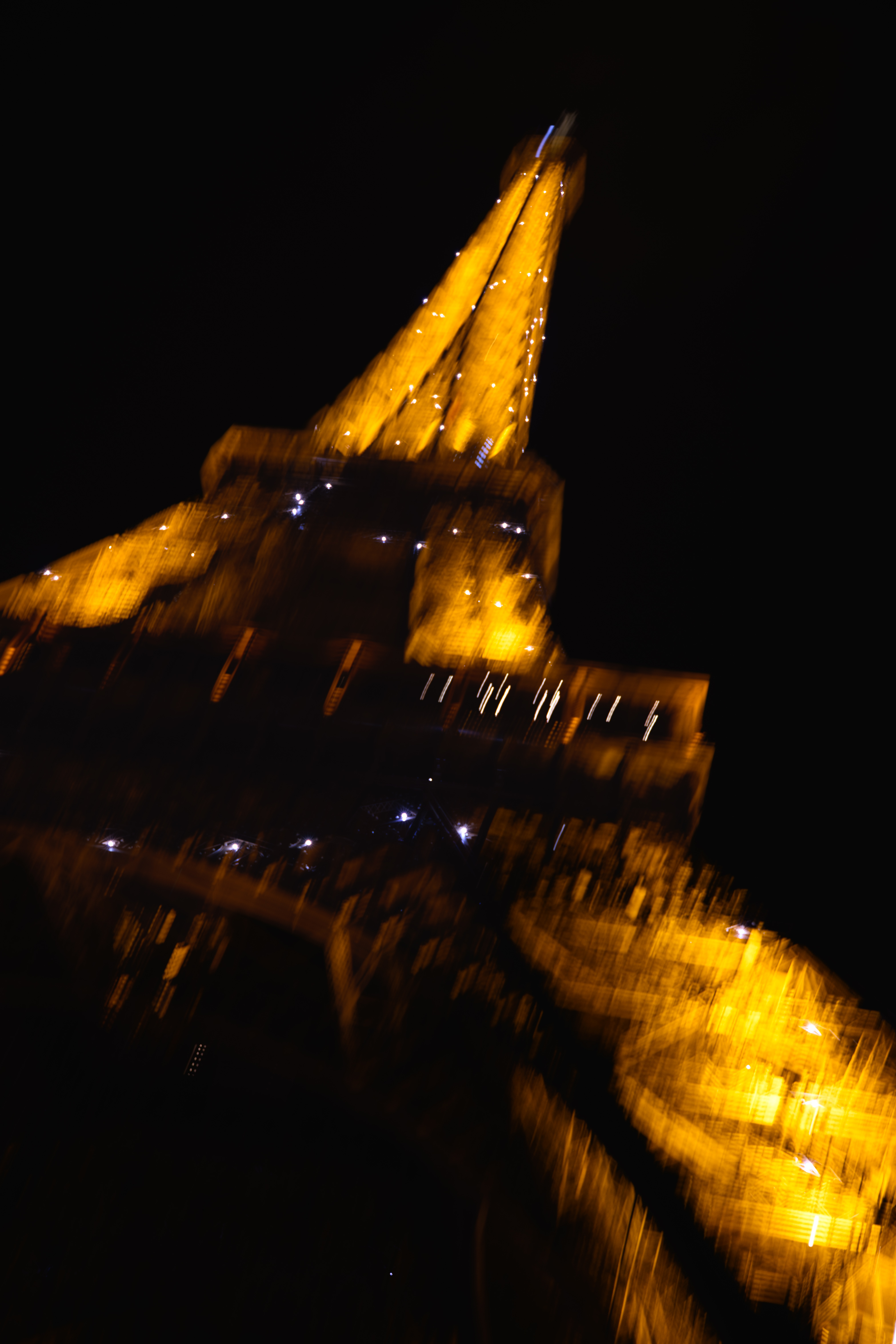
Sudden, merciless, rising dark against the blueing sky. For a suspended instant it stood there, its ribs black lacework, a shadow pinned against the last breath of daylight. The driver’s quarrel with his wife continued on in French, but the Good Reader no longer heard. He pressed his forehead to the window like a child, breath fogging the glass, his sling bag clutched so tightly his fingers ached. And just as his eyes adjusted, the Tower exhaled, the lights surged upward in a golden wave, dusk collapsing into radiance. A stray cloud caught the glow and blushed. On the ground, the lattice cast long, trembling shadows across the Champ de Mars, as if the earth itself were reading. Hemingway whispered it was Paris’s great witness; Barthes countered that it was “a pure sign,” swollen with meaning; Maupassant muttered his disgust; Cocteau called it “the miraculous lamp.” A chorus of literary ghosts, contradictory and insistent, rose around him as the Tower flared alive.
When he stepped from the car, the Tower swelled to its full impossible height, tilting over him like a manuscript written in sky. Around him, camera shutters clicked, a hawker rattled keychains, and still the avalanche of voices began.Proust murmured that memory itself bent inside its arches. Joyce snickered that it was the longest parenthesis in history. Whitman thundered that it contained multitudes. Shakespeare would have made it a rib of night, a stage for the moon. Rushdie would have spun it into a ribcage of light, delirious and excessive. Austen, dry as ever, might have smirked that it was universally acknowledged that a gentleman of fortune required a flat with a view. Tagore would have sung it as flame turned to monument, poetry hardened into prayer. Thiruvalluvar would have needed only two couplets, brief as lightning, eternal as law. All of them, living, dead, unborn, imagined, crowded into the Good Reader’s skull, collapsing centuries into one unbearable instant. The Tower was no longer structure but sentence, one endless line composed of all literature ever written and all that never was.
And that sentence resolved into one word, trembling across its iron ribs in luminous certainty, a word older than monuments, larger than cities, and still small enough to catch in the throat: amour.
The Good Reader mouthed it aloud, half whisper, half prayer, and felt the syllables stick awkwardly to his tongue, as if love itself required rehearsal. His eyes stung; a single tear slipped down, but it was not his alone. It fell on behalf of all the poets who had never seen this light, for the novelists who had died in dim rooms far from Paris, for every line that longed for a monument and found one only now.
He had not read all summer, not even past page 36, and yet he had read this.
Then the lights faltered off, sudden darkness, iron against sky. On again, blazing, as if the Tower itself had winked, punctuating the sentence. Full stop. He pressed harder against the night air, trembling, unread yet briefly redeemed. And in the hush that followed, the Tower itself whispered the only line that mattered:
This is literature. No rush, monsieur.
He stood motionless, chest buzzing, the Tower still burning on his retinas. For one suspended breath it felt as though even failure had been forgiven.
Then the tug.
The sling bag vanished. A pickpocket melted into the crowd, swallowed by the glow. Hemingway was gone. The Good Reader spun, helpless, then gave a small, rueful laugh. “Of course, Paris,” he whispered. He fumbled for his phone, snapped a crooked picture of the Tower, and stood blinking back a tear, unread, unlucky, but somehow lighter: the pilgrim of reading failure.
It began, as all midlife revelations do in the year 2025, with a YouTube thumbnail: a woman in Santorini holding The Bell Jar like a wine glass, promising that travel had healed her reading life. The Good Reader clicked. And clicked again. And an hour later, algorithmically enlightened and fully caffeinated, he arrived at a conclusion so bold, so unearned, so obviously doomed that it could only be his: the problem was place. Not him. Never him. His unread summer was not a failure of will, attention, he told himself. It was environmental. He had been trying to read in the same stale corners where he paid bills, ignored text messages, and watched seventeen-minute videos on decluttering without decluttering. But what if he moved? What if, like the travel gods and booking apps and shimmering people of Instagram had foretold, a change in scenery could change everything?
And so, delirious with purpose, he packed his bags, not with socks or chargers, but with intentions. He would read where the air smelled different. He would annotate in cafes with wooden tables and unobtrusive jazz. He would become the kind of man who reads under foreign skies. Never mind that Austen never left Hampshire, Dickens barely crossed the Channel, and Tolstoy, that snowy colossus, wrote War and Peace without once visiting a curated riad in Marrakesh. The Good Reader was not interested in historical precedent. He was interested in possibility. In curated stillness. In Airbnb silence. In the slow-motion footage of himself turning a page while a tram passed behind him in Lisbon.
And so he departed, hopeful, unread, and chronically online, to chase literature across oceans. His first stop: Chennai.
So the Good Reader’s summer pilgrimage began in Chennai, that humid furnace of temples, traffic, and family obligations, where he arrived on a British Airways flight carrying not only luggage but also a dozen hardcovers. As he stumbled out of immigration, two taxi drivers instantly materialized, each shouting competing truths: one quoted 1,400 rupees, the other 700, about $17 versus $8, both assuring him with priestly conviction that their fare alone contained salvation. There was a philosophical question in it. Was the Good Reader worth double? Or was he, as he feared, the kind of man who would always choose the cheaper cab and therefore the cheaper fate? Before he could answer, the crowd surged, horns blared, and Chennai wrapped him in its dense, sweaty embrace.
The very first thing he read in India was Kanni Theevu, the serialized comic strip that has been running for sixty-three years in the Dina Thanthi newspaper. Episode #23,193. Yes, twenty-three thousand one hundred and ninety-three. That’s more than Proust, Balzac, and Dickens combined. This morning’s installment featured Sindbad, the once-classic adventurer, now inexplicably conscripted into something resembling a Rajamouli battle scene, flying about on golden birds with arrows sticking out of their feathers. It was magnificent nonsense, and the Good Reader thought: If this is literature in Chennai, I can stop worrying. The city is already reading for me.
It was the month of Aadi, when the goddesses descend from their sanctums and erupt onto the roads in twelve-foot banners, neon-outlined and serial-lit like cosmic billboards. Lakshmi gleamed beside traffic lights, Mariamman beamed over pharmacies, and Durga’s lion snarled above autorickshaws. Twice, in peak evening traffic, his car was engulfed by ritual throngs; and both times, in an act of supreme kindness, the crowd parted, waving him forward. The result was an accidental drive-thru darshan. For a surreal instant he found himself peering straight through the temple doors at the deity herself, chauffeured to revelation without leaving the back seat.
Day One was meant for buying local books. He would buy Indian magazines and dailies to read in India. He returned with India Today, The Hindu, a yellowing Ananda Vikatan, and, because the kiosk man smirked, Vogue India. He stacked them reverently, and prepared to read. But first, a mini tiffin for breakfast. And the pongal, golden, molten, ghee-laden, destroyed him. He collapsed into a seven-hour carb coma. When he woke, three aunties, two uncles, and a cousin he hadn’t seen since 1999 had materialized with more food. Reading was postponed, indefinitely, to the afterlife.
And yet, amid the assaults of ghee, he always found salvation in filter coffee. The slow drip of decoction, brewed like a lab experiment and frothed into steel tumblers, became his truest text. Each cup promised twenty pages of progress; instead, it delivered twenty minutes of jittery pacing and long essays to himself about what he would read later. Still, he drank cup after cup, a pilgrim in the Church of Decoction.
The days blurred: temples, traffic, relatives, food. Chennai was a city under permanent renovation, each street dug up, each corner sprouting a Metro Train pillar, as if the city were sacrificing the present so some future generation could glide smoothly forty years hence. Every cab ride was meant to be his silent reading hour, but instead became a rolling seminar: Vijay’s political entry, the price of tomatoes, whether cricket collapses were fate or foolishness. He nodded gravely, muttered “Ah, correct, correct,” and held his book like a tragicomic prop.
Once, he managed a walk. From Bazullah Road to G.N. Chetty Road, past Vani Mahal, he crossed Sangeetha and Geetham, two restaurants that had split like quarreling siblings, now competing with identical menus. At Sangeetha he ordered coffee; at Geetham, tea. Both tasted excellent, both arrived boiling, both sugared beyond mercy. The difference was academic: one was called tea, the other coffee. That walk, probably the longest he managed in Chennai, grounded him. Elsewhere, walking was impossible. KK Nagar was a chaos of potholes, encroached pavements, snarling traffic, and an absurd street-war over stray dogs. People shouted, groups split, alliances shifted. Our Good Reader, wisely, stayed neutral, knowing either side might bite.
He sought books again. The Tamil bookshop offered him little, yet staring at the rows of unfamiliar names he chastised himself. He stared at the Tamil titles, feeling the weight of his own ambition. Was he chasing literature, or just running from himself? He must change his attitude, return to Tamil contemporary writing, discover something beyond Sujatha’s science fiction and Ashokamitran’s humble novels. Driving past their houses, he remembered them with reverence, along with Cho’s satire and Jayakanthan’s radical prose.
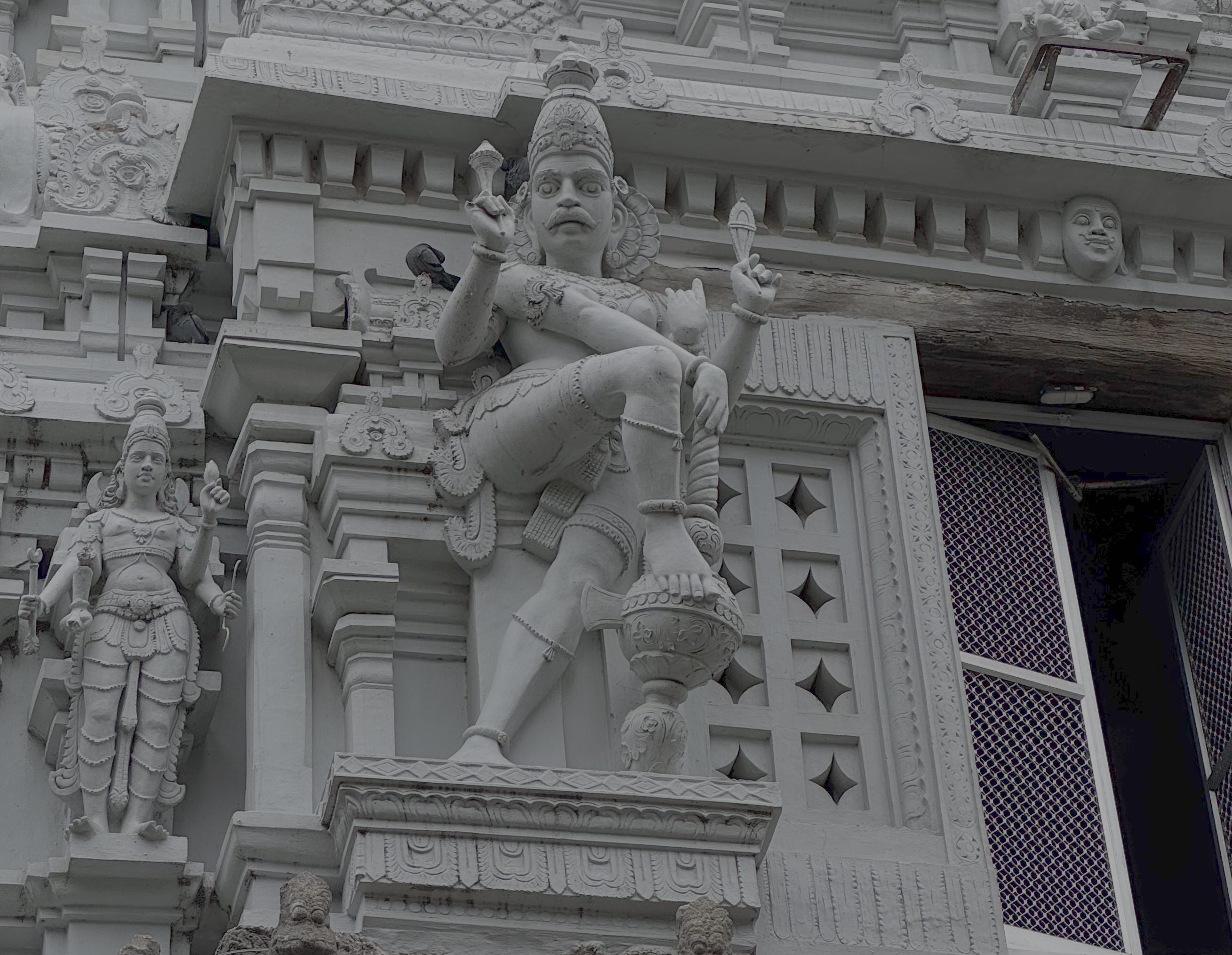
On a drive to Kanchipuram, the so-called city of a thousand temples, he found that nearly all of them were undergoing renovation. Every gopuram was covered in scaffolding, slathered in a coat of ritual yellow fabric. Shiva, Vishnu, all seemed to have conspired to hold a citywide consecration clearance sale. The gods were still eternal, but their towers looked like construction projects from an overambitious municipal plan.
He tried English bookstores in malls. He tried. But the shelves carried The Da Vinci Code, Fifty Shades, GRE prep guides from 2011. It looked like US Airport bookstores in exile, only dustier.
He sighed, bought yet another tote bag, and carried it to Kapaleeshwarar Temple, convinced that perhaps the gods would grant him a chapter if he only read in their presence. He settled cross-legged in a corner with his book, tote bag beside him like a loyal but useless squire. Almost immediately the temple loudspeakers roared to life. A man with a voice like gravel mixed with nasal syrup launched into a public sermon: simple life truths from the Thevaram, twisted into parables about grocery bills, cricket collapses, and unruly children. Every few sentences he broke into song, a thin, nasal chant of Thevaram verses that the microphone faithfully mangled and then blared for three kilometers in every direction. Each note ricocheted across the gopuram and into the Good Reader’s skull. Reading Julian Barnes was hard enough in silence; under the assault of devotional karaoke, it was impossible.
He shifted, hunting for quiet, and found a side space near the small shrine of Lord Shaniswara, where the sound was fractionally less punishing. There he discovered two temple cats playing tag among the pillars, their chase far more gripping than any plot in his unopened book. He noticed the devotees too: everyone walked in strict single file on a cemented path coated with some mysterious cooling compound, as if the temple floor had become a game board where stepping outside the squares meant instant disqualification. Curious, he sat down to observe, but within three seconds the stored heat of the ancient stone rushed straight through his dhoti and into his spine. He sprang up like a man electrocuted, though he later told himself it was all deliberate.
The real reason for his sudden leap was more persuasive: beneath the gopuram, volunteers were distributing hot puliyodharai in little cups made from pressed dry leaves. The smell alone collapsed his literary ambitions. He abandoned the shrine, the cats, the tote bagged books, and joined the throng, shoveling down the tangy tamarind rice with manic devotion. Once was not enough. He returned for a second serving, standing barefoot among strangers, cheeks bulging with holy carbs, taste buds singing Yaar Yaar Sivam, off-key but bliss-drunk. The book, once again, never left the bag.
Even Wi-Fi mocked him. In his bedroom, the signal wheezed like a dying harmonium. To catch a bar, he shuffled into the living room, where serials blared at max volume. He abandoned books and began reading people instead: their gossip, their WhatsApp forwards, their endless speculation about weddings. Chennai gave him not novels but serialized oral epics, complete with cliffhangers and filter coffee breaks.
Modernity added its own comedy. Swiggy, Zomato, Blinkit, Instamart delivered at such speed he suspected even literature might arrive boxed in ten minutes. It never did. Instead, always rava dosa. He ate, grateful, and stayed unread.
For variety, he tried five-star buffets. Two hotels in a week. Here he discovered India’s paradox of luxury: naans transcendent, curries mediocre, prices astronomical. Hospitality itself was the entree; waiters refilled plates like emergency responders, insisted he try aloo gobi gratin with tragic devotion, and treated him like a visiting emperor while serving dal that tasted suspiciously like dull rainy day in Seattle.
Doctor visits, too, became their own literature. His mother’s checkups resembled travel interviews: twenty minutes on Seattle’s rainy weather, five minutes on her blood pressure. Prescriptions came only from the in-house pharmacy, a plot twist nobody resisted.
And then there was first-day-first-show Rajinikanth movie. The cinema theater was temple and stadium combined: camphor, confetti, applause that bent walls. His book became a popcorn coaster, his glasses fogged from ecstasy. Reading had no chance against Rajini.
At Thiruvannamalai, the temple wasn’t a sanctuary but an ocean. Humanity surged in tidal waves; incense smoked like fog machines; chants thundered like amplifiers. To imagine pulling out Karl Ove Knausgaard was delusion. Reading here was not resistance, it was surrender, to sweat, to rhythm, to collective devotion. And then, unexpectedly, for a few minutes he forgot about tote bags, Goodreads lists, Knausgaard, all of it. He was just another body in the tide, pressed shoulder to shoulder, palms streaked with turmeric and vibhuti ash, chanting syllables he barely recognized. He was swallowed, shaken, broken open, and yet, in that surrender, he felt something astonishingly close to what he had come chasing: attention, undivided and absolute. Not on a page, but on a god glowing behind a curtain of incense.
Still, Chennai was not cruel. It engulfed him with kindness. Strangers guided him across roads. Relatives fed him as though he were a famine orphan. Doctors leaned in, curious about Seattle clouds. Goddesses glowed at intersections. The city whispered, “Don’t read me in a book. Read me directly”. It gave him sweat, gossip, ghee, coffee, neon, scaffolding, potholes, kindness. His books remained locked in their suitcase, noble tourists never stamped. The one text he read with full attention? A restaurant bill itemizing “pongal (extra ghee)” twice.
After twelve nights, which he generously rebranded as a personal Twelfth Night, the Good Reader boarded his flight. Shakespeare had banishment and disguise; he had tote bags and unopened books. Unread but faintly adored, he moved on to the next city, still incapable of finishing page one but fully committed to the sequel.
It’s late July in the Pacific Northwest, the time of year locals call ‘summer’ which means the rain has been rescheduled to a more convenient weekend. The tomatoes in my backyard are suspiciously green, the sunsets arrive just before bedtime, and the only thing you can count on is the distant perfume of woodsmoke. Fingers crossed it’s from one of my neighbor’s barbecue, not the wildfires. Around here, the sunny season is longer than usual. We might get a full five days this year, maybe even six, if the weather gods are feeling generous. But summer does something rare, it lets your mind meander. It’s the season of daydreaming. Which is, incidentally, where this story begins.
There once was an age when a thought could really make itself at home. No rush, no calendar invites, no expectation to fit itself onto a post-it. A thought back then had ambitions, it wanted to be an epic. If you asked Socrates a simple question, he’d start stroking his beard, stare into the middle distance, and promptly answer with another question, then another, then launch into a debate so long you’d finish your hummus and start thinking about ordering takeout.
Socrates, for what it’s worth, would have made a terrible panelist on a Netflix reality show. Imagine: “Love Is Blind, but for Philosophy.” He’d filibuster every elimination. He’d want a fidget spinner to keep his hands busy while he wondered whether fidget spinners even exist or if they’re just the illusion of motion in a digital age. By the time he finished, the ratings would be gone, the host would have retired, and Netflix would be recommending a documentary called Talking in Circles.
But this is the charm of long thought. The sheer right to ramble, to contradict, to pause and, perhaps, change our mind. The ancient Indians, for example, took meandering thought to Olympic levels. Buddhist councils, they say, stretched on for months. Surely, after all that time, what emerged was more than just enlightenment. And then, of course, there’s the Gita. One epic long thought delivered in 18 chapters and hundreds upon hundreds of rolling, metrical verses, all while standing in the middle of a battlefield. Now, that’s commitment to an argument.
Gandhi and Ambedkar, Nehru and Patel, these were not men who shied away from a good, meandering fight. Their disagreements and agreements during Indian Independence were not just philosophical, they were over the very bones of a new nation: caste, representation, whether the village or the city should be India’s heart. Letters, pamphlets, endless back-and-forth, all in public and none of it blocked or muted.
Amartya Sen, the Nobel Prize-winning economist, once looked at this tradition and gave it a name: ‘The Argumentative Indian.‘ Sen did not mean it as an insult but as a badge of honor, a recognition that India, at its best, was a place where argument and disagreement were not threats to harmony but its very foundation. Spirited, public debate was the operating system, not a glitch. The arguments themselves weren’t the magic. It was all the quiet thinking that came first, the slow-cooked ideas that made even the most heated debates worth having.
Somewhere along the line, we all got busier, and busier at being busy. The world sped up, and so did our expectations of thought. Where ancient debates took months and a good argument might outlast a monsoon, today even a traffic light feels too slow. Our machines got faster, our networks noisier, and a thousand little prompts, from news feeds to streaming shows now jostle for our attention, each promising instant answers, instant outrage, instant everything. The patient luxury of letting an idea simmer, toying with uncertainty, or tolerating silence has quietly become a rare skill, almost a rebellion. In the age of rapid refresh and ‘next episode’ countdowns, there is simply no space for a thought to unpack its suitcase and stay a while.
Once, knowledge was like a cathedral, spacious, slow to build, requiring patience and time. Now it’s a food truck at a festival, loud, fast, everyone elbowing for attention, and most things gone before you figure out what’s worth trying.
Here’s the bit that should keep us up at night. Civilization-changing thoughts have always taken their time. Let’s pick a weirdly odd but a perfect example. Take blood circulation, a concept so basic now it’s hard to imagine anyone getting it wrong. For centuries, people just assumed blood sloshed about inside you, as if your body were a washing machine set to ‘random.’ Galen, clever but mistaken, convinced the world it all sort of drifted this way and that. Then came Ibn al-Nafis, quietly suggesting there might be more to it. But it took William Harvey, to labor through the evidence, face down the doubters, and prove, slowly, painstakingly, in the face of ridicule and inertia, that blood circulates. It took over a hundred years of patient friction and debate before the world caught on. Every checkup, every diagnosis, every heartbeat today depends on the outcome of that long, stubborn argument.
That’s the point. Big ideas, the kind that shift the ground beneath us, need time and space and, most of all, friction. They need the long thought.
And it turns out, jobs that really matter (teachers, doctors, parents, engineers, the guy who has to explain your health insurance policy) rely on the long thought, not the hot take. The ability to sit quietly with uncomfortable facts, to listen longer than is strictly necessary, is not only rare but the one skill that sets you apart from the chorus of stamp-sized opinions.
So where, you might wonder, does the long thought hide out these days? I’ll tell you: in the pauses. In the margin notes on a good book. In the fifteen-minute shower where you forget you already washed your hair. In the suspiciously quiet evening walk, phone left at home, where an idea can breathe (hopefully the air quality index isn’t toxic).
Oddly enough, zebras aren’t black with white stripes, or white with black stripes. They’re actually both and also neither. Which feels about right for where the long thought lives. Not at the extremes, but somewhere in the blurry, undefined middle. The best ideas rarely announce themselves in bright colors. They arrive camouflaged, half-glimpsed, sometimes mistaken for something else entirely.
Some of my own longest thoughts have ambushed me during strange rituals or family routines that made no sense at the time. For example, every summer, during mango season, my aunts and uncles insisted that mangoes could only be eaten standing up, usually out in the courtyard of the village house. Officially, it was a kind of tradition, supposedly for good luck but I suspect the real reason was more logistical. Indian mangoes are juicier, messier, almost engineered for maximal chaos. With a surplus of children and a shortage of space, the only solution was to exile us outside, mango juice running down our arms, the cats looking on in dignified horror. For those few minutes, we weren’t thinking about anything in particular just savoring the moment, sticky and sun-soaked. But that’s exactly when the interesting thoughts would appear, slipping in sideways, hiding between bites.
The best thinkers are not the ones with the fastest thumbs or the loudest podcasts. Darwin took the same walk every day, letting his mind wander as aimlessly as his sandwalk. Virginia Woolf stared out the window for hours, half-dreaming sentences. Take Gabriel Garcia Marquez. He could spend weeks on a single page, letting the story ferment, letting each thought linger until it tasted right. Hemingway, too, famously trimmed and rewrote until his sentences were as sharp and clear as the morning after a storm.
So perhaps the only way to resist stamp-size thinking is not to shout louder or post more but to wait it out. To practice the long thought. Maybe even to make a little ritual of it: brew a cup of chai, stare out the window, put on some Chopin or A R Rahman, and let your mind off-leash for a while. If your neighbor thinks you’ve lost it, just say you’re channeling your inner Ted Lasso, optimistic and a little bewildered.
And if you’ve read this far, through all the digressions, metaphors, wildfires, netflix references, and the stubborn voyage of blood, then maybe, just maybe, you’ve given the long thought the homecoming it deserves. If your thumb is itchy to scroll try resisting it for a second longer. Sometimes, the best thoughts aren’t meant to be liked or shared. They’re meant to be lived with, returned to, and on occasion, scribbled on the back of a very…. very large stamp.




 kirukkal.com