I have a small confession to make, which is the only kind of confession I’m interested in. I sent a text to a group of friends asking where we should eat, and then I sat at my desk and watched the screen the way people in old movies used to watch the door.
Three of them started typing. I could see all three at once, the small grey ellipses blinking away in what I can only describe as a committee. Then one of them stopped. Then another one started. Then the first one started again, having presumably reconsidered. For a full minute, possibly longer, my friends were typing, which is a verb the phone has invented to mean “in the process of having an opinion they have not yet seen fit to share with you.” Nothing came through. I made a cup of coffee. I checked my email. I came back. They were still typing.
By the time the first reply landed, somewhere with rava dosa and coffee?, ninety seconds had passed, and I had aged, by my own accounting, somewhere between four and seven years.
I don’t know when this happened to me. I don’t know when it happened to any of us. But it has, and I think we should probably talk about it, because once you start to notice it you can’t stop, and you might as well have company.
It used to be that silence was the default condition of most relationships. You wrote someone a letter, and then you went about your week, and you didn’t think about that letter again for days, because nothing was going to come back for a while and you knew it. The waiting was built into the structure of the thing, like the spine of a book. You didn’t have to wait at anyone. You just lived your life, and eventually a reply showed up, and you read it standing at the kitchen counter, probably while eating something straight out of the container, which is where I read everything important.
Now silence is a sentence. It has subjects and verbs and, increasingly, accusations. A friend who hasn’t responded in two hours is having a feeling about you. An email that’s been read but unanswered means something, and what it means is rarely good. The pause in a video call that goes on one beat too long (you know the one, where everyone’s face freezes in that particular way that makes them look like they’re being interrogated by the KGB), that pause is full of meaning now, even when it’s only full of bandwidth.
The conventional wisdom is that everything got faster, and this is the kind of thing people say at dinner parties when they want to sound thoughtful without actually committing to a thought. The pace of life, they say, gravely, as if pace were a substance you could measure. The phones got faster. The internet got faster. The deliveries, the planes, the payments, the news. All faster. This is true in the way that “it’s warmer than it used to be” is true. Accurate, unhelpful, and slightly beside the point.

Paul Julius Reuter is worth a small detour here. Reuter is the man whose name ended up on the news service, although nobody thinks about that anymore, the way nobody thinks about Mr. Hoover when they vacuum.
In the 1850s, Reuter had a problem, which was that the telegraph network of continental Europe had a hundred-mile gap in it between Aachen and Brussels. A hundred miles of nothing, electrically speaking. If you were a merchant in Brussels and you wanted to know what was happening on the Paris exchange, the news came by train, and it came at a leisurely pace, the way everything came in the 1850s, which is one of the reasons I sometimes think I was born in the wrong century, although I’d miss air conditioning.
Reuter solved this problem with pigeons. I love that the answer to a continental information bottleneck in the middle of the Industrial Revolution was birds. I love that he set up an actual relay system, with little canisters strapped to their tiny pigeon legs, like something a child would invent and then be told was unrealistic. I love that the pigeons flew the gap in about two hours, and that this was, at the time, considered miraculous, when in fact it was just considered miraculous to the people who needed to know things faster than the other people who needed to know things.
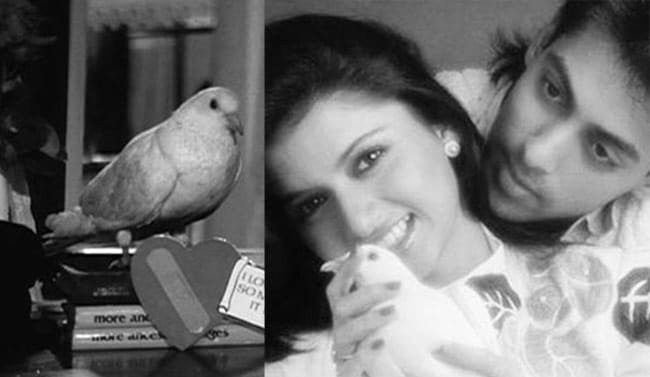
And I love, while we’re at it, that pigeons have been pressed into emotional service across most of human history. Salman Khan and Bhagyashree in Maine Pyar Kiya, sending a pigeon back and forth, singing kabootar ja, ja, ja. Seven and a half minutes which I am willing to argue, against considerable resistance, are the beating heart of 1980s Hindi cinema. If you have ever seen the film, you cannot get the song out of your head. If you have not, well, you have just watched it, and now neither can you. Essentially the same technology Reuter used, only deployed for love instead of grain futures. The pigeons did not know the difference. The pigeons were the part that worked.
He wasn’t the first person to use pigeons. He wasn’t even particularly fast in any absolute sense. The telegraph eventually closed the gap and made his birds obsolete within a few years, which is a lesson about innovation I’d rather not dwell on. None of that is what matters.
What matters is what happened to everyone else. Because the moment Reuter’s pigeons started arriving with stock prices before lunch, every trader in Brussels who wasn’t getting Reuter’s pigeons was suddenly trading on information that had already gone slightly off, like milk you keep meaning to throw out. They didn’t know it had gone off. The information looked the same. But the man across the room knew the same thing they knew, only he’d known it for three hours longer, and three hours is the difference between being early and being late, which is the difference, in markets and in life, between being right and being a fool.
Reuter didn’t invent speed. He invented the expectation of speed, which is a much more dangerous invention, and which we have been refining ever since.
This is the part nobody talks about. Letters took days, then the telegraph cut it to hours, then the telephone cut it to minutes, then messaging cut it to seconds, and each step gets told as a story about wires and cables and satellites, as if the technology were the point. The technology is not the point. The technology is the costume. The point is what happened to the waiting. A week used to be a normal interval. Then a week became impolite. A day became neglectful. An hour became suspicious. We are now in a place where four minutes can constitute, in certain relationships, a small betrayal, and I am not exaggerating, although I’d like to be, because I’d prefer to be exaggerating about this.
What we call the pace of life is really the length of our feedback loops. When the loops were long, you could put things inside them. You could write a letter and then forget you’d written it, and have a whole week of your own life before the reply showed up to remind you what you’d been thinking. You could change your mind, and nobody would know you ever held the first opinion. You could ask a question and let the asking dissolve into the day, and by the time the answer came you might not even need it anymore, which is, I would argue, the natural fate of most questions and probably the best one.
Now there are no loops. Or rather, the loops are so short they don’t have anything inside them. The asking and the answering happen in the same breath, and the small private space that used to exist between them (the space where you could be uncertain, or wrong, or just tired) has closed up. I think about that space a lot. I think it was where most of ordinary life used to happen.
So I send my text about lunch, and I watch three of my friends type and stop and type and stop, and what I’m really watching, I think, is a gap that used to be there and isn’t anymore. The waiting hasn’t gotten harder. It’s that there used to be so much more of it, distributed quietly through every hour of every day, padding the corners of everything, like the lining inside a good coat.
The world didn’t get faster. It just learned to answer back. And we, standing over our phones at midnight, learned to expect it to. Bring back the pigeons, I want to say, although I know what would happen. Within a year we would be checking the sky every nine seconds, wondering what was taking so long.


Leave a Reply