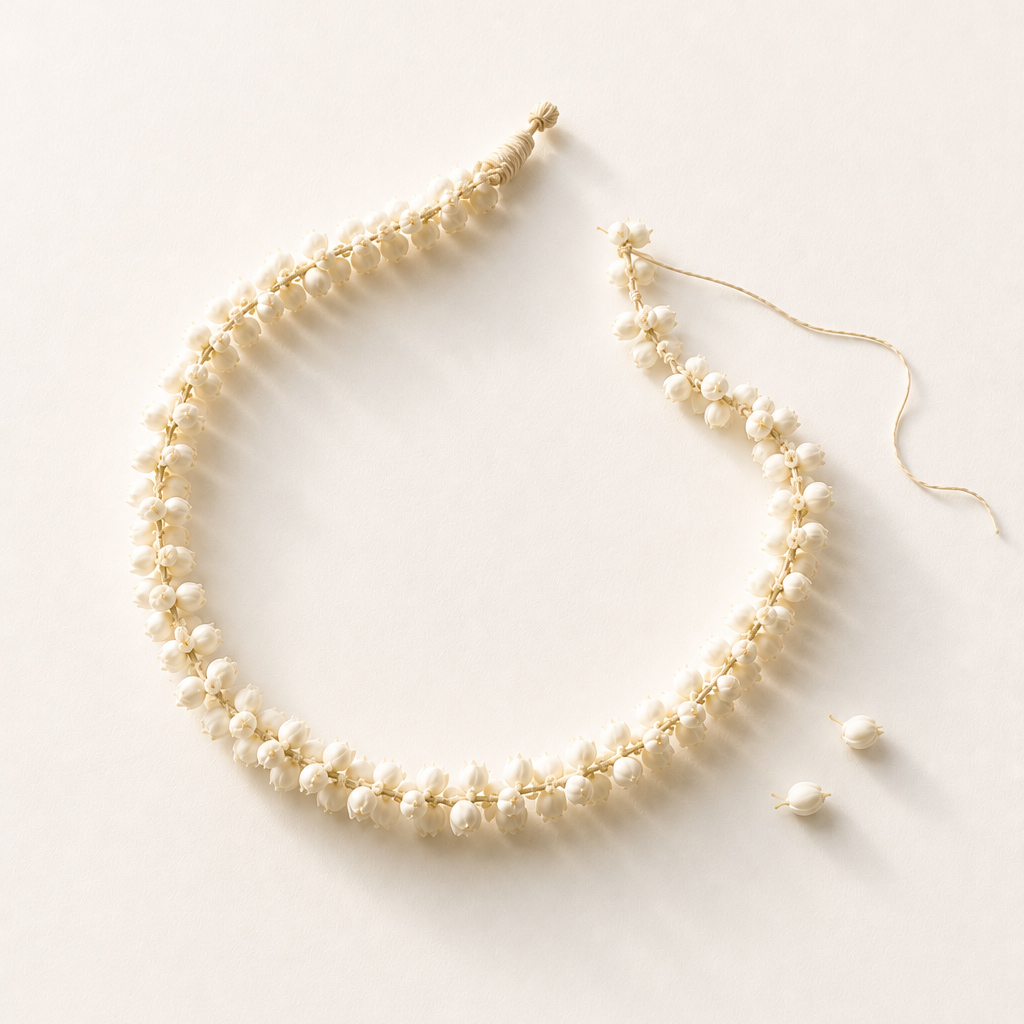
At eleven minutes to five on a Monday, with the abhishekam bell about to go, Shanmugam stops being able to finish tying a string of jasmine.
The last loop is between his thumb and his first finger. It does not close. The jasmine waits. The woman waiting for the jasmine, green saree, gold at the ears, glances at her phone the way the whole city has lately learned to glance at its phone, as if time lived in there now and not in the sky where it used to live, and behind her a young man in a striped shirt who is late for the Pradosham and wants it understood that he is late shifts his weight from one chappal to the other and lets out through his nose the small expensive sigh of a man who believes his hurry is the most important object on East Mada Street.
It is not. The most important object on East Mada Street, at this moment, eleven minutes to five, is a thing none of them can see, which is the inside of the man tying the flowers.
He has sold flowers and the small machinery of devotion at the east gate of the Kapaleeswarar temple for forty-one years. Camphor, kumkumam in a tin worn silver at the lip, sandalwood, the loose vermilion he scoops with a folded square of newspaper, agarbatti in fans, vilvam leaves for the god and arugampul grass for the bull, the lemon that is said to take away the nameless fear, the banana, the coconut, and the flowers, always the flowers, malli and mullai and the orange kanakambaram strung in arm-lengths by women in Mylapore who go blind early doing it. His stall is not a shop. A shop has walls and a shutter and a name painted by a man who came on a ladder. Shanmugam’s establishment is a blue plastic sheet, two crates, a plank, and an understanding, renewed daily, between himself and the corporation and the police, who twice a year arrive with a lorry and a sense of theatre and clear the entire gauntlet of platform vendors off the street into the lorry and drive away feeling that order has been served, after which the vendors walk back from wherever the lorry left them and by evening the plank is on the crates again and the flowers are strung again and the understanding, which is older than the policemen and will outlive them, resumes. He has been cleared away and has returned more times than he can count. It is, if you think about it, a small rehearsal of resurrection, staged twice a year, though nobody on the street thinks about it, least of all him, who only thinks, on those days, about the cost of a new sheet.
So. The loop will not close.
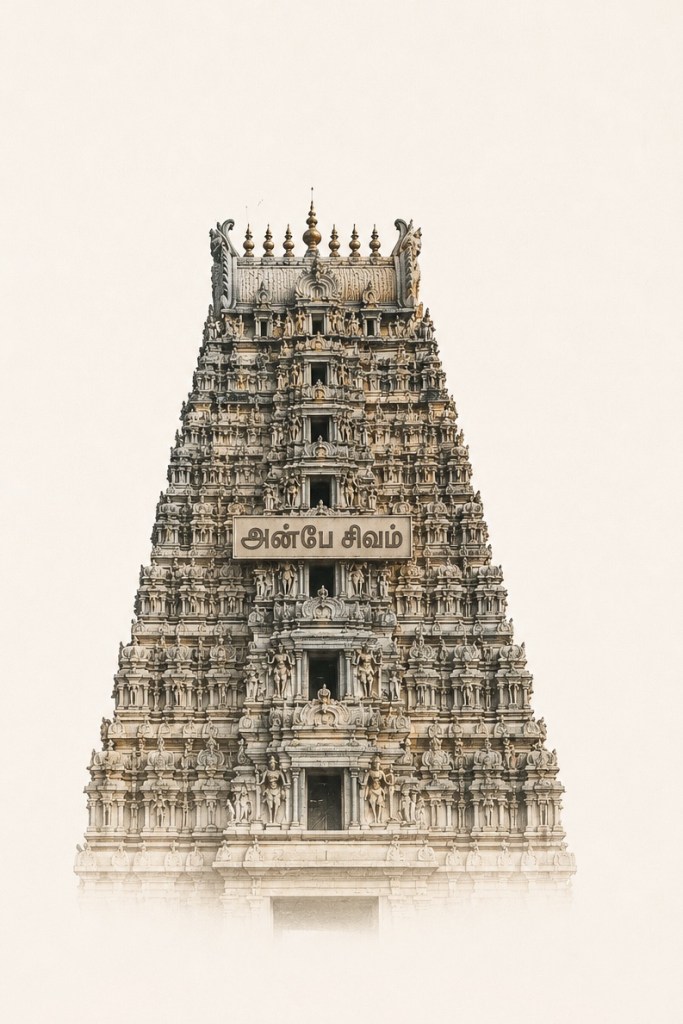
Dusk is coming down on Mylapore at the pace of a temple elephant, thick and golden. The gopuram above the east gate has gone from stone to bronze to a great standing shadow with lamps waking at its feet. The mada street is filling: cycle bells, auto horns, office shirts, silk, schoolbags, the flower row’s kerosene lamps catching one by one down the line like a slow fuse. On the west side the tank holds the last of the sky in its green water and lets it go. Somewhere inside the walls a peacock cries. The town is named for them. And the light is doing the thing it does only at this hour, the hour that is neither, the day ending and the night not begun, the seam, and every Tamil child is told the same two things about this hour, you do not sleep in it, you do not set out in it, because the seam is where things pass through.
Now, you should understand what kind of evening this is, because the evening is part of the machinery and the machinery has chosen its moment with a craftsman’s malice. It is Pradosham. Not any Pradosham but Soma Pradosham, the thirteenth lunar day fallen on a Monday, Monday being the day that belongs to Shiva the way Friday belongs to the goddess, so that the merit doubles and the crowd doubles and the abhishekam inside is about to begin, the milk and the curd and the honey and the trembling ghee going over the dark stone of the lingam while the priest’s voice climbs the old ladder of the chant. And the books, the ones Shanmugam cannot read because his schooling stopped at the second standard when his own father died and the stall passed to him like a debt, the books say a thing about this hour that the books are quite serious about. They say that during Pradosham the gods come down. All of them. That the membrane between the seen world and the unseen world, which is ordinarily as thick as the wall of the temple, goes thin as the skin on boiled milk, and the thirty-three crore of them, which is the number everybody says and nobody has counted, descend to attend the worship, to crowd invisibly into the prakaram and stand among the devotees and receive what is offered.
And here is the first cruelty of the evening, the small one, the appetiser. They have, in fact, come down. The street at eleven minutes to five is packed shoulder to shoulder with the divine. They throng the gate. They are everywhere, weightless, innumerable, dressed in light the colour of light, and not one of them, not one single god out of the thirty-three crore who have crossed the thinned membrane specifically and only in order to see and be seen, looks at the man at the gate who is dying.
Because that is what is happening. The loop will not close because somewhere in the left side of his chest a muscle that has beaten without his thanks for sixty-eight years has, like a vendor cleared one time too many, declined to walk back. There will be no resurrection of this one. He has perhaps a minute. He does not know it is a minute. What he knows is that the jasmine has gone very far away and very bright, that a cold sweat has come up on him in the warmest hour of the evening, and that the bell is about to ring, and that the membrane, which the books promised would go thin, has gone thin not above the temple but inside him, so that the unseen world pouring through tonight is not a world of gods at all but the only unseen world he was ever the keeper of, which is himself.
The minute opens like a hand.
The first thing it puts into his hand is smell.
Understand this about flower men: they cannot smell flowers. It is the first tax the trade collects. Somewhere in his third year at the plank the jasmine walked out of his nose the way a woman will walk out of a house where she is never spoken to, quietly, taking everything, and for four decades since, the man at the exact centre of the most fragrant trade the earth conducts has not once smelled a flower. Now it comes back. All of it, in one breath. Forty-one years of malli going off in his skull, festival-loud, and under the jasmine the camphor, and under the camphor the sambrani smoke, and under the smoke the snapped green blood of the vilvam leaf, wet stone, lamp oil, split coconut, the deep brown smell of the street itself giving back the day’s sun, dust, diesel, somebody’s burnt-sugar kadalai cart, the tank’s old green water, the whole confiscated library of his nose returned in a single second, with interest, and the interest is this: smell is the oldest door, it goes straight to the back rooms where the first things are kept, and so with the jasmine comes, unasked, after sixty years, the smell of his mother’s hair.
You think a minute is small. You think it the way you think a paisa is small, having forgotten there was ever a thing it could buy. A minute, properly opened, properly looked into, is not small. A minute is a town. It has streets you have never walked and a tank with steps going down into green water and a gopuram with three thousand eight hundred painted figures on it, which is the number the street has always said and nobody has ever climbed up to check, and you could spend a life walking it, and most people do, walking the one minute they are actually inside while believing themselves to be elsewhere, in some larger emptier place called the future where they have parked all the looking they intend to do later. He had thirty-five million of these. He is now told, by the brightening of the jasmine, that he kept almost none, and that the bill for the unkept ones has fallen due all at once, payable now, in the only currency the hour accepts, which is attention, and he has exactly one minute’s worth left in his pocket and the books did not lie, the gods have come down, but they came for the milk and the ghee, they did not come for him, no one comes for him, the witnessing of Shanmugam is a thing that has been left, like so much else, for later, and later has just been cancelled.
So he turns.
Not his body. His body is a plank on two crates and will not be cleared again tonight. What turns is the man who lived inside the vendor, the self that forty-one years of correct change had kept out of sight, and it comes around slowly, the way the temple turns the festival idol on its pivot so the crowd on every side receives its darshan.
And here is the thing the street had said for forty-one years and never once heard. His name is the word for what is happening to him now. Shanmugam, which in plain Tamil is Arumugam, the six-faced, the six faces of the god folded into a flower-seller’s name and called across the counter ten thousand times with the god in it heard by no one. The god is directly above him. He has been up there the whole time, high on the east tower in painted stucco with his two wives beside him, repainted every generation, six faces turned six ways over the gate, and the crowd going in underneath does not look up at him either. So the pivot brings him round, face after face, and the first it turns into the brightness is the one they all knew: the vendor, correct change, the right flower, the lemon for the nameless fear handed across to other people’s fear. Behind it, already swinging into the light, is the second.
The second face is the one that read the street.
Because he did read it, oh he read it, forty-one years is a long education and the gate of a temple is the only seat in Mylapore from which the entire human comedy is legible, every soul passing through on its way to lie to god in the cleaned-up language people save for god, and Shanmugam, who could not read the books, read the people instead, fluently, helplessly, the way some men cannot help solving the puzzle in the newspaper. He knew from what they bought. The widow who bought an extra muzham of flowers in the month after the husband went, buying for two, keeping the habit warm a little longer. The big merchant from Luz who came every amavasya and bought the largest coconut and the most camphor and the rice-flour that is said to wipe out debt, and prayed, Shanmugam knew, against the second set of books he kept, the ones with the true numbers in them, and the prayer never worked because the gods can read the second ledger too. The girl who came glowing on a Tuesday and came grey on the Tuesday eight weeks later and bought, the second time, only the small flowers, the cheap ones, the flowers you buy when you are asking and not thanking. He knew before the families knew. He was the unlicensed astrologer of the gate, reading not the stars but the baskets, and the accuracy of him would have frightened the street had the street ever once suspected that the flower-fellow was awake in there, was a lit room, was anything at all behind the hands.
That was his whole genius and he spent it the way you spend a thing you have decided is worthless. On strangers. Safely. At the exact distance of a transaction, which is the safest distance there is, close enough to touch the coin, too far to be touched. He loved them, the passing thousands, he loved them with the enormous unspendable surplus of a man who had decided early, for reasons the minute is now turning up like flagstones, that the love must never be allowed to show, because a thing that shows can be wanted, and a thing that is wanted can be taken, and he had had, once, at the very start, something taken, and had filed the lesson under the heading where he filed everything, which was: give them the flower, keep the man.
Kamala.
The third face is Kamala and it costs him, even now, even with the bell about to ring and the brightness eating the edges of the street, it costs him to turn it up into the light.
She came on Fridays. Thirty years of Fridays, for the goddess, for Karpagambal of the wish-giving tree, and she bought the long jasmine, the good mullai, and she did a thing with it he could have picked out of a crowd of ten thousand women. She took the string in her right hand and knocked it twice against the inside of her left wrist to shake the water off. Twice. Never once, never three times. Then into the bag. Then the coins, which she always had ready before she asked, counted out of a cloth purse with a broken clasp that she carried for three decades and never replaced.
What she never knew, what he made certain across thirty years that she would never know, was that on Thursday nights he set aside the best of the coming day’s string for her, the tightest buds, the ones that would open slowest and last longest in a woman’s hair, he chose them for her the way the priest inside chooses the words, and he handed them across with the correct change and not one syllable more than the transaction required, and she took them believing she was being served, and she was being loved, every Friday, for thirty years, in a language he had invented specifically so that it could not be understood.
There was a Friday eleven years ago when she came in white.
He had known for two days. The street tells the street. He had had two days to find a sentence and had not found one, and she stood at the plank in the white and asked for the long jasmine as she had asked for it every week of her adult life, and he gave her the string he had chosen on Thursday night, and he gave her the correct change, and he said nothing. Not one word. Because a word would have been a hand, and a hand once put out has to be taken back afterwards, and he did not have the second thing in him. She knocked it twice against her wrist. She went in to the goddess.
And for eleven years after that he went on choosing, every Thursday night, in the dark, by feel, the buds that would open slowest and last longest in a woman’s hair, for a woman who would never again put a flower in hers.
Tonight is Monday. She comes on Fridays.
In four days she will walk up to the east gate and there will be somebody else at the plank, a nephew or whoever the street sends, and she will buy the long jasmine from him, and it will not be a string chosen the night before because there will be no more Thursday nights, and she will knock it twice against her wrist and go in and ask the goddess for whatever it is she has been asking for. She may notice. The way you notice that a tree has gone from a street and find that you cannot say what kind of tree it was.
He knew her name because he had heard her daughter use it. He never once said it. To say the name would have been to cross the channel, and you do not cross the channel.
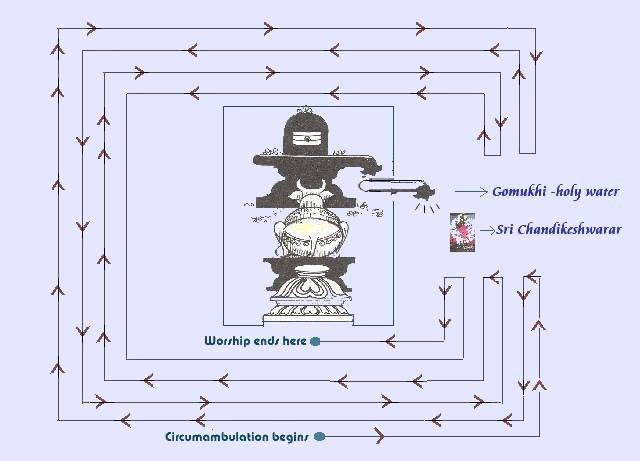
He knows about channels. Pradosham has a particular walk, the somasutra pradakshinam, where the devotee goes from the bull toward Chandikeswarar and back, and then toward the gomukhi, the channel that carries the bathed god’s water out, and never once crosses it, approaching and retreating, approaching and retreating, never completing the circle, and Shanmugam, who has watched ten thousand devotees do this walk through the gate, understands in the brightening minute that it is the only walk he ever did. Toward and away. The flower across the gap. Never the closing of the loop. He built a life out of the somasutra and called it dignity and the minute is informing him, without mercy, because the minute has no mercy in it, only light, that it was not dignity. It was fear wearing dignity’s good shirt.
The bell goes.
Inside, the first brass pot tips, and the milk comes down over the dark stone in one long unbroken white rope. It runs off the god the way everything runs off a god, blessed and unkept, away down the channel toward the gomukhi, and on Shanmugam’s tongue, across fifty years and a hundred feet of crowd, arrives the taste of that same milk: prasadam in a boy’s cupped palm, faintly warm from the stone it had been poured over, his father’s hand on his shoulder, his father alive, the stall still the father’s debt and not yet the son’s, the temple courtyard cool underfoot at some festival dawn before everything. He has not tasted it in half a century. He tastes it now to the last degree of its warmth. And under the sweetness, rising like water coming up in a field, a new taste, thin and metallic, which he does not recognize, and which is the body beginning to hand back its instruments.
And now the fourth face, and the bell has not yet finished its first stroke, and the milk is still on its way down the dark stone, and the books say that at this exact instant Shiva is dancing between the horns of the bull, the ananda tandavam, the five-fold dance the Tamil calls aindhozhil, the one that makes the worlds and keeps the worlds and ends the worlds and the fourth act of which, the fourth, is named maraithal, concealment, the hiding, the veiling of the real so the unready are not destroyed by seeing it too soon, and Shanmugam has been performing the fourth act of god for sixty-eight years without knowing it had a name or a fifth act after it, because the fifth act is arulal, the unveiling, the grace, the showing at last, and he never reached the fifth act, he stopped the dance at four, he concealed and concealed and concealed and the curtain never went up
and the fourth face is Karthik.
He named the boy himself, in the year the rains failed, named him for the same war-god he himself was named for, the god who can turn any face he likes to the world, and they used it, the two of them, oh they used it, they turned hard faces to each other across a kitchen for twenty years, the father iron because iron was the only material he trusted, and he had told himself for so many years that it was the only material he had been issued that he had come to believe it, the boy reading the iron as the absence of love because how is a boy to know that iron is what love looks like in a man who has decided love must never show, and the boy did the only thing the boy could do which was the thing the god is famous for, he went away to his own hill, his hill being a city far off and then a country far off, and the going was a slammed door and the father heard it slam and turned, you understand, turned the fourth face, the concealing one, and let the boy believe the slam had landed on a man who did not care, when in fact
and Pankajam, dying, four years before the boy, Pankajam who had watched the whole somasutra of it from the kitchen for thirty years, who had married a man who talked, who had been inside the lit room once, in the first year, for about eleven months, and had felt the door go quietly to behind her and had spent the remaining twenty-nine years knocking on it in the only language he left her, which was the volume knob of the radio, up when she was angry and down when she wanted him to speak, and in twenty-nine years he never once turned it either way himself, Pankajam said to him the last clear thing she ever said, she said you love that boy more than your own breath and you are going to let him die not knowing it, and he had said nothing, he had given her silence, the correct change, and she had been right, she had been right to the day, because the call came on a Tuesday, the boy, the hill, the heart, the same traitor muscle that ran in the family like a name, gone, at forty, in a country whose flowers Shanmugam could not picture, gone certain to the last hour that his father was simply a cold man, and the truth of it, the whole lit room of it, the forty-one years of unspent terrible tenderness, stayed where it had always stayed, inside the one man, witnessed by nobody, spoken to nobody, a love that existed entirely and only and forever inside a single skull and was now, with the milk falling over the stone and the bell still ringing and the green-saree woman beginning, just beginning, to notice that something is wrong with the flower-seller, about to be switched off at the source as though it had never been, the purest unseen thing in a city of unseen things, going into the ground with him in the next several seconds, unrecorded, the way it goes into the ground constantly, all around you, in every overlooked person you have ever failed to look at, right now, as you read this, someone at a gate
and he reaches for the boy.
This is the fifth face, this is the act he never performed, the unveiling, and he performs it now, in the brightness, with everything he has left he turns the whole hidden room of himself toward Karthik and opens it, every door, the flowers chosen in the dark and the name said at last and the iron explained and the slam answered, he opens all of it, he is at last and entirely a man who shows, the dance has reached its fifth act in the final second of the dancer, anugraha, grace, the showing,
and there is no one there.
The boy is four years in the ground in another country. The woman is reaching across the plank now and saying ayya, ayya, in a voice the gods do not turn toward either. The young man in the striped shirt has not yet looked up from his hurry. And the love, fully shown at last, perfectly and completely shown, the somasutra completed, the channel crossed, the fifth act danced, arrives nowhere, lands on no one, is received by not a single living or divine or remembering thing in the thinned and crowded and blazing world, two reachings crossing in the dark and touching nothing, the father reaching for the boy who reached, once, and was met with iron.
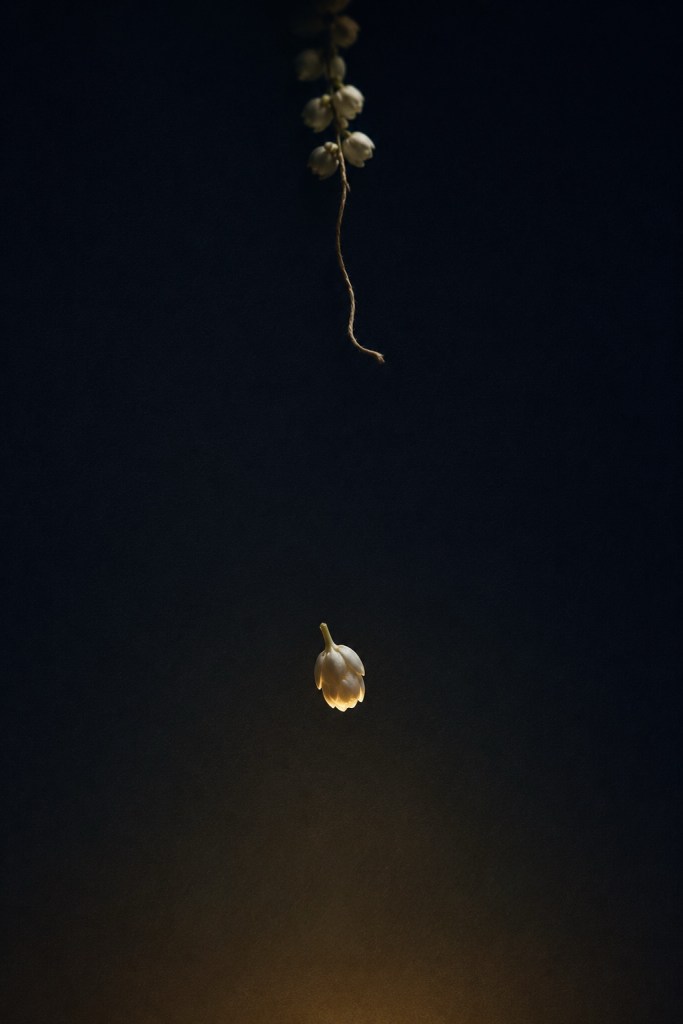
Inside, between the horns of the bull, the camphor goes up.
The cry goes up with it, ten thousand throats at once, the crowd on the steps surging to see the one flame all of Mylapore has come out this evening to see, the small fire lifted in its slow circles between the two horns, and the thirty-three crore, packed into the prakaram shoulder to invisible shoulder, are watching it too, every divine eye and every human one aimed at a single light. There are two lights in Mylapore tonight. That is the first. The second is at a flower stall by the east gate, and it is the brightness, and the brightness now is everything, the gopuram and its three thousand eight hundred painted gods gone molten at their edges, the green of the tank, the milk on the stone, the buds he chose on a Thursday, the whole seen world burning white the way film burns white at the end of a reel, and not one eye, human or divine, of all the crores gathered at this gate for the express and ancient purpose of seeing, is looking at it.
And now the world leaves him in order, the way the lamps are put out in a great house, one room at a time. The evening wind comes off the tank and crosses the street, he can see it crossing because the hung jasmine sways, and it does not arrive on his skin. His skin has closed its counter. The woman’s coin is held out in the air, one rupee, the milled edge he has known better than any face, and his hand declines to report it, the hand forgetting money first of all things. The last thing his skin accepted, a moment ago, without his knowing it was the last, was the cool of the jasmine. And then there is only sound, because hearing is the last door, hearing stays by the bed after all the others have gone home, and he hears the bell, and under the bell the chant climbing its old ladder, and under the chant the woman, ayya, ayya, and under her, from the temple wall, a peacock crying the light down, and one by one the sounds let go of the things that made them, the bell’s sound lets go of the bell, the street’s sound lets go of the street, the ladder lets go of the chant, the crying lets go of the peacock, until it is all one sound, and the one sound is the room the world is kept in, wide and unfurnished, and at the sill of that room the loop, the last loop of the jasmine, between his thumb and his first finger, in the final unspendable instant, begins, at last, after a whole life of the somasutra, after forty-one years at the gate, after the second standard and the lorry and the understanding older than the police, to


Leave a Reply