Last Thursday, at about 4:40 in the afternoon, my bank’s fraud department called to ask whether I had spent forty-three dollars and seventeen cents at a Shell station in Tukwila. I had not. But before we could discuss it, the woman on the phone, whose name was Denise, asked me to verify my date of birth. I refused. Politely, but I refused, because she had called me, and I have read too many emails from my own bank warning me about people who call claiming to be my bank. Denise explained that she could not proceed without verifying me. I explained that I had no way of verifying her. There was a pause while we both absorbed the situation, which was that two parties, each entirely willing to cooperate, had no procedure for establishing that the other one existed. Over a gas station in Tukwila, Denise and I had achieved a small Cold War.
So I hung up and called the number on the back of the card, which is the approved protocol, and after a pan flute had played for some time, a machine asked me for the name of the street I grew up on. Vellala Street. I said it out loud, alone, in Seattle, and a computer somewhere in Virginia checked the word against itself and let me in. This is the anchor of my legal existence: a public road in Purasawalkam, in Chennai, with a bus route, a temple, and a man who repaired umbrellas. My deepest secret has an address. Anyone can walk down it. Nobody can guess it.
I spend a surprising amount of my life this way now, and so do you. Six-digit codes arrive on one device I own so I can type them into another device I own, thereby proving that I own the first device. A checkbox asks whether I am a robot and takes my word for it. Last year a relative’s WhatsApp was taken over, and the whole family knew within about four minutes, not because any security system caught it but because the first message said “Hello dear,” and no one in my family has ever said Hello dear. The impostor had the account. What he didn’t have was the punctuation.
Anyway. The Odyssey opens this Friday.
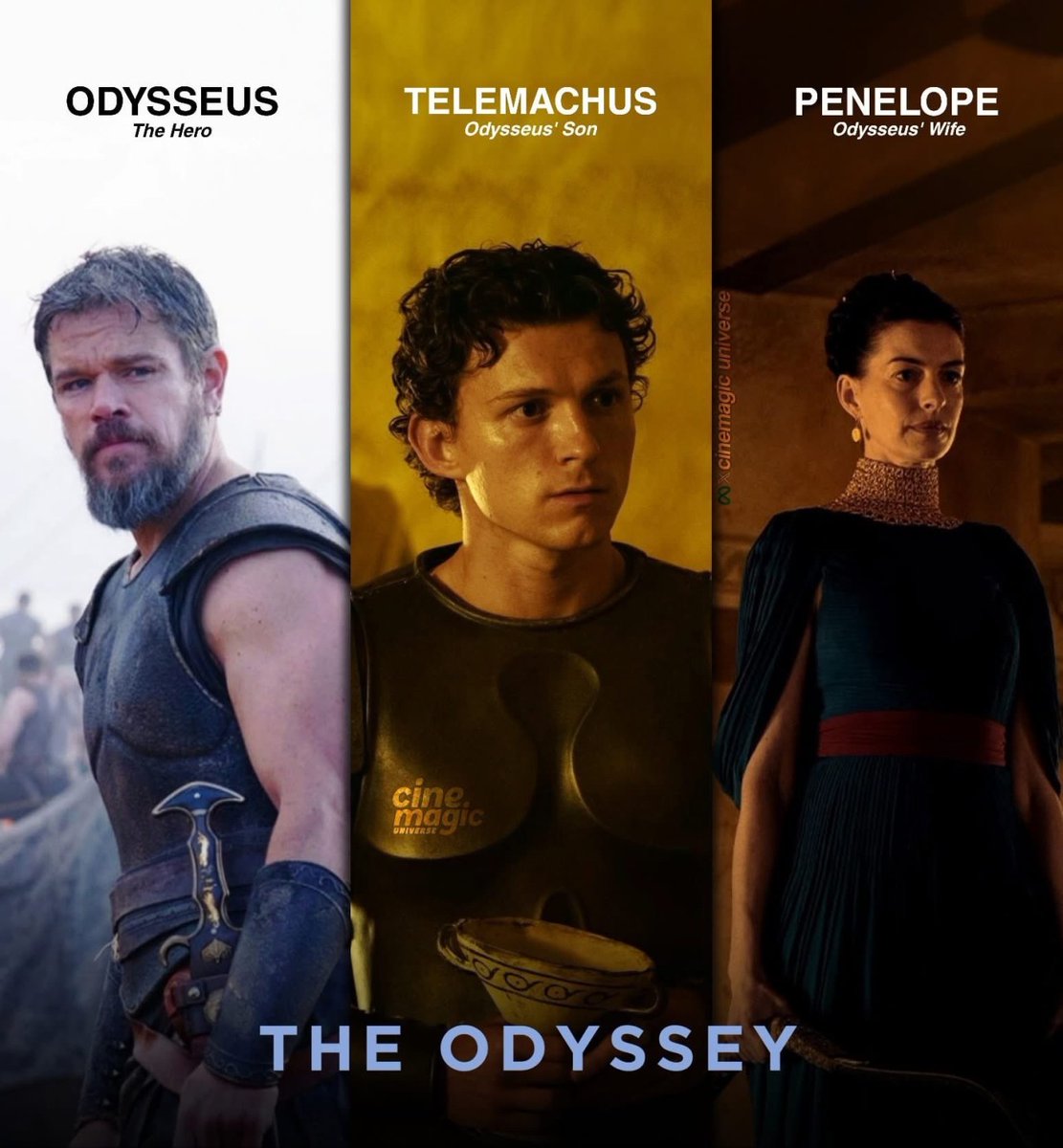
It has Matt Damon, IMAX cameras the size of washing machines, Nolan behind them, trailers full of ships and storms and Tom Holland looking very worried. And in case your school placed you in the group that read something else that semester, here is the entire plot. There was a war over a woman. It ran ten years, the Greeks finally won it with a large wooden horse full of soldiers, and then one of their kings, a man named Odysseus, spent ten more years trying to sail home to a small rocky island called Ithaca, where his wife, Penelope, was fending off a houseful of men who wanted to marry her, on the sensible theory that anyone gone twenty years is dead. That’s the story. War, boat, monsters, home. It fits on a napkin, and the dictionary agrees, because the dictionary says an odyssey is a long, eventful journey, which is what the word has meant to everyone since roughly the invention of the college application essay.
I once lost an argument about this exact word. Years ago, in a conference room, I proposed naming a piece of software Odyssey. Its entire job was to tell people whether their apps were doing fine, and I thought the name had sweep. My manager declined it so tactfully that I did not realize I had been declined until the drive home. An odyssey, he explained, is an arduous journey. You do not want to tell a customer that finding out whether their software works will be one. He was right. I agree with him a little more every year. I would also like it recorded somewhere permanent, so let it be here, that the service thrives today under its sensible name and would have thrived harder as Odyssey, and I am aware that both of those opinions cannot be true, and I hold them anyway. Though Friday complicates things, because a man just named a movie The Odyssey, promised everyone an arduous journey, and people bought tickets a full year before the film existed. It turns out you can sell an arduous journey. You just cannot sell it as a dashboard.
The poem is twenty-four chapters long. The monsters everyone remembers, the one-eyed giant, the singing ladies on the rocks, live in just four of them. And those four chapters aren’t even told by the poet. They are a story Odysseus tells at a dinner, a shipwrecked stranger singing for his supper in front of a king he needs a ride from, and he is, on the poem’s own extensive evidence, a fluent and habitual liar. He lies to his wife. He lies to his own father. At one point he lies, beautifully and at length, to a goddess who has arrived in disguise to help him, and she is so charmed by the quality of the lying that she drops the disguise just to compliment it. The poem never shows you a monster. It shows you a man claiming a monster.
Then, barely halfway through, he gets home. His crew lays him on his own beach asleep, stacks his treasure beside him, and rows away without waking him, which remains my favorite arrival in all of literature: a man deposited on his own island like a package left with a neighbor. And everything after that, the entire second half of the most famous travel story ever written, happens within a few miles of his own front door. It took him ten years to get home. It takes the rest of the poem for anyone to believe he’s there.
Because that, it turns out, is what the story is actually obsessed with. How do you know a person is who they say they are? The island has no photographs, no paperwork, no records office of any kind. Twenty years have happened to his face, and on top of that the goddess disguises him as an old beggar, although I’d argue she is only doing officially what twenty years does anyway. So his own household runs him through checkpoints, one at a time, without ever calling them that.
The dog goes first. Argos, whom Odysseus raised as a puppy, is lying on a dung heap by the gates, old and full of ticks, too weak to stand. The disguised beggar walks past. Argos flattens his ears and wags his tail. Odysseus wipes away one tear where nobody can see and keeps walking, because he cannot afford to be known yet. Argos dies. He is the only creature in the poem who requires no proof at all, and the recognition costs him the last strength he has.
The old nurse is next, and the nurse is an accident. She had raised Odysseus from a baby, and she is washing the strange beggar’s feet, which is simply what you did for guests then, when her hands find the scar above his knee, from a boar hunt when he was a boy. She knows instantly. Her eyes fill, the water basin clatters to the floor, and Odysseus grabs her by the throat before his name can leave her mouth. I find this scene almost unbearably modern. He has spent the entire evening managing his story, controlling every word, and his own leg gives him up. Your body keeps records on your behalf. It will testify without asking you first.
But Penelope. Penelope is the reason this essay exists.
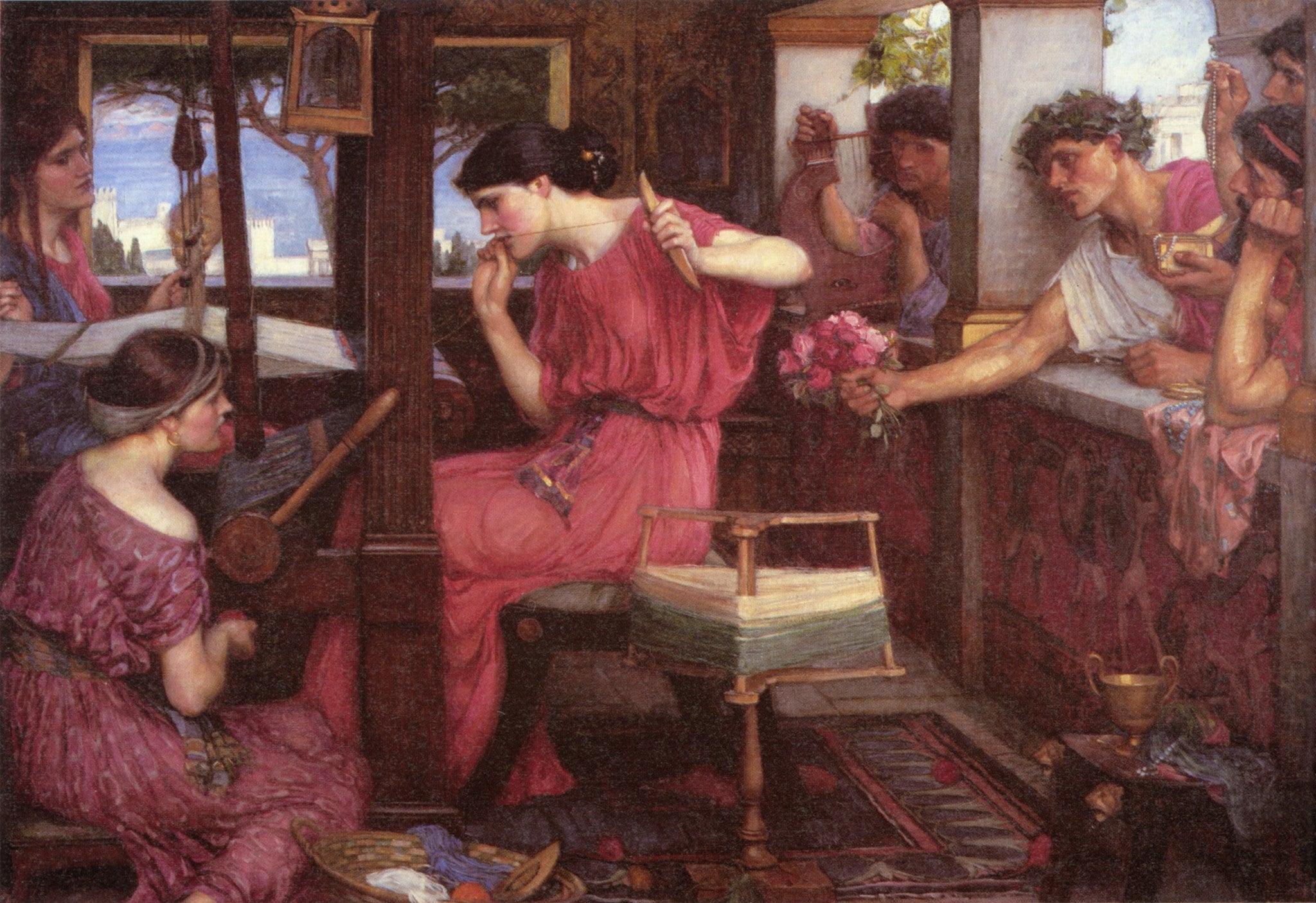
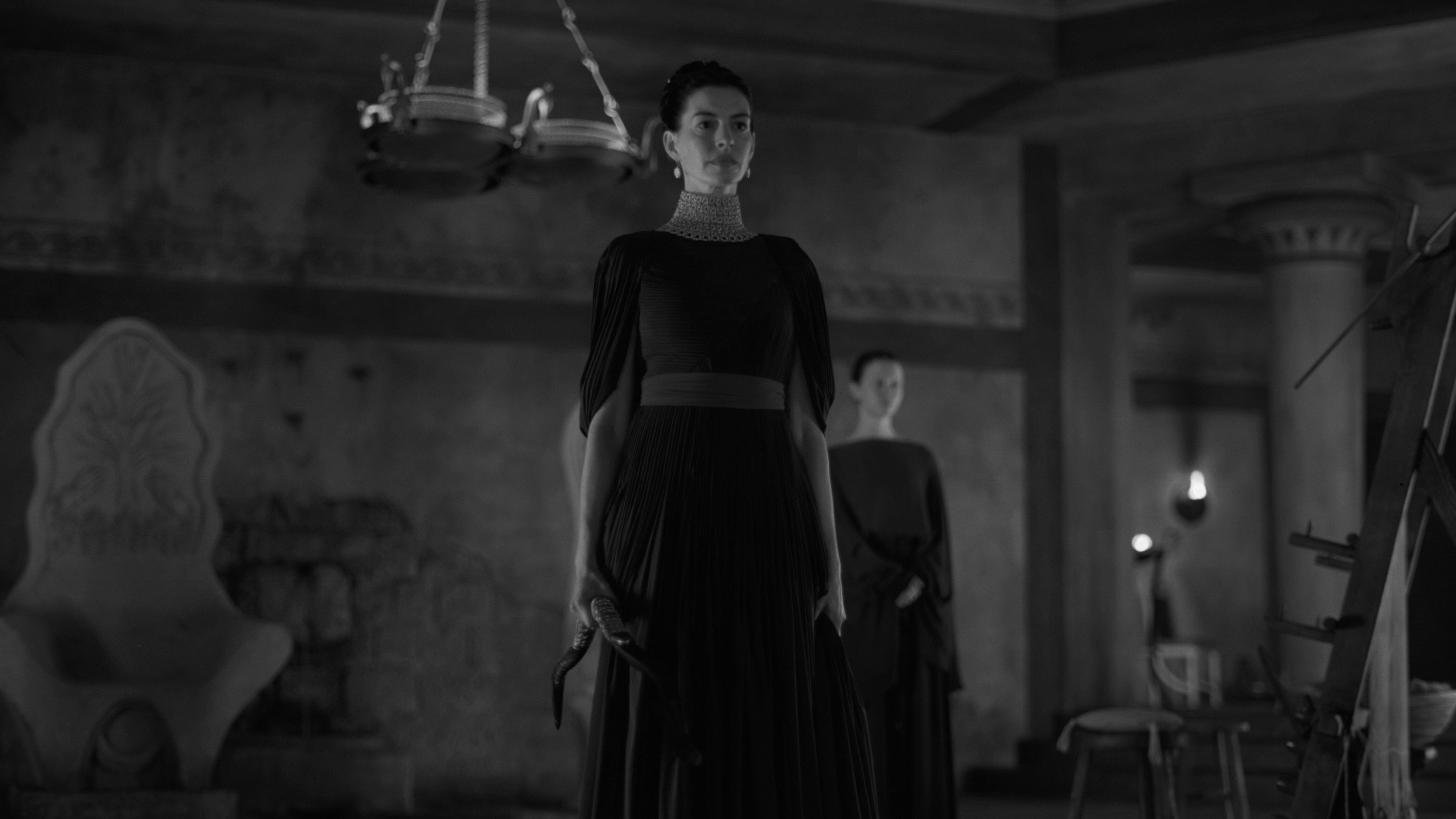
You already know her, or at least the postcard: the faithful wife, the patient one, waiting at the window while the husband had adventures. The postcard leaves out her hands. For three years she kept the suitors at bay by weaving a burial shroud for her elderly father-in-law, announcing she would choose a new husband the moment it was finished, and then every night, by torchlight, she unpicked the day’s work. The most famous act of waiting in literature was a deadline she kept quietly deleting. A maid eventually ratted her out. She was married to the most celebrated liar in the world, and the poem is gently clear about what kind of household this was: there were two of them.
Consider her twenty years. The poem tells us, in passing, that every drifter who washes up on the island invents news of Odysseus, because a good sighting of the missing king is worth a meal and a warm cloak from the queen. She has been fed false husbands for two decades. She has heard every version of the story from every liar on every boat, which makes her, by the time the poem needs her, the most experienced fraud analyst in the ancient world.
And she has already tested this particular beggar once, the night before everything happens, in a quiet scene almost nobody remembers, and it should bother us more than it bothers her. The beggar claims that he once hosted her husband, years ago, on the way to the war. Prove it, she says. What was he wearing? And the beggar delivers. A thick purple cloak, folded double. Pinned to it, a gold clasp with a tiny scene worked into the metal: a hunting dog catching a young deer, the deer still kicking, so finely made that people used to crowd around just to look at it. And under the cloak, he adds, a shirt so soft and gleaming it looked like the skin of a dried onion. Which is not a detail anyone invents. She weeps in front of him. The poem says her tears ran the way snow melts off a mountain. And every word of it checks out, and of course it does, because he is describing himself. She made that cloak. She wove it with her own hands, and she pinned that gold clasp on him at the door, twenty years ago, the morning he left for the war. The one man alive who can pass her clothing quiz perfectly is her husband, and here he sits in her hall, using a true detail to sell her a false story. And somewhere in her, the lesson lands. Because think about what a famous cloak actually is. Sailors saw it in harbors. People described it in taverns. For twenty years, anyone with ears could have collected that description and worn it into her hall. Right answers can be gathered. A quiz proves that a man has the correct answers. It does not prove where he got them.
The next day comes the famous part, and I’ll be quick about it, because the famous part is the least interesting part. There is an archery contest. The prize is her hand. The bow is Odysseus’s own enormous bow, and the hundred-odd men who have spent years eating his estate down to the ledgers, a kind of hostile audit with wine, cannot even bend it. The old beggar strings it sitting down, the way you’d check a violin, and then, the poem being the poem, kills every last one of them.
Which is evidence most people would call sufficient. Her twenty-year problem is dead on the floor of her own dining hall, and the man who did it is standing in front of her, and even her son is furious with her, calling her cold, iron-hearted, because she will not cross the room. She sits against the far wall and studies the stranger and says, roughly: if it is really him, we have ways of knowing each other. Secret ones.
And then she runs her test, and the test is a lie. She turns to the old nurse, perfectly casual, and says: make up the bed for him, the big bed, the one from our room. Move it out here.
He detonates. Who moved my bed? It cannot be moved. He built it himself, as a young man: found a living olive tree growing on the property, trimmed the trunk into a bedpost, and built the bedroom around it, so that the marriage bed is rooted in the actual ground of the island. Only three living people know this, the two of them and one elderly maid, and the poem is honest enough to mention the maid. An impostor, told his bed had been moved, says thank you. Only the husband demands to know who touched it. She isn’t running another quiz. She watched a liar ace her quiz with her own gold clasp the night before. She is testing for the eruption, the involuntary outrage of a man being told someone sawed through the thing he built, and that is the one answer no impostor can rehearse. Three thousand years later, security engineers would give a name to the fixed, unmovable anchor at the bottom of every trusted system. They call it a root of trust. Hers had leaves. The scar proved what he is, the bow what he could do; the bed proved what only two living people knew, and if you have opened a bank account recently, you have met all three of these gentlemen under worse lighting.
And her wanting. She had wanted exactly this knock at the door for twenty years, and she is the only person in the whole poem who treats her own wanting as the security hole. The wife in her would have crossed the hall at the bow. The analyst waited.
Even then it isn’t over. The next morning he walks out to the family farm, where his father, a widowed old man, is grieving in the orchard, digging around a sapling. The father wants proof too. And Odysseus gives him the only password left: the trees. He recites the orchard he was given as a boy, tree by tree, thirteen pear and ten apple and forty fig. An old man is authenticated back into his own life by an inventory of fruit trees, and then he faints. (People who study this poem for a living will tell you these scenes are about honor, hospitality, the ritual return of the king, and they are not wrong, and I am aware that I am reading one of the founding poems of the world the way a help desk reads a ticket.)
For most of human history, the hard half of this story was the first half. Distance was the epic. Oceans, weather, gods, years. Well, we solved distance. A voice can be in your kitchen in one ring. A face can attend a meeting in Singapore in its pajamas. I can arrive anywhere on earth, as a voice, as a face, as a paragraph, in about a second, for free. And the moment arriving became free, it stopped being the hard part, and the full weight of the old poem slid quietly onto the other half. Every login is Ithaca. Twenty years of drifters inventing news for a cloak is my spam folder with better weather. And the drifters have improved. Three seconds of audio is now enough to clone a voice, and there are grandmothers, right now, taking calls in which a grandson asks for bail money in his exact voice, his exact worried pitch, the little pause he does. The official advice, from the same security industry that runs on fingerprints and satellites, is this: agree on a family code word ahead of time, and when the voice calls, ask for it.
That is the bed. That is exactly the bed. The frontier of twenty-first-century fraud prevention is the contents of a marriage. After the biometrics and the tokens and the six-digit codes, the safest place anyone has found to keep a secret is still another person.
There is one more scene, the gentlest in the poem, and I am prepared to argue the funniest. The goddess, having watched twenty years of this, does the couple one final favor. She holds back the dawn. Literally. She keeps the horses of the morning standing in their stalls so the night can run as long as these two need it to. The most powerful being in the story surveys a man and a woman who have just found each other after two decades, one massacre, and a furniture exam, and concludes that what they need is a longer night. And here is what they do with it. The poem is discreet. It grants them the obvious, briefly, and then reports, with a perfectly straight face, that afterward the two of them lay there and took their real pleasure in talking. She goes first: the suitors, the shroud, three years of undoing the day’s weaving by torchlight while a hundred grown men ate her out of house and home downstairs. Then he goes. The whole twenty years, the storms, the giant, and the two goddesses he had lived with along the way, both of whom he files, in the telling, under delays. I have been married. I have my suspicions.
Consider what this scene is up against now. A modern couple, handed one divinely suspended night, the sun itself waiting on them, would spend the first forty minutes of eternity deciding what to watch. I say this with love and firsthand knowledge. We have since built an entire economy around buying back small aftermarket versions of what the goddess did for free. Date night is a stopped clock you pay for, plus fifteen dollars an hour to a teenager to supervise the consequences of the previous ones. Couples therapy is a stopped clock that bills by the hour, an arrangement the original made impossible, since the hour declined to move. And the four most frightening words in a modern marriage, the ones that make grown adults suddenly remember an urgent email, are the exact words this poem hands its hero as the grand prize. We need to talk. All night. On purpose. With the horses held.
Which is, I have come to think, what all the testing was for. The treasure his sailors stacked beside him on the beach gets hidden in a cave and, as far as the poem cares, is never spoken of again. The prize was the conversation. The point of proving who you are is that one person, at the end of it, finally gets the unedited version. Everyone else gets the monsters.
My wife and I chose our word last month. This took longer than it should have, and the delay was my fault, because it turns out I have an occupational problem. I have spent most of my adult life publishing the contents of my own head. The street I grew up on is sitting in the second paragraph of this essay, which means I owe my bank a phone call the moment I finish it. The flat I was raised in is in print. So are the songs my father played on Sunday afternoons, and the restaurant where I learned to save the butter for last. A personal essayist is a man who gives away his own security questions for a living, one warm little paragraph at a time. So we went back past all of it, to a Tamil word from long before I ever wrote anything down. It has never been on a page. Exactly one reader would recognize it, and you may know her by now.


Leave a Reply