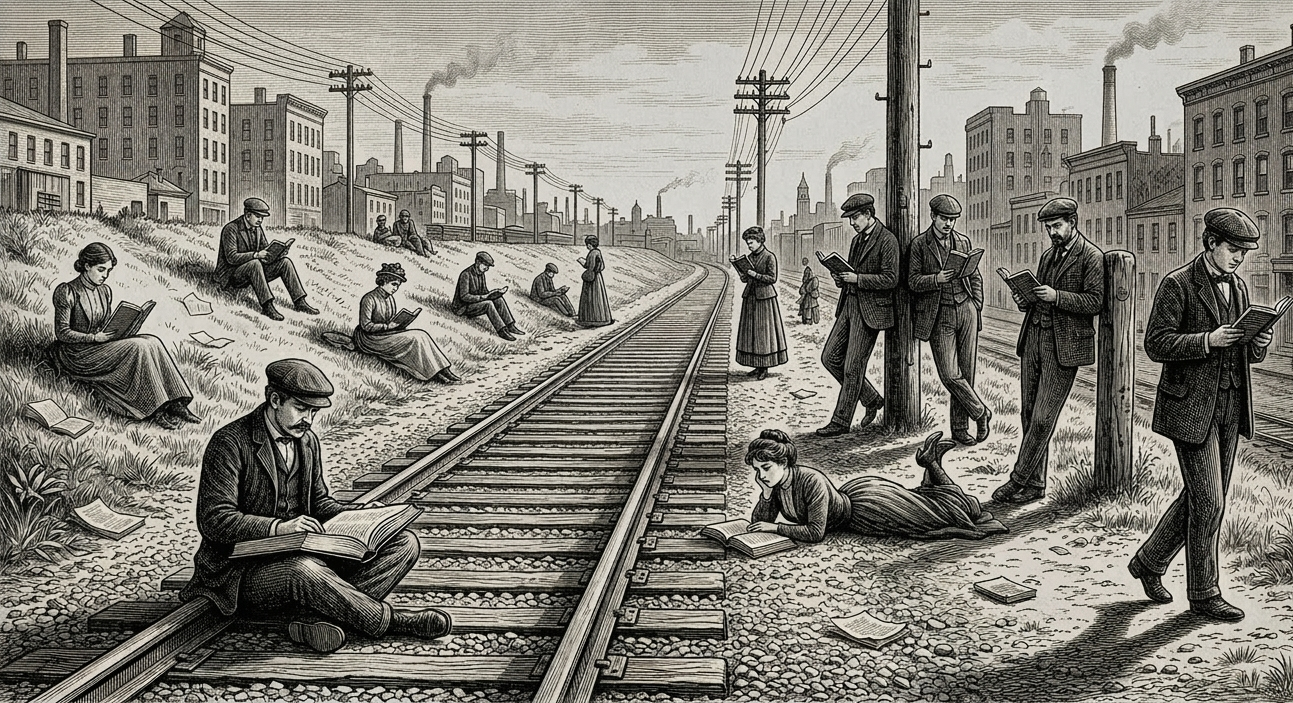
Somewhere outside the city, along a quiet stretch of railroad track that has seen better centuries, a small group of people are walking slowly through the evening air reciting books to one another.
One man is repeating a passage from Plato’s Republic. Another has taken responsibility for the Book of Ecclesiastes. A third is carrying a Dickens novel somewhere in his head and appears to be doing a very respectable job of it. If you listen long enough you realize that these people are not merely quoting favorite lines the way enthusiastic readers do after two glasses of wine. Each of them has memorized an entire book. They walk, talk, pause occasionally to correct a misplaced sentence, and continue on like a traveling library whose shelves happen to be made of human brains. This arrangement, unusual as it may seem, has become necessary because in the cities they have left behind books have developed a rather unfortunate tendency to catch fire.
There is something quietly unsettling about a civilization that assigns the job of burning books to its firemen. In most societies firefighters are expected to arrive heroically with hoses, ladders, and an admirable sense of urgency about preventing things from turning into smoke. In Ray Bradbury’s imagined futuristic America the fire engines arrive carrying kerosene. Their job is not to extinguish fires but to start them. When a hidden library is discovered (novels, philosophy, poetry, the occasional alarming volume of history), the firemen stack the books together in cheerful heaps and set them alight with impressive professionalism. The system works extremely well. Paper, it turns out, is highly cooperative when exposed to sufficient heat.
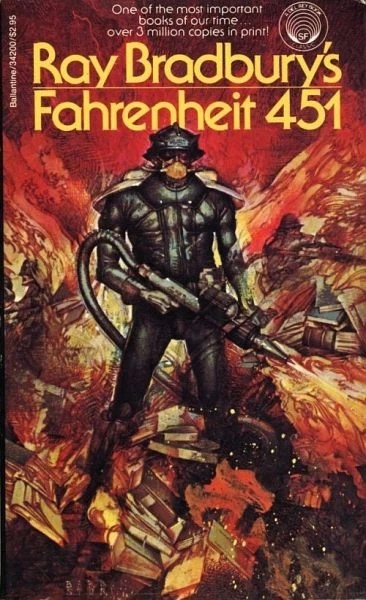
Bradbury named his novel Fahrenheit 451, after the temperature at which paper supposedly ignites and burns. Published in 1953, the book has become one of the most famous dystopian novels ever written, though it has also achieved the slightly awkward distinction of being banned in a number of schools and libraries over the years. This is not unlike banning umbrellas during a rainstorm, but literature has always been full of these small ironies.
Most readers remember the burning. What they often forget is that the burning is not actually the frightening part.
In Bradbury’s world, books do not disappear through sudden confiscation by authorities. The process is slower and, in its own way, more depressing. The population gradually stops reading. Television walls fill entire rooms. Conversation shrinks to slogans and pleasantries. Books begin to feel inconvenient: too slow, too complicated, too full of ideas that require effort to follow. Eventually the firemen arrive not as conquerors but as custodians of conformity, tidying away objects that society has already decided it no longer needs.
This is the detail that makes the novel unsettling even now. The threat is not censorship. The threat is indifference at a civilizational level. Bradbury understood this possibility very well, because his own life had unfolded in exactly the opposite direction.
Ray Bradbury never went to college. When his family moved to Los Angeles during the Great Depression, higher education was something other people with reliable incomes occasionally pursued. Bradbury instead discovered a far more democratic institution: the public library. Three days a week he walked into the Los Angeles Public Library and stayed for hours. He read science fiction magazines, Victorian novels, Greek mythology, essays, travel writing, poetry, anything that happened to cross his path and looked vaguely interesting. Bradbury approached reading the way curious travelers approach unfamiliar cities: by wandering around until something fascinating appears, which in libraries happens roughly every twelve feet.
He later explained the arrangement with admirable clarity. “Libraries raised me,” he said. It is a striking sentence when you stop to consider it. Parents generally raise children. Schools occasionally help. Libraries are not usually listed in the official documentation. Yet for Bradbury the library became something very close to a university, except that it had the considerable advantage of not requiring tuition or examinations.
The remarkable thing about libraries is that they contain other minds. A reader can sit quietly at a wooden table and borrow the thoughts of people who lived centuries earlier. Shakespeare might wander through the room. So might Dickens, Plato, Tolstoy, or a Victorian naturalist explaining the behavior of beetles. The reader opens a book and suddenly finds themselves thinking alongside someone who died long before electricity reached their neighborhood. It is an unusual arrangement.
Watching a film provides faces, voices, scenery, everything conveniently assembled for the viewer. Reading works differently. The author supplies the words, but the reader must construct the world. Characters borrow the reader’s voice. Landscapes borrow the reader’s memories. Each sentence requires a small act of imagination, and before long the reader discovers that they have become a participant in the act of writing rather than merely its audience.
This process has a curious side effect. The mind expands. A reader finishes a novel and the world looks exactly the same. The dog is still asleep in the same place. But somewhere inside the mind a few new ideas have taken up residence. A phrase has been learned. A metaphor has settled in. A different way of describing the world has quietly appeared.
Words accumulate. Ideas connect. And after enough reading a person begins to notice that the internal vocabulary with which life is interpreted has grown larger than it once was.
Bradbury discovered this gradually, which is the only way such discoveries occur. Books did not arrive in his mind like revolutionary proclamations. They arrived as sentences (interesting ones, strange ones, sometimes beautiful ones), and over time those sentences rearranged the architecture of his thinking. Eventually he began writing stories of his own.
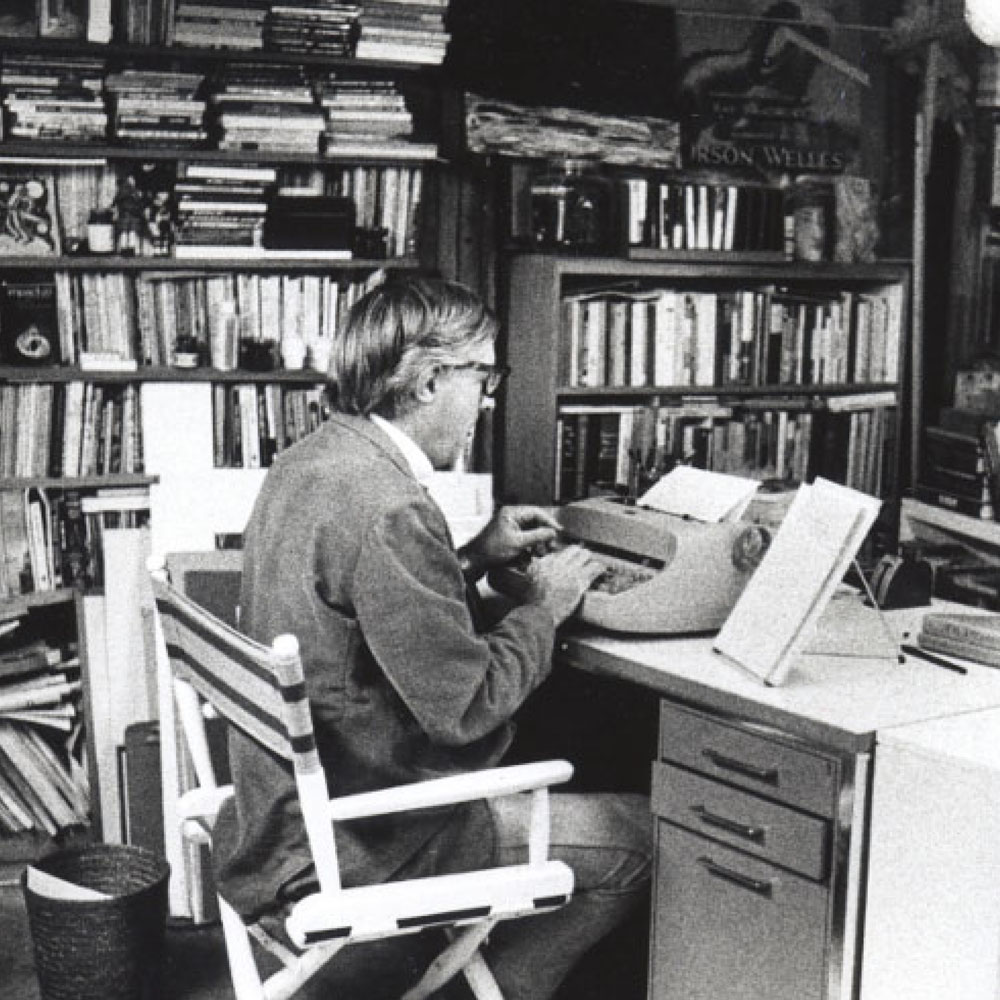
In the early 1950s Bradbury was working on a story about a future in which books had disappeared. He found himself at the UCLA Powell Library, which contained a basement room with an unusual convenience: typewriters that could be rented for ten cents per half hour. Bradbury fed coins into the machine and began typing. Every pause cost money, so he typed quickly. The clatter of keys echoed in the basement as sentences accumulated, pages filled, and a novel slowly took shape. Years later Bradbury calculated that the entire manuscript had cost him nine dollars and eighty cents in borrowed typewriter time.
It is difficult to imagine a more appropriate birthplace for Fahrenheit 451 than a public library basement humming quietly with rented typewriters. Bradbury was writing a novel about the destruction of books in the one place that had created him.
Which brings us back to those people walking beside the railroad tracks, calmly reciting entire volumes to one another while civilization burns libraries behind them. Bradbury understood that books are not merely objects made of paper and glue. They are devices for enlarging the mind that reads them. A civilization may decide that books are inconvenient things. They take time. They ask difficult questions. They complicate what might otherwise be a perfectly pleasant evening of television walls and agreeable noise.
So the firemen arrive with kerosene. Libraries disappear. Shelves turn to ash. But the books themselves have already moved somewhere else.
They may burn the libraries.
But the minds that have read them are considerably harder to set on fire.
 kirukkal.com
Leave a comment