
[if you’re wondering how our good reader ended up here croissants in hand, books still unread, the backstory is available in two equally unhelpful installments: part 1 and part 2.]
“Bonjour, monsieur. Voilà votre café crème… et votre Hemingway starter kit.”
(“Good morning, sir. Here is your coffee… and your basic tourist intellectual package.”)
The waiter smirked, setting down the tray: café crème foaming, orange juice bright as stained glass, and a pain au chocolat sweating butter through its paper sleeve. But the true relic, of course, was the paperback copy of A Moveable Feast, spine already cracked at page 36, the universal signal to every Parisian waiter that the guest believed himself the reincarnation of Hemingway, only hungrier and less published. The Good Reader stiffened, determined to look serious, as though the waiter’s sarcasm had been meant for the other thirty people attempting the same ritual that morning.

At 8:07 a.m., on the terrace of Café de Flore, the boulevard unfolded into theater. Women in sundresses rehearsed Instagram reels, pacing back and forth until their boyfriends got the hair flick just right. Men in linen shirts staged static photo shoots, clutching hardcovers as props, their faces tilted into the kind of fake concentration that suggested deep reading but was actually just mild sun glare. Tourists orbited the tables, selfie-sticks extended like medieval lances. Even joggers slowed, aware that every stride might end up in someone else’s “Paris morning vibes” reel.
And in the middle of it all sat our Good Reader, book open, brow furrowed, a man entirely convinced he was summoning Hemingway’s ghost through osmosis. This was performance art, with himself as the unpaid extra. And even as he underlined a sentence with priestly solemnity, there was already a telltale tremor in the air, the unmistakable prelude to failure. Paris had not yet defeated him, but it was warming up.

The Good Reader stirred his cafe creme, reverent as if channeling Hemingway through dairy. He sipped, frowned, and realized the grim fact: this was not black coffee. This was espresso disguised, padded with milk, foam, and Parisian attitude. He raised a hand.
“Excuse me,” he asked, vowels wilting in the humid air, “do you have… just black coffee?”
The waiter did not blink. He smirked the way only a Parisian waiter can, having seen this exact scene thirty times already that week.
“Non, monsieur. Ici, il n’y a pas de ‘black coffee.’ We have café allongé. We have Americano for tourists who miss their office mugs. But in Paris…” He placed another tiny cup beside the first with theatrical precision. “…in Paris we drink espresso.” Then he leaned in, delivered the line with velvet sarcasm, and in doing so baptized the Good Reader into the true religion of café culture:
“Here’s your espresso, monsieur. No rush, monsieur.”

The words clung like prophecy. No rush, monsieur. Half insult, half gospel, the phrase became the Good Reader’s refrain for the rest of his Parisian days. Every time he tried to hurry a waiter for the check, every time he opened Google Maps only to discover the average café stay was 2 hours 37 minutes, the city whispered it back: No rush, monsieur. This was Paris, the capital of lingering, the republic of loafing, the empire where art is born not in haste but in the holy slowness of small cups and large afternoons.
But how had he landed here, espresso in hand, Hemingway at page 36, performing seriousness while photobombing three Instagram reels? Rewind. Two days earlier, unread and overfed in Chennai, the Good Reader had boarded a British Airways flight to London with the posture of a man boarding the Ark: one man, one tote bag, twelve unread books. Somewhere over the Black Sea, between turbulence and reheated paneer tikka curry, he decided London was merely a foyer, a polite lobby to the true cathedral. Paris. Paris was where artists sharpened their pens, where painters invented light, where writers birthed manifestos between cigarettes and indigestion. He would not stop at London. He would tunnel under water itself if he had to. And in the 1920s and ’30s, Paris had been the heady crossroads of the Lost Generation, a magnet for starving artists and restless expatriates chasing cheap wine, cheaper rents, and the illusion that genius might be contagious. Hemingway, Fitzgerald, Stein, Pound, they had all brooded and brawled here, drinking their youth and their doubts into art. To the Good Reader, that history meant Paris was not just a city but a proving ground, the only proper arena where a reading pilgrimage could turn into scripture.
And so, like all great pilgrimages, it began at an airport bookstore. Heathrow, Terminal 5. A display table groaning under pastel thrillers, leadership manifestos, and cookbooks promising enlightenment through lentils. And there, gleaming faintly through the clutter: Hemingway’s A Moveable Feast. The thirteenth book of his summer, bought with the solemn conviction that it could only be read in Paris, on a terrace, with overpriced coffee and a smug expression. He tucked it reverently beside his other eleven volumes, carried them onto the Eurostar as if smuggling contraband genius, and emerged two hours later into the City of Light, unread but glowing with intention.
Back at Café de Flore, the Good Reader adjusted his paperback to page 36 of A Moveable Feast, convinced this would be the day his life changed. The sentence he underlined was Hemingway’s famous line: “There is never any ending to Paris, and the memory of each person who has lived in it differs from that of any other.” He stared at it with solemnity, mouthing the words like scripture, and managed, before destiny intervened, to read exactly six additional lines.
Because the pain au chocolat was steaming. Because the orange juice gleamed in its glass. He bit. He sipped. He asked the waiter, foolishly, why the juice tasted so fresh. The waiter, without missing a beat, “Because, monsieur, it was squeezed twenty seven seconds before you walked in. No rush, monsieur.” The book closed itself. The pastry dissolved. The orange juice staged its own applause. Literature could wait; butter could not.
Upstairs, he discovered the restroom, not a restroom but a reliquary, wood-paneled and echoing with ghosts. He gazed at framed photos of Sartre and Beauvoir, their cigarettes burning like exclamation marks against the café’s long mornings. Hemingway had sat here too, brooding into notebooks; Fitzgerald had stumbled through; the entire 20th century had apparently stopped for coffee here, leaving behind wisdom, love affairs, and possibly overdue bills. The Good Reader, bladder empty but heart full, descended the narrow staircase like a pilgrim returning from the holy of holies.
He asked the waiter to take a picture of him, book in hand, brow furrowed, staged in perfect imitation of an intellectual lost in thought. The waiter obliged with the resigned air of a man who had done this 500 times that week. The result was convincing enough for Instagram, less convincing for reality. By noon, the Good Reader had abandoned reading entirely, retreated to his hotel bed, and fallen asleep in the full dignity of Hemingway’s page 36.
When he woke later that afternoon, sunlight slanting through Paris, he decided: today was for the Eiffel Tower. A place for love, yes, but also for books. If Paris demanded you either kissed beneath its iron ribs or read there, he would choose the latter. Romantic gestures could wait
Warnings echoed in his head. Everyone on the Eurostar, everyone he had ever met, even the Uber driver in London, had whispered of Paris pickpockets like priests warning of demons. Fear stricken, the Good Reader placed all twelve of his unread books in the hotel safe, along with his passport, wallet, and dignity. He carried his phone in his shorts pocket and A Moveable Feast book locked into a sling bag which he gripped so tightly it left a red mark across his chest.
The Paris Metro defeated him instantly. Hemingway, he thought, would have called it a clean defeat. Machines blinked in French, commuters surged like tides, and his card’s rejection turned ticket buying into slapstick. He gave up. Uber it was. He summoned a car and clutched his bag as though it contained nuclear codes.
The Uber glided through the city, a black Mercedes humming like a secret. The driver argued with his wife on speakerphone for twenty uninterrupted minutes, French syllables ricocheting through the car like cutlery in a drawer. The Good Reader nodded politely at the rearview mirror, then as the car turned and the horizon opened, he saw it.
The Eiffel Tower.
Sudden, merciless, rising dark against the blueing sky. For a suspended instant it stood there, its ribs black lacework, a shadow pinned against the last breath of daylight. The driver’s quarrel with his wife continued on in French, but the Good Reader no longer heard. He pressed his forehead to the window like a child, breath fogging the glass, his sling bag clutched so tightly his fingers ached. And just as his eyes adjusted, the Tower exhaled, the lights surged upward in a golden wave, dusk collapsing into radiance. A stray cloud caught the glow and blushed. On the ground, the lattice cast long, trembling shadows across the Champ de Mars, as if the earth itself were reading. Hemingway whispered it was Paris’s great witness; Barthes countered that it was “a pure sign,” swollen with meaning; Maupassant muttered his disgust; Cocteau called it “the miraculous lamp.” A chorus of literary ghosts, contradictory and insistent, rose around him as the Tower flared alive.
When he stepped from the car, the Tower swelled to its full impossible height, tilting over him like a manuscript written in sky. Around him, camera shutters clicked, a hawker rattled keychains, and still the avalanche of voices began.Proust murmured that memory itself bent inside its arches. Joyce snickered that it was the longest parenthesis in history. Whitman thundered that it contained multitudes. Shakespeare would have made it a rib of night, a stage for the moon. Rushdie would have spun it into a ribcage of light, delirious and excessive. Austen, dry as ever, might have smirked that it was universally acknowledged that a gentleman of fortune required a flat with a view. Tagore would have sung it as flame turned to monument, poetry hardened into prayer. Thiruvalluvar would have needed only two couplets, brief as lightning, eternal as law. All of them, living, dead, unborn, imagined, crowded into the Good Reader’s skull, collapsing centuries into one unbearable instant. The Tower was no longer structure but sentence, one endless line composed of all literature ever written and all that never was.
And that sentence resolved into one word, trembling across its iron ribs in luminous certainty, a word older than monuments, larger than cities, and still small enough to catch in the throat: amour.
The Good Reader mouthed it aloud, half whisper, half prayer, and felt the syllables stick awkwardly to his tongue, as if love itself required rehearsal. His eyes stung; a single tear slipped down, but it was not his alone. It fell on behalf of all the poets who had never seen this light, for the novelists who had died in dim rooms far from Paris, for every line that longed for a monument and found one only now.
He had not read all summer, not even past page 36, and yet he had read this.
Then the lights faltered off, sudden darkness, iron against sky. On again, blazing, as if the Tower itself had winked, punctuating the sentence. Full stop. He pressed harder against the night air, trembling, unread yet briefly redeemed. And in the hush that followed, the Tower itself whispered the only line that mattered:
This is literature. No rush, monsieur.
He stood motionless, chest buzzing, the Tower still burning on his retinas. For one suspended breath it felt as though even failure had been forgiven.
Then the tug.
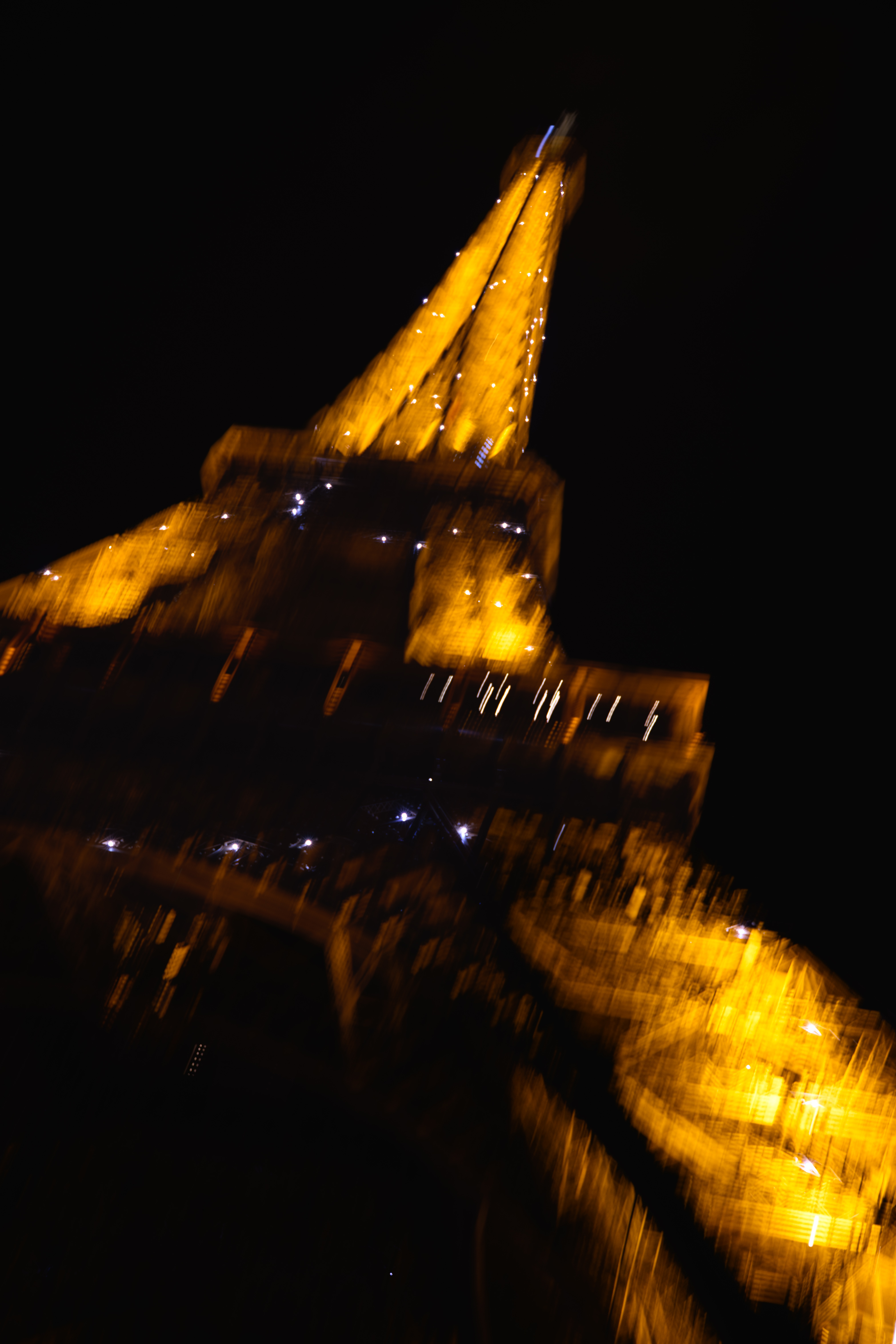
The sling bag vanished. A pickpocket melted into the crowd, swallowed by the glow. Hemingway was gone. The Good Reader spun, helpless, then gave a small, rueful laugh. “Of course, Paris,” he whispered. He fumbled for his phone, snapped a crooked picture of the Tower, and stood blinking back a tear, unread, unlucky, but somehow lighter: the pilgrim of reading failure.
(to be continued…)

 kirukkal.com
Leave a comment